€299.00 *
Prices incl. VAT, free shipping worldwide
Ready to ship today,
Delivery time appr. 3-6 workdays

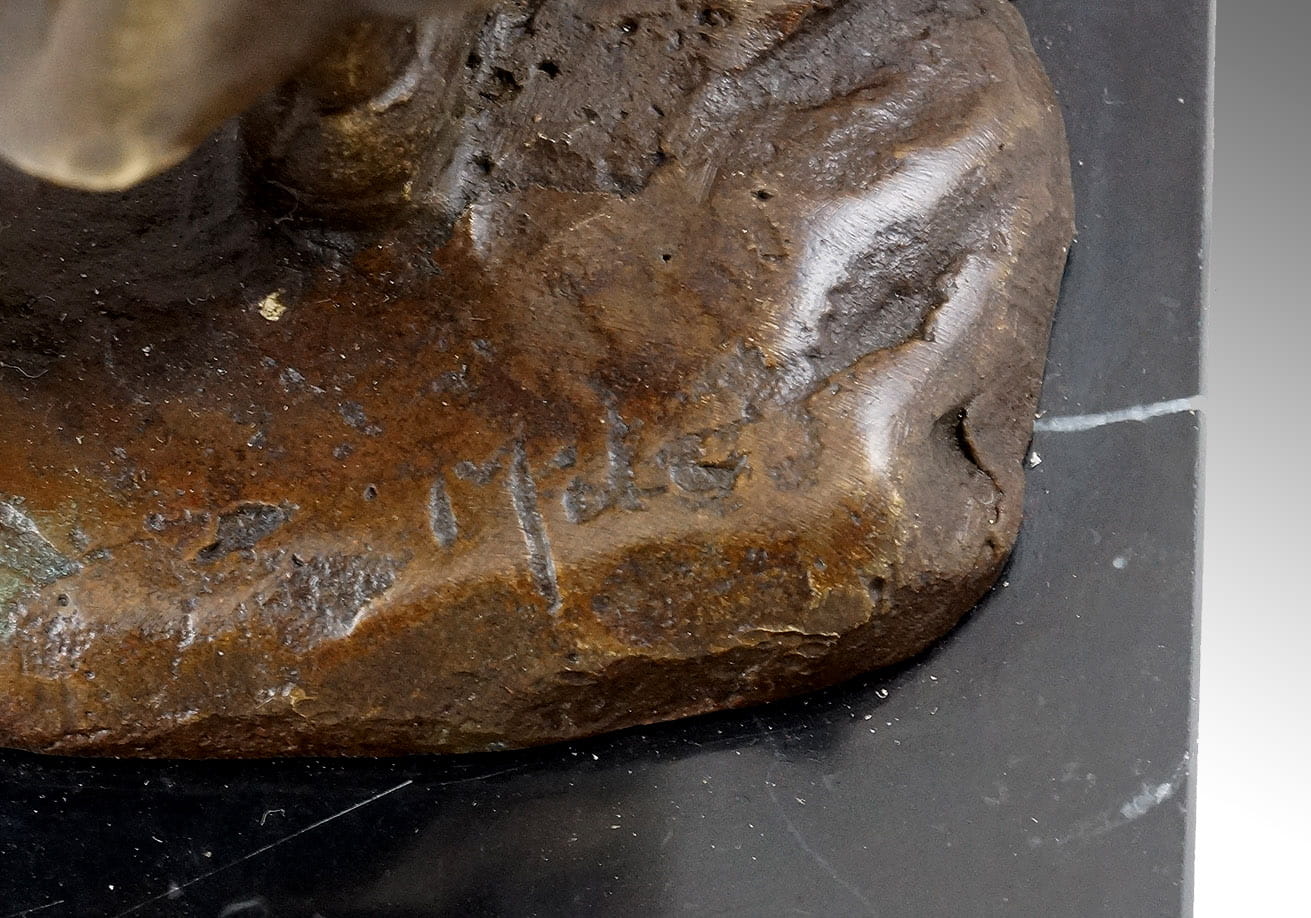
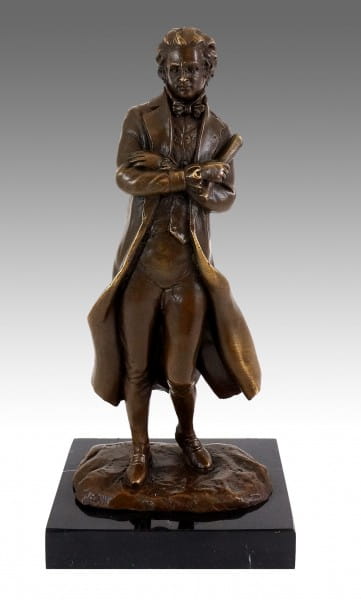
Bronze figure – Composer Franz Peter Schubert - Signed Milo This bronze figure of Franz Peter... more
Product description
"Bronze Statue - Composer - Franz Peter Schubert - Milo"
| Weight | 1,4 kg |
Bronze figure – Composer Franz Peter Schubert - Signed Milo
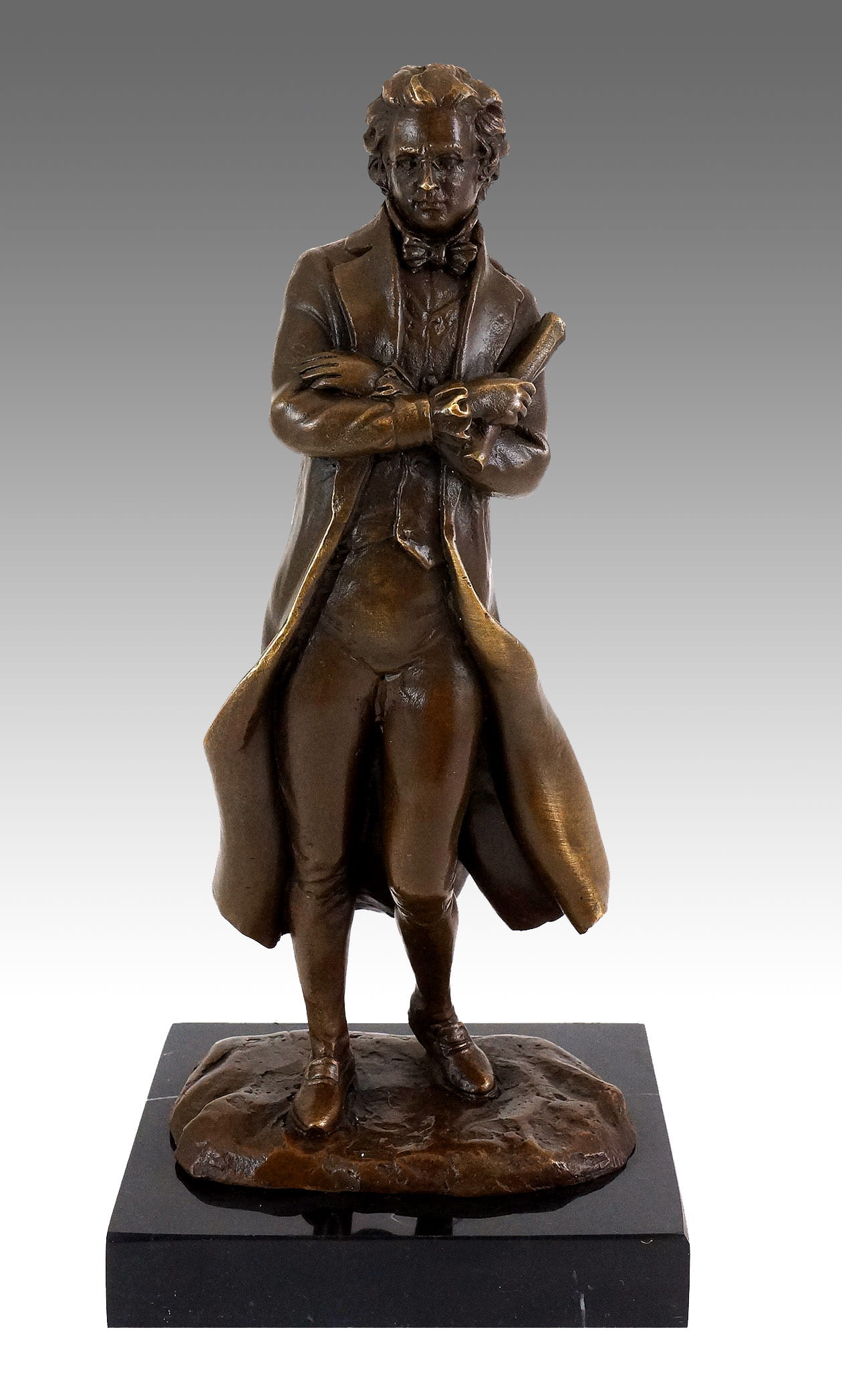
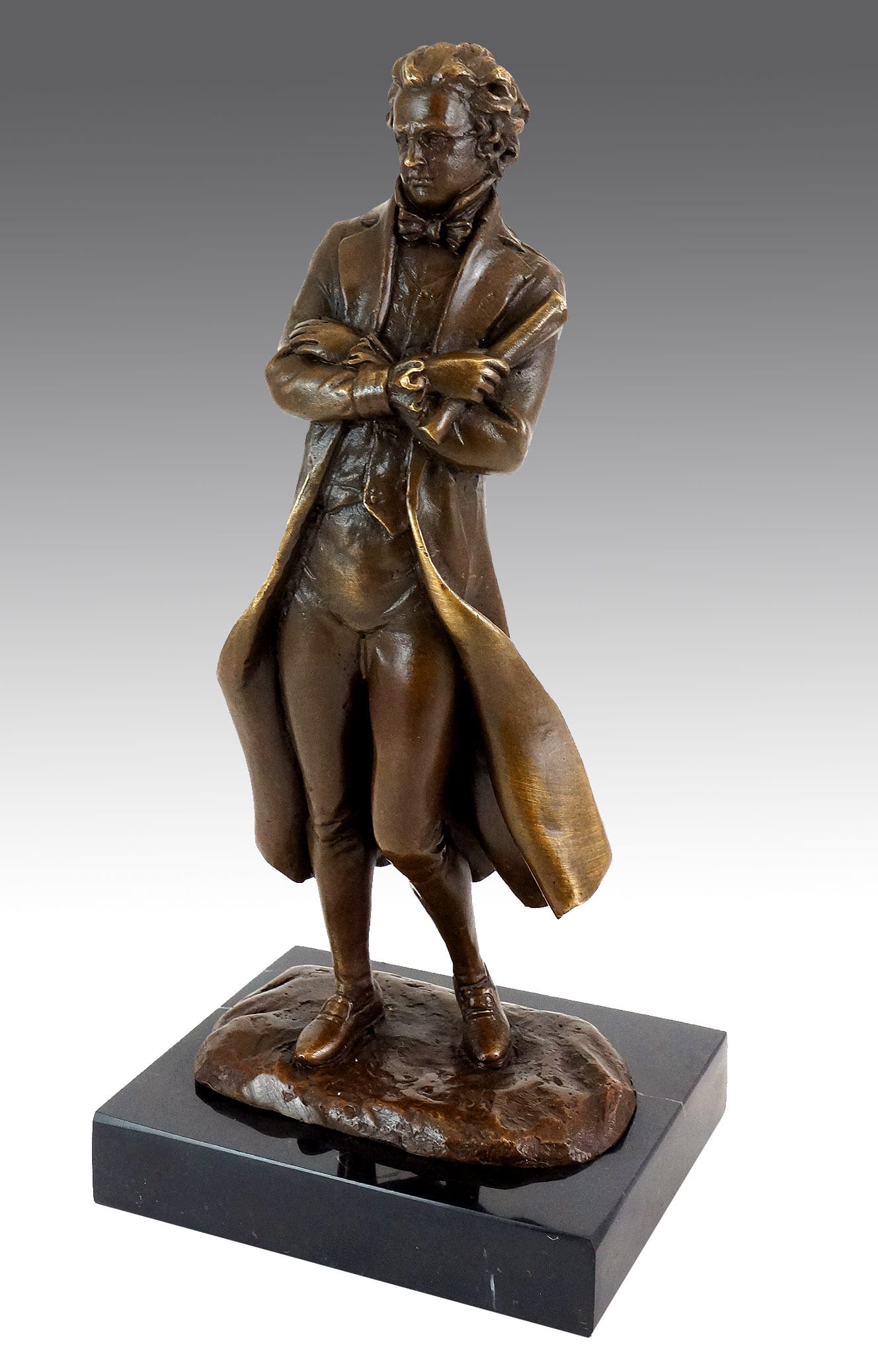
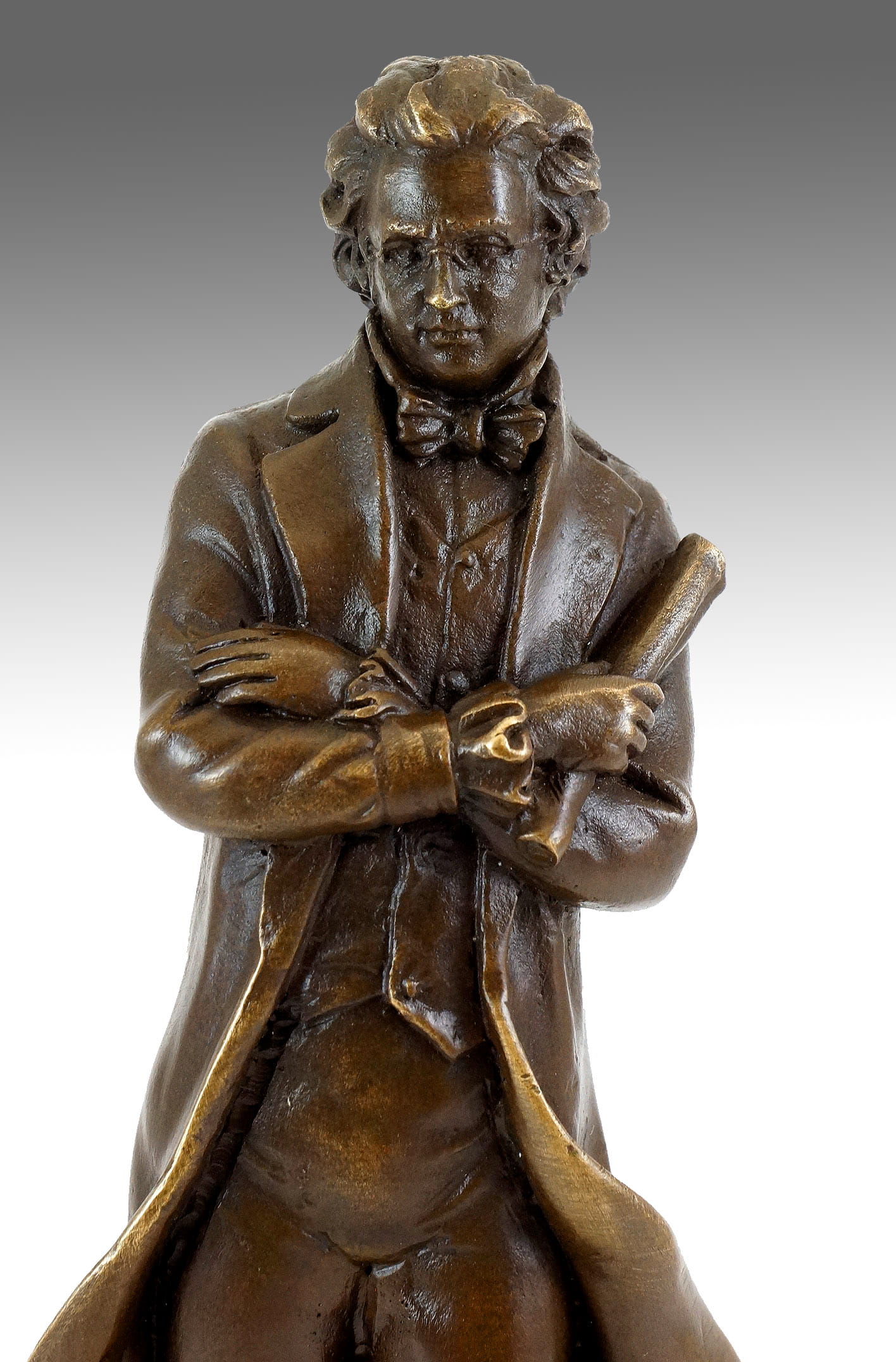
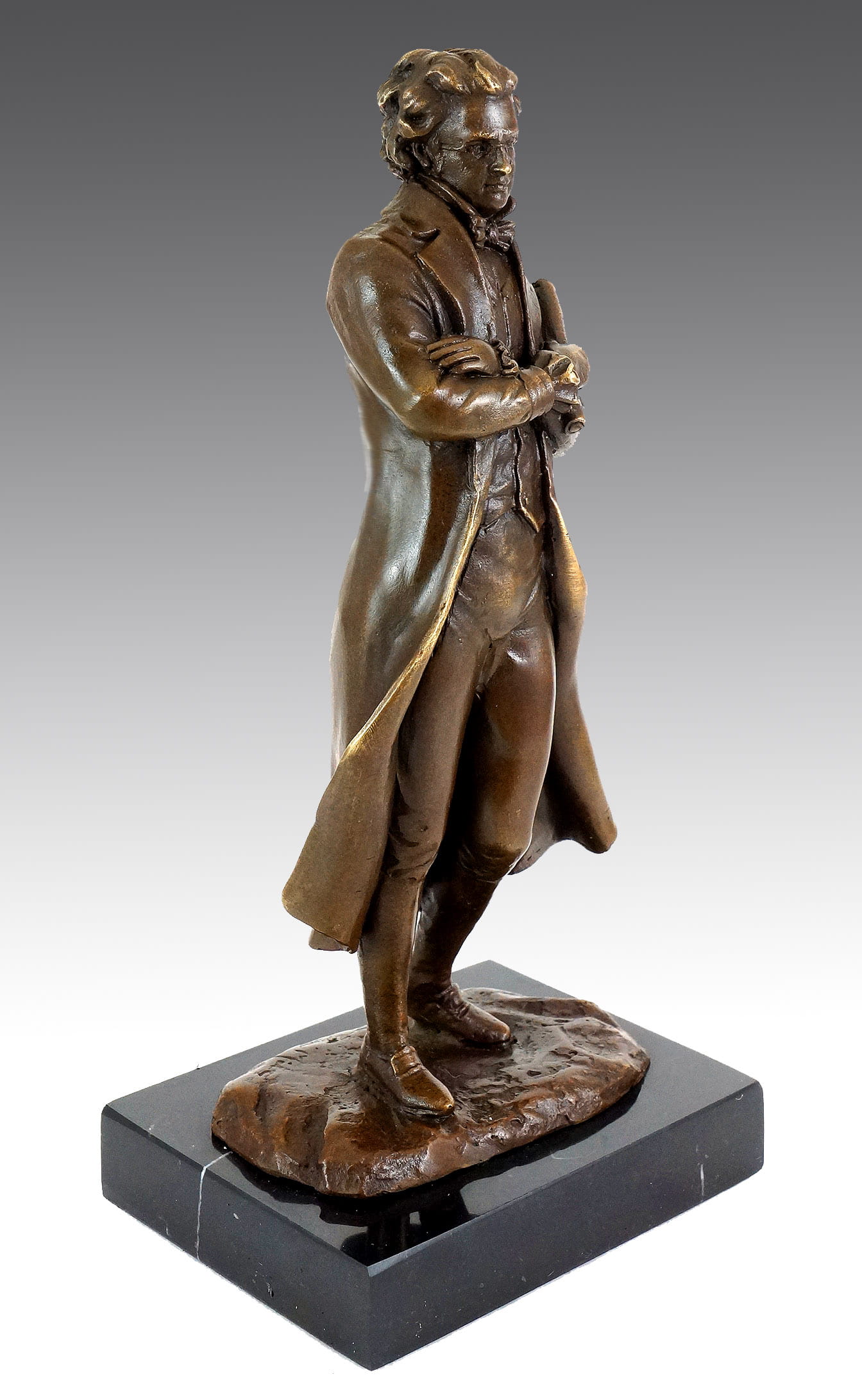
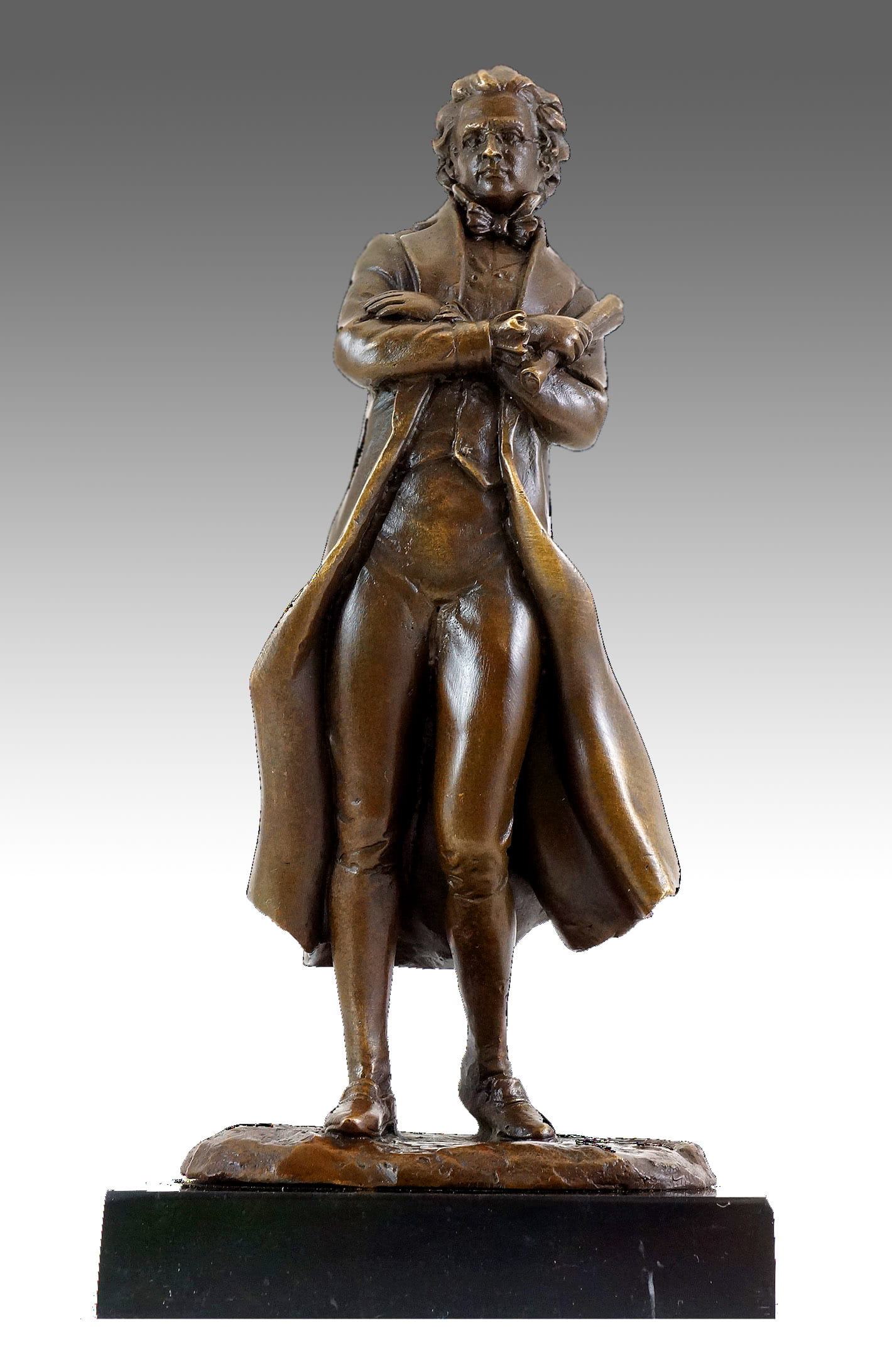
This bronze figure of Franz Peter Schubert captures the composer in a moment of profound contemplation, presenting him not as the celebrated icon of concert halls, but as the reflective and quietly driven artist he was in life. The sculpture, created by Miguel Fernando Lopez, known as Milo, portrays Schubert with arms crossed and a rolled manuscript in hand, an intimate reference to the countless works that emerged from his inner world. His gaze is slightly lowered, as if listening inwardly to melodies forming before they ever reached paper. The delicate modeling of his facial features suggests sensitivity and concentration, aligning with historical depictions of Schubert’s gentle, introverted character. The figure stands firmly on a textured bronze base, enhancing the feeling of grounded creativity.
A pose shaped by musical genius
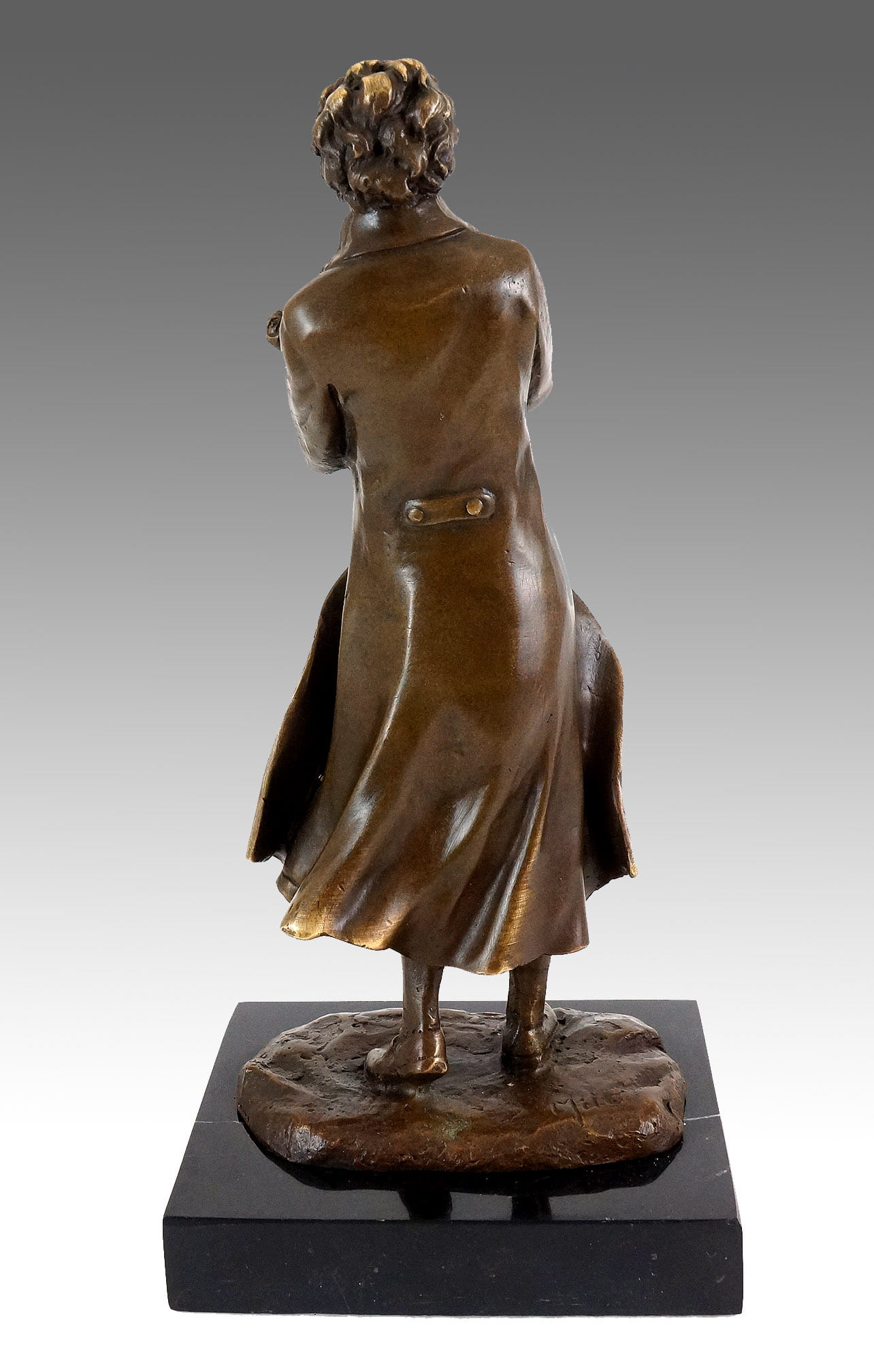
The sculpted stance reveals Schubert’s characteristic modesty and quiet dignity, which contemporaries often described as both humble and unwaveringly self-assured in his devotion to music. The flowing movement of his coat captures a sense of motion, as though he has just stepped away from the piano to reconsider a phrase or quietly hum a new motif. Milo’s sensitive treatment of the hands—one holding the manuscript, the other resting against the body—evokes the tension between the inner process of composition and the physical act of writing. Subtle detailing in the garments reflects early nineteenth-century fashion while maintaining a timeless elegance. Each element invites viewers to imagine Schubert in the intimate spaces where his masterpieces were born.
A sculpture meant for places of reflection
This bronze figure is ideally suited for rooms where music, literature, or philosophical thought play a central role, such as a study, a music room, or a library. Its presence carries a sense of calm concentration that enhances personal workspaces or home environments where creative contemplation is welcomed. The sculpture’s height and slender proportion allow it to sit harmoniously on mantelpieces, shelves, or dedicated pedestals without dominating the room. The polished marble base elevates the figure visually, giving it the authority of a commemorative object while remaining approachable. Its expressive quietness complements both classical interiors and modern minimalist settings.
Schubert’s life as sculptural inspiration
Franz Peter Schubert, born in Vienna in 1797, was the twelfth child of a schoolmaster and grew up in a family where music was encouraged but resources were modest. Showing exceptional talent early on, he studied at the Stadtkonvikt, where he was deeply influenced by the music of Mozart and Beethoven. His life, marked by moments of intense creativity and personal hardship, produced over six hundred songs, numerous chamber works, and orchestral compositions that would later define him as one of the great melodic innovators of the nineteenth century. His premature death at the age of thirty-one left many masterpieces unpublished, yet today his work resonates worldwide in concert halls, opera houses, and recordings. Milo’s sculpture reflects this mixture of youthful brilliance and gentle melancholy.
Milo’s craftsmanship and artistic path
Miguel Fernando Lopez, born in 1955 in Lisbon to a family with strong artisan roots, developed an exceptional sense for shaping expressive human figures. Encouraged by his parents, he pursued formal training at the Escola Superior de Belas-Artes de Lisboa, where he deepened his understanding of anatomy, casting techniques, and classical composition. Over the decades, Milo became known for his capacity to blend realism with emotional nuance, giving even still poses an inner vitality. His works are exhibited internationally in galleries, private collections, and cultural institutions that appreciate his unique balance between technical precision and poetic interpretation. It is this sensitivity that makes his portrayal of Schubert so compelling.
Presence in collections today
Bronze figures of Schubert crafted by Milo can be found in private music libraries, homes of collectors passionate about classical composers, and galleries specializing in figurative bronze sculpture. Some pieces appear in cultural centers dedicated to nineteenth-century music, where they complement historical exhibits and educational programs. Their appeal lies in their ability to evoke the quiet intensity of composition, making them cherished objects for musicians and admirers of Schubert alike. Their enduring presence ensures that Schubert’s legacy remains tangible in spaces dedicated to creativity and reflection.
A creation rooted in memory and emotion
This bronze figure, cast in a traditional foundry and finished by hand, embodies a dialogue between Milo’s artistic sensibility and Schubert’s introspective spirit. Every curve, fold, and gesture reflects the sculptor’s intention to honor a life devoted to melody and poetic expression. The sculpture invites viewers to pause, to listen, and to reconnect with the quiet strength found in Schubert’s music. Its thoughtful composition makes it not only a decorative object but also a companion to moments of personal contemplation. It stands as a testament to the enduring power of human creativity.
This bronze figure of Franz Peter Schubert captures the composer in a moment of profound contemplation, presenting him not as the celebrated icon of concert halls, but as the reflective and quietly driven artist he was in life. The sculpture, created by Miguel Fernando Lopez, known as Milo, portrays Schubert with arms crossed and a rolled manuscript in hand, an intimate reference to the countless works that emerged from his inner world. His gaze is slightly lowered, as if listening inwardly to melodies forming before they ever reached paper. The delicate modeling of his facial features suggests sensitivity and concentration, aligning with historical depictions of Schubert’s gentle, introverted character. The figure stands firmly on a textured bronze base, enhancing the feeling of grounded creativity.
A pose shaped by musical genius
The sculpted stance reveals Schubert’s characteristic modesty and quiet dignity, which contemporaries often described as both humble and unwaveringly self-assured in his devotion to music. The flowing movement of his coat captures a sense of motion, as though he has just stepped away from the piano to reconsider a phrase or quietly hum a new motif. Milo’s sensitive treatment of the hands—one holding the manuscript, the other resting against the body—evokes the tension between the inner process of composition and the physical act of writing. Subtle detailing in the garments reflects early nineteenth-century fashion while maintaining a timeless elegance. Each element invites viewers to imagine Schubert in the intimate spaces where his masterpieces were born.
A sculpture meant for places of reflection
This bronze figure is ideally suited for rooms where music, literature, or philosophical thought play a central role, such as a study, a music room, or a library. Its presence carries a sense of calm concentration that enhances personal workspaces or home environments where creative contemplation is welcomed. The sculpture’s height and slender proportion allow it to sit harmoniously on mantelpieces, shelves, or dedicated pedestals without dominating the room. The polished marble base elevates the figure visually, giving it the authority of a commemorative object while remaining approachable. Its expressive quietness complements both classical interiors and modern minimalist settings.
Schubert’s life as sculptural inspiration
Franz Peter Schubert, born in Vienna in 1797, was the twelfth child of a schoolmaster and grew up in a family where music was encouraged but resources were modest. Showing exceptional talent early on, he studied at the Stadtkonvikt, where he was deeply influenced by the music of Mozart and Beethoven. His life, marked by moments of intense creativity and personal hardship, produced over six hundred songs, numerous chamber works, and orchestral compositions that would later define him as one of the great melodic innovators of the nineteenth century. His premature death at the age of thirty-one left many masterpieces unpublished, yet today his work resonates worldwide in concert halls, opera houses, and recordings. Milo’s sculpture reflects this mixture of youthful brilliance and gentle melancholy.
Milo’s craftsmanship and artistic path
Miguel Fernando Lopez, born in 1955 in Lisbon to a family with strong artisan roots, developed an exceptional sense for shaping expressive human figures. Encouraged by his parents, he pursued formal training at the Escola Superior de Belas-Artes de Lisboa, where he deepened his understanding of anatomy, casting techniques, and classical composition. Over the decades, Milo became known for his capacity to blend realism with emotional nuance, giving even still poses an inner vitality. His works are exhibited internationally in galleries, private collections, and cultural institutions that appreciate his unique balance between technical precision and poetic interpretation. It is this sensitivity that makes his portrayal of Schubert so compelling.
Presence in collections today
Bronze figures of Schubert crafted by Milo can be found in private music libraries, homes of collectors passionate about classical composers, and galleries specializing in figurative bronze sculpture. Some pieces appear in cultural centers dedicated to nineteenth-century music, where they complement historical exhibits and educational programs. Their appeal lies in their ability to evoke the quiet intensity of composition, making them cherished objects for musicians and admirers of Schubert alike. Their enduring presence ensures that Schubert’s legacy remains tangible in spaces dedicated to creativity and reflection.
A creation rooted in memory and emotion
This bronze figure, cast in a traditional foundry and finished by hand, embodies a dialogue between Milo’s artistic sensibility and Schubert’s introspective spirit. Every curve, fold, and gesture reflects the sculptor’s intention to honor a life devoted to melody and poetic expression. The sculpture invites viewers to pause, to listen, and to reconnect with the quiet strength found in Schubert’s music. Its thoughtful composition makes it not only a decorative object but also a companion to moments of personal contemplation. It stands as a testament to the enduring power of human creativity.
Height: 21,5 cm
Width: 10 cm
Depth: 8 cm
Weight: 1,4 kg
100% bronze
Related links to "Bronze Statue - Composer - Franz Peter Schubert - Milo"
Read, write and discuss reviews... more
Customer evaluation for "Bronze Statue - Composer - Franz Peter Schubert - Milo"
Write an evaluation
Evaluations will be activated after verification.
Our advantages
free shipping
Worldwide free shipping
14 days money back
You can cancel your order
within 14 days
secure payment services
Paypal, Master Card, Visa, American Express and more