€199.00 *
Prices incl. VAT, free shipping worldwide
Ready to ship today,
Delivery time appr. 3-6 workdays

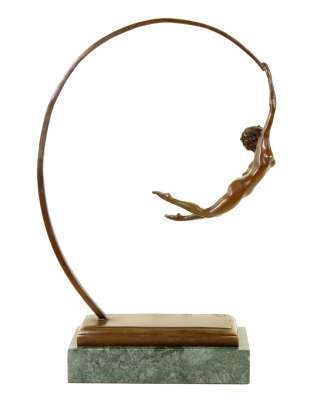
Amor the Tulip King - God of Love - Greek Statue - Signed Milo This bronze sculpture... more
Product description
"Amor the Tulip King - Amor Statue - Bronze"
| Weight | 0,8 kg |
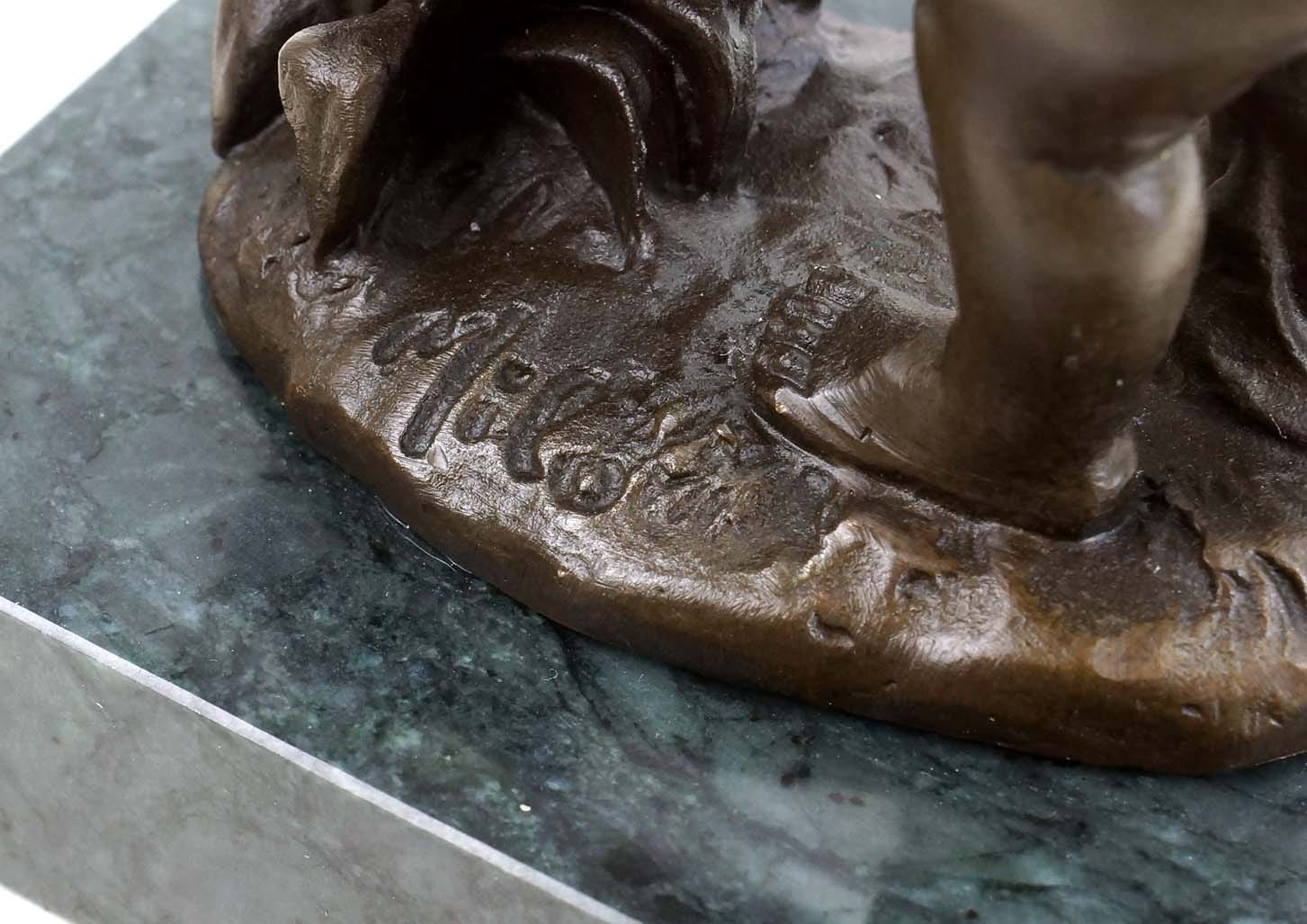
Amor the Tulip King - God of Love - Greek Statue - Signed Milo
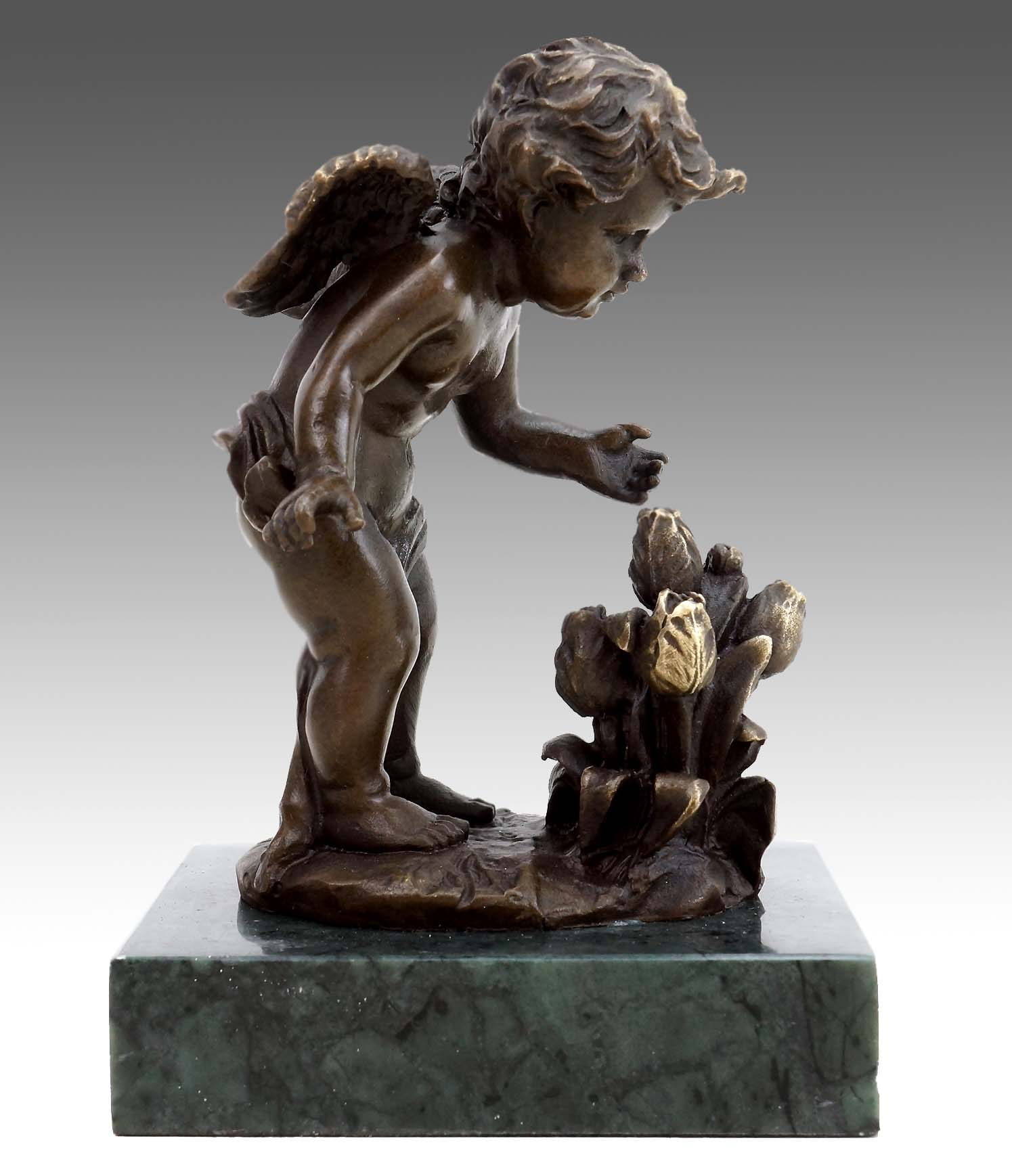
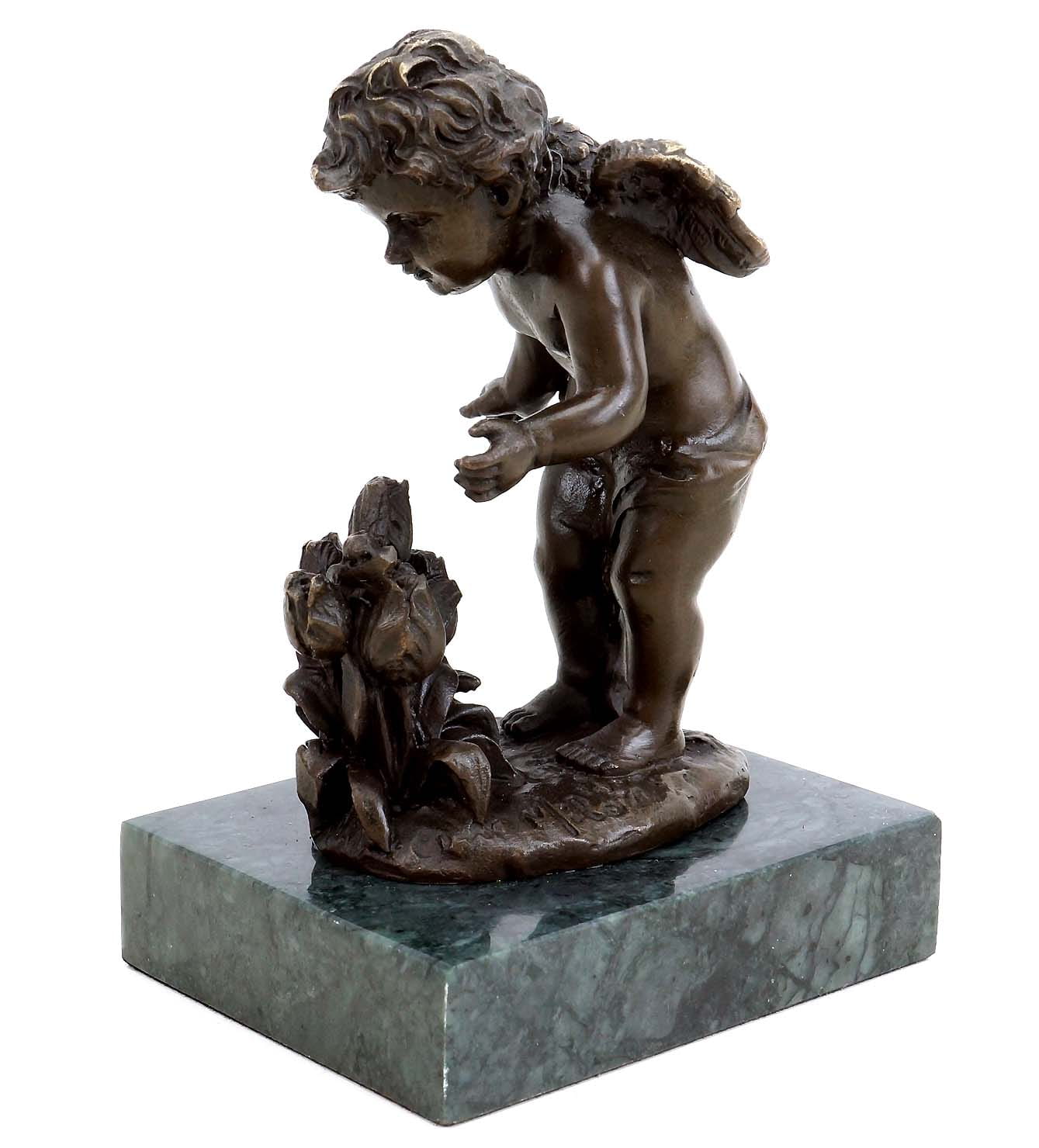
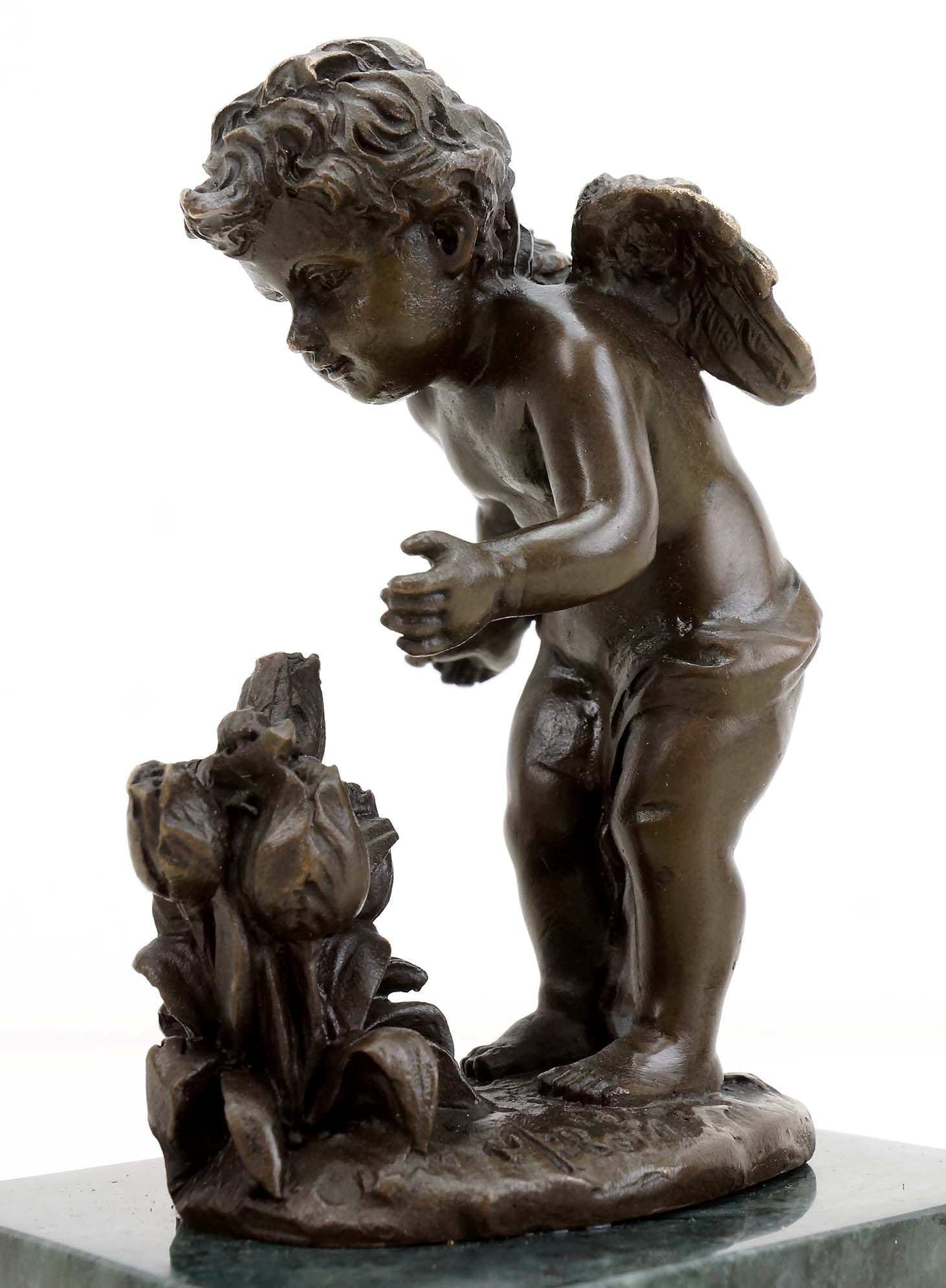
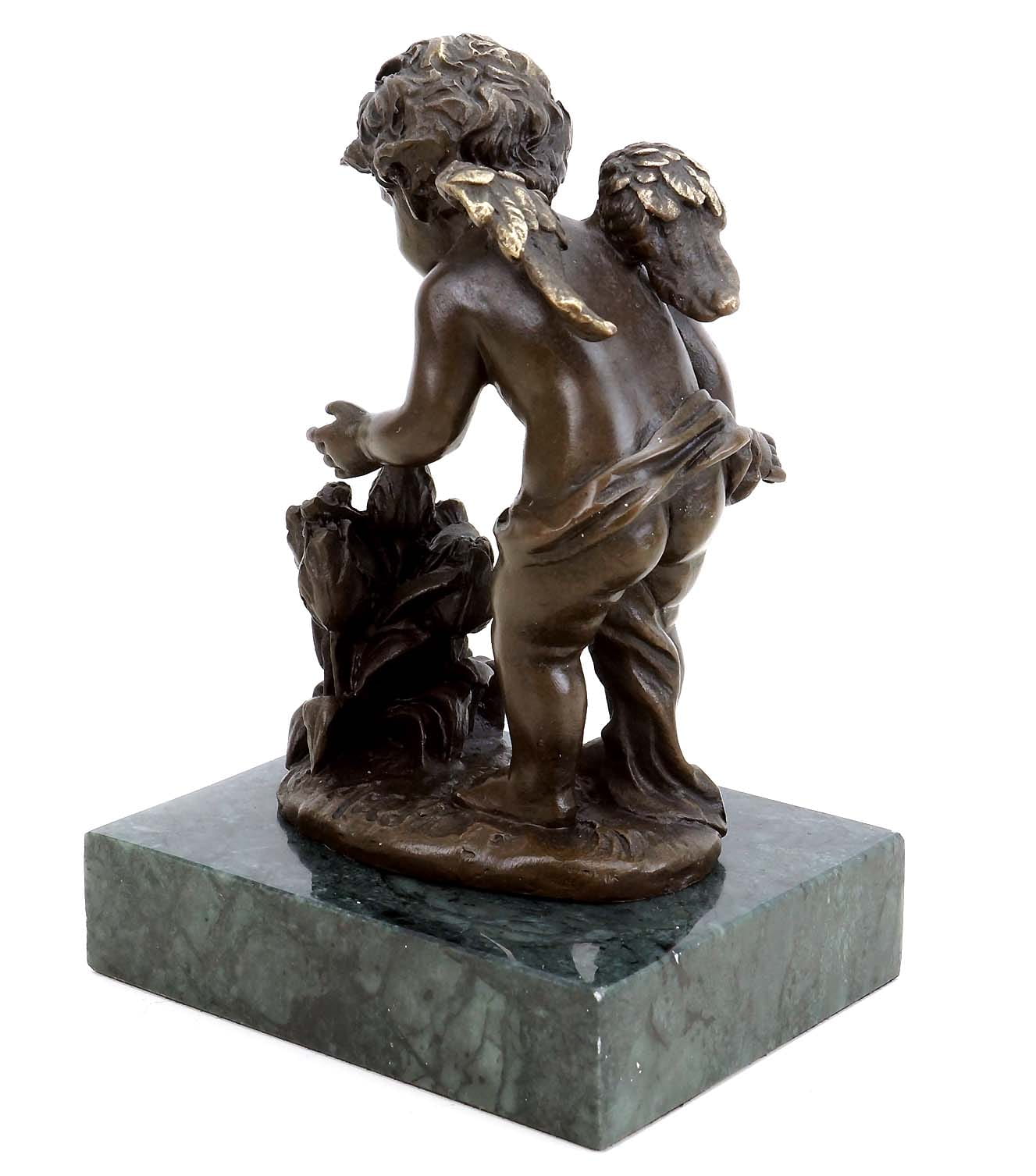
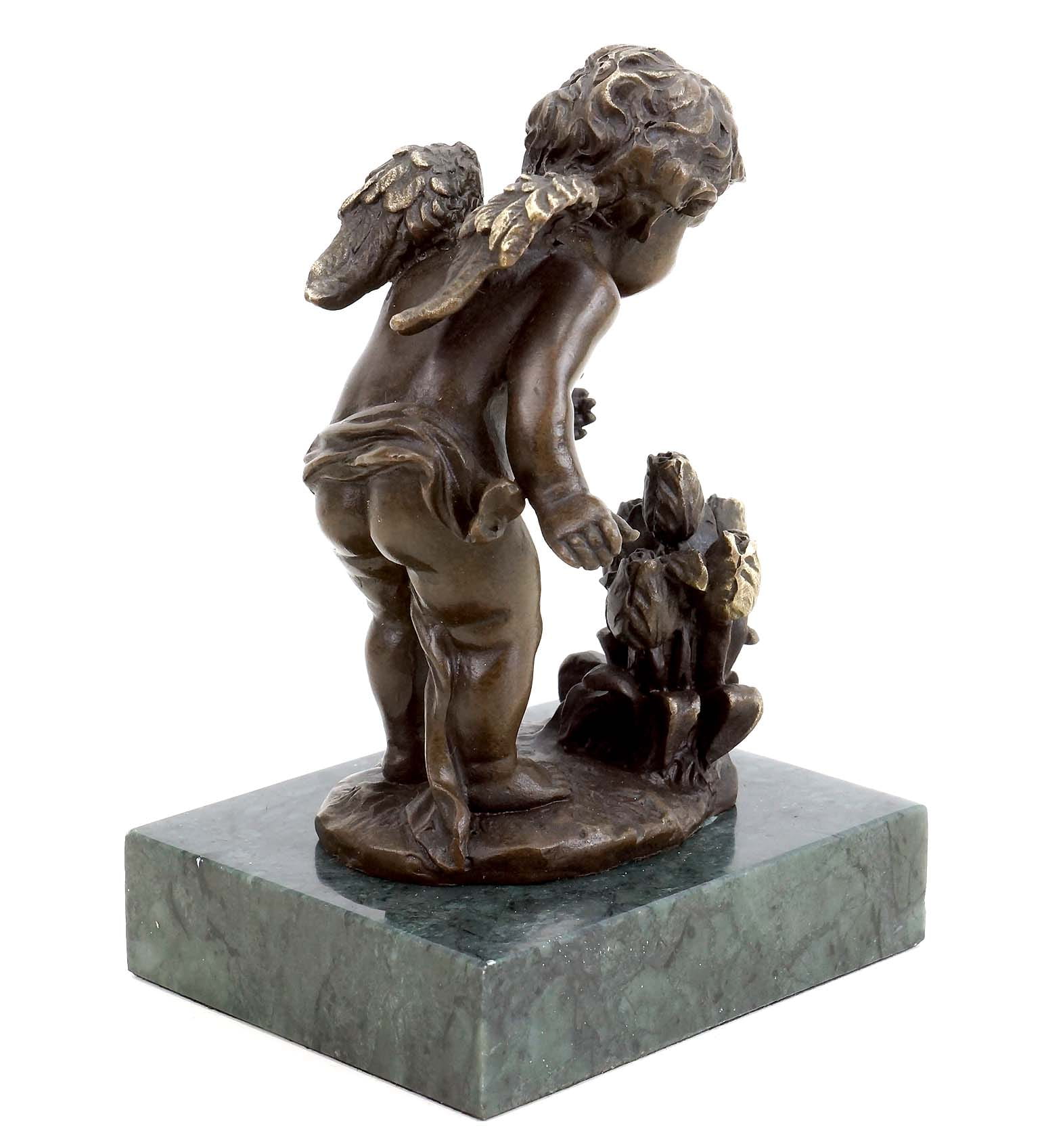
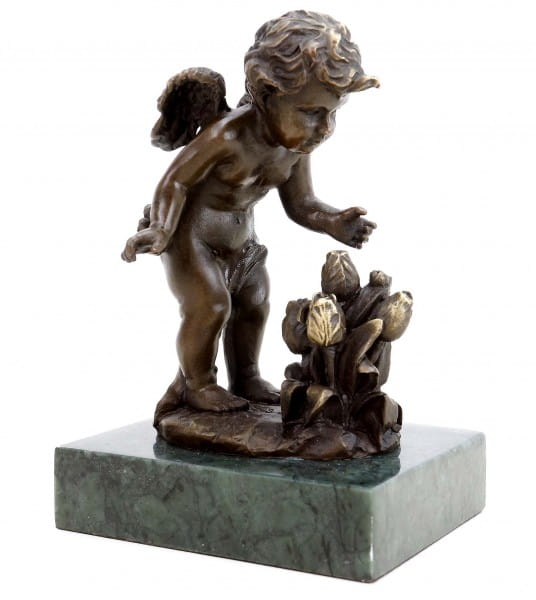
This bronze sculpture titled Amor the Tulip King captures a quiet yet emotionally radiant moment in which the young god of love bends curiously toward a blossoming cluster of tulips. Every contour of the figure, from the softly rounded limbs to the delicate wings at his back, conveys an intimate harmony between divine innocence and earthly beauty. The childlike gesture of reaching out toward the flower emphasizes a poetic curiosity that becomes the soul of the composition. The sculpture radiates a tenderness that invites viewers to pause, reflect and reconnect with their own sense of marvel. Placed on a marble base, the figure gains a sense of grounded dignity, making it suitable for both private interiors and elegant gallery spaces.
The expressive language of form in bronze
The figurine shows Amor in a natural, relaxed stance, with slightly bent knees and a gentle forward lean that suggests anticipation. The wings, finely textured and subtly curved, frame the young body like a protective aura, drawing the eye toward the figure’s face and hands. The tulips at his feet are rendered with soft yet detailed shapes, creating a contrast between the divine figure and the fragile delicacy of flowers. Light plays beautifully across the warm bronze patina, making the sculpture change character depending on its surroundings. Whether placed on a mantelpiece, a console table, or within a curated collection of mythological bronzes, the sculpture enriches its environment with a timeless warmth.
Symbolism rooted in ancient myth
The representation of Amor—known in Latin tradition as Cupid and in Greek mythology as Eros—evokes layers of symbolic meaning that enhance the sculpture’s narrative depth. As the god of love and desire, Amor’s interaction with the tulip suggests themes of affection, purity and the first awakening of emotion. Tulips have long been associated with declarations of love, which aligns harmoniously with the figure’s mythological identity. The combination of childlike innocence and divine relevance creates an expressive duality, making the sculpture a contemplative object for both mythological enthusiasts and collectors. Today, pieces of this motif can be seen in private art collections across Europe and North America, where they often complement interior spaces dedicated to classical themes.
The craftsmanship behind the scene
Bronze casting allows for dynamic modelling and soft surface nuances, both of which the artist uses masterfully in this figure. The subtle musculature of the young body, the refined shaping of the curls, and the expressive detailing of the tulip petals reveal a deep understanding of material and proportion. The marble base, polished yet natural in its texture, provides a contrasting foundation that stabilizes the composition both visually and physically. The sculpture is designed in such a way that it can be displayed centrally on a pedestal or integrated into a shelf arrangement, depending on the collector’s preference. Its emotional softness makes it especially effective in living rooms, libraries or even bedrooms where symbolic elegance is desired.
The background of the artist Milo
Miguel Fernando Lopez, widely known as Milo, was born in 1955 in Lisbon into a family that valued craftsmanship and creativity. His father, a carpenter, introduced him early to the world of materials, while his mother encouraged his fascination for drawing and sculpture. Milo studied fine arts at local academies before refining his bronze-casting skills in workshops across Portugal and Spain. His career spans both figurative and abstract compositions, with a particular sensitivity toward mythological and emotional subjects. Today, many of his works can be seen in private collections, sculpture parks and galleries that appreciate his ability to infuse modern bronze with poetic expression.
A poetic presence in any interior
Amor the Tulip King is a sculpture that invites quiet admiration, offering a gentle reminder of discovery, affection and the small wonders that shape human experience. The warm tones of the bronze and the intimate scale of the piece make it exceptionally versatile, whether displayed in a classical interior or a contemporary living space. Its mythological subject and emotional resonance allow it to serve as both decorative centerpiece and contemplative object. Through its tender posture and delicate detailing, the sculpture becomes a symbol of curiosity and affection. The final impression it leaves is one of quiet joy and enduring sentiment, enriching any environment where it finds a home.
This bronze sculpture titled Amor the Tulip King captures a quiet yet emotionally radiant moment in which the young god of love bends curiously toward a blossoming cluster of tulips. Every contour of the figure, from the softly rounded limbs to the delicate wings at his back, conveys an intimate harmony between divine innocence and earthly beauty. The childlike gesture of reaching out toward the flower emphasizes a poetic curiosity that becomes the soul of the composition. The sculpture radiates a tenderness that invites viewers to pause, reflect and reconnect with their own sense of marvel. Placed on a marble base, the figure gains a sense of grounded dignity, making it suitable for both private interiors and elegant gallery spaces.
The expressive language of form in bronze
The figurine shows Amor in a natural, relaxed stance, with slightly bent knees and a gentle forward lean that suggests anticipation. The wings, finely textured and subtly curved, frame the young body like a protective aura, drawing the eye toward the figure’s face and hands. The tulips at his feet are rendered with soft yet detailed shapes, creating a contrast between the divine figure and the fragile delicacy of flowers. Light plays beautifully across the warm bronze patina, making the sculpture change character depending on its surroundings. Whether placed on a mantelpiece, a console table, or within a curated collection of mythological bronzes, the sculpture enriches its environment with a timeless warmth.
Symbolism rooted in ancient myth
The representation of Amor—known in Latin tradition as Cupid and in Greek mythology as Eros—evokes layers of symbolic meaning that enhance the sculpture’s narrative depth. As the god of love and desire, Amor’s interaction with the tulip suggests themes of affection, purity and the first awakening of emotion. Tulips have long been associated with declarations of love, which aligns harmoniously with the figure’s mythological identity. The combination of childlike innocence and divine relevance creates an expressive duality, making the sculpture a contemplative object for both mythological enthusiasts and collectors. Today, pieces of this motif can be seen in private art collections across Europe and North America, where they often complement interior spaces dedicated to classical themes.
The craftsmanship behind the scene
Bronze casting allows for dynamic modelling and soft surface nuances, both of which the artist uses masterfully in this figure. The subtle musculature of the young body, the refined shaping of the curls, and the expressive detailing of the tulip petals reveal a deep understanding of material and proportion. The marble base, polished yet natural in its texture, provides a contrasting foundation that stabilizes the composition both visually and physically. The sculpture is designed in such a way that it can be displayed centrally on a pedestal or integrated into a shelf arrangement, depending on the collector’s preference. Its emotional softness makes it especially effective in living rooms, libraries or even bedrooms where symbolic elegance is desired.
The background of the artist Milo
Miguel Fernando Lopez, widely known as Milo, was born in 1955 in Lisbon into a family that valued craftsmanship and creativity. His father, a carpenter, introduced him early to the world of materials, while his mother encouraged his fascination for drawing and sculpture. Milo studied fine arts at local academies before refining his bronze-casting skills in workshops across Portugal and Spain. His career spans both figurative and abstract compositions, with a particular sensitivity toward mythological and emotional subjects. Today, many of his works can be seen in private collections, sculpture parks and galleries that appreciate his ability to infuse modern bronze with poetic expression.
A poetic presence in any interior
Amor the Tulip King is a sculpture that invites quiet admiration, offering a gentle reminder of discovery, affection and the small wonders that shape human experience. The warm tones of the bronze and the intimate scale of the piece make it exceptionally versatile, whether displayed in a classical interior or a contemporary living space. Its mythological subject and emotional resonance allow it to serve as both decorative centerpiece and contemplative object. Through its tender posture and delicate detailing, the sculpture becomes a symbol of curiosity and affection. The final impression it leaves is one of quiet joy and enduring sentiment, enriching any environment where it finds a home.
Height: 12.0 cm
Width: 8.0 cm
Depth: 8.0 cm
Weight: 0.8 kg
Width: 8.0 cm
Depth: 8.0 cm
Weight: 0.8 kg
Related links to "Amor the Tulip King - Amor Statue - Bronze"
Read, write and discuss reviews... more
Customer evaluation for "Amor the Tulip King - Amor Statue - Bronze"
Write an evaluation
Evaluations will be activated after verification.
Our advantages
free shipping
Worldwide free shipping
14 days money back
You can cancel your order
within 14 days
secure payment services
Paypal, Master Card, Visa, American Express and more