€999.00 *
Prices incl. VAT, free shipping worldwide
Ready to ship today,
Delivery time appr. 3-6 workdays

Greek Mythology Statue – The Abduction of Europa - Signed Albert Hinrich Hussmann This... more
Product description
"Europa and the Bull Sculpture - Bronze Statue"
| Weight | 8,7 kg |
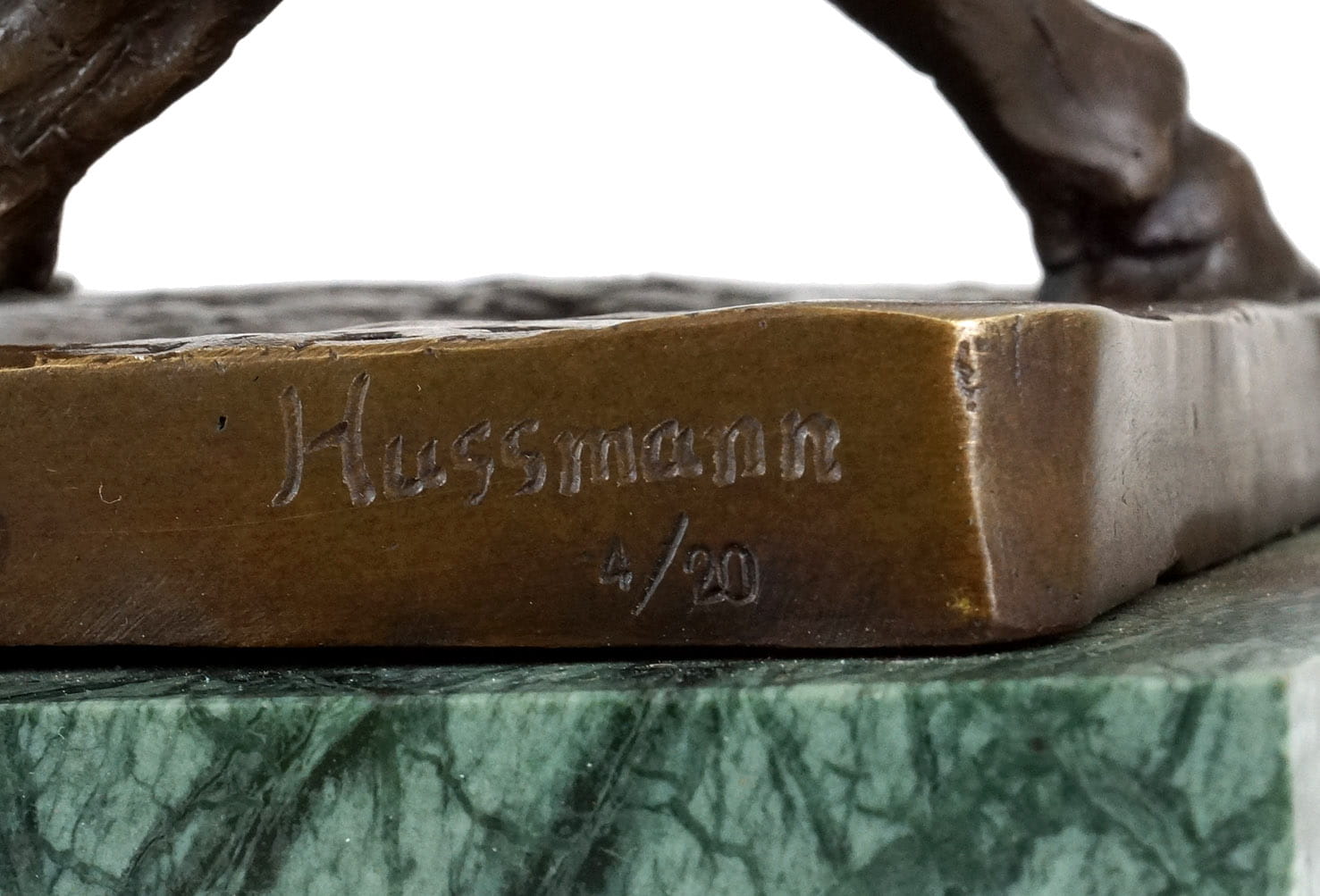
Greek Mythology Statue – The Abduction of Europa - Signed Albert Hinrich Hussmann
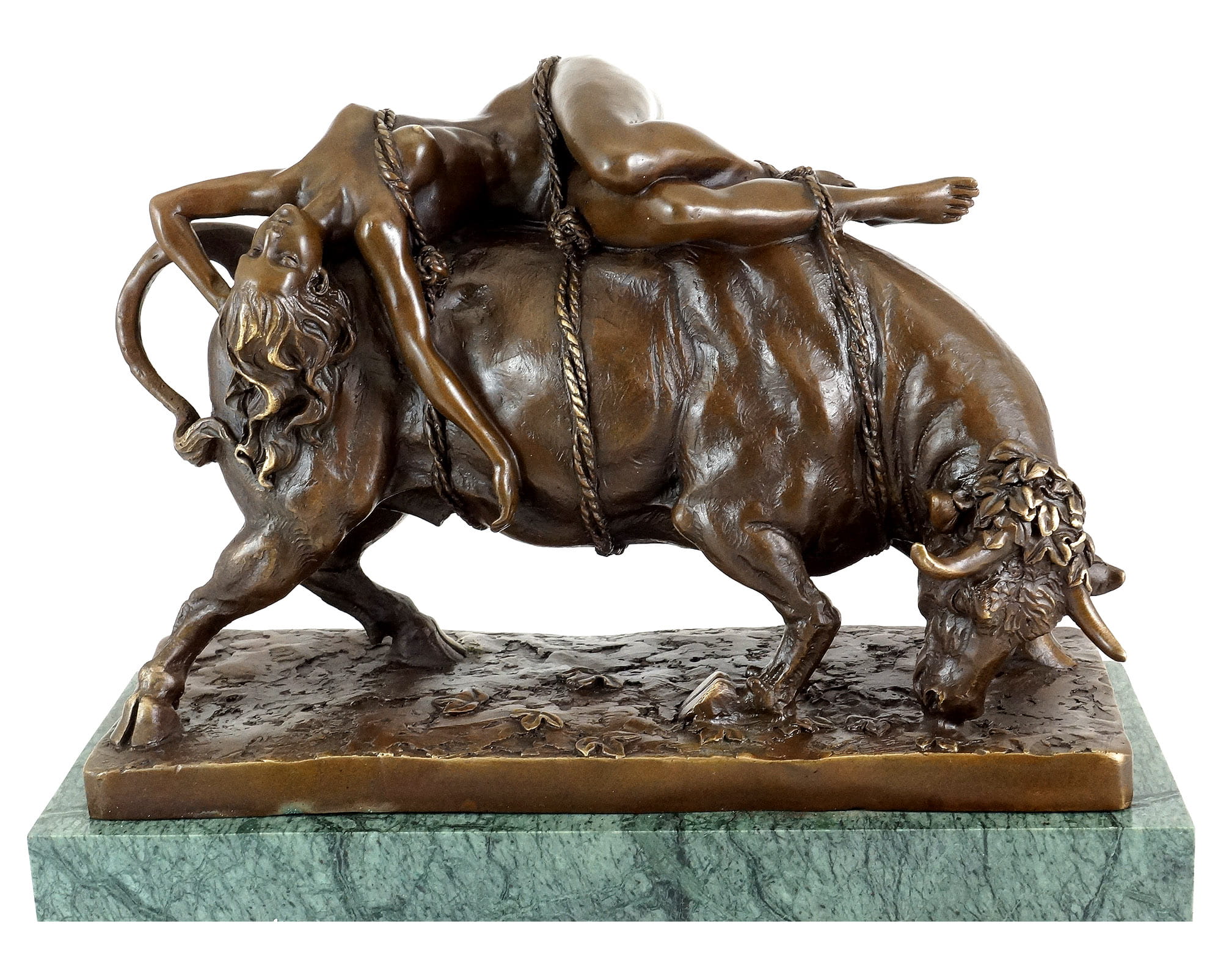
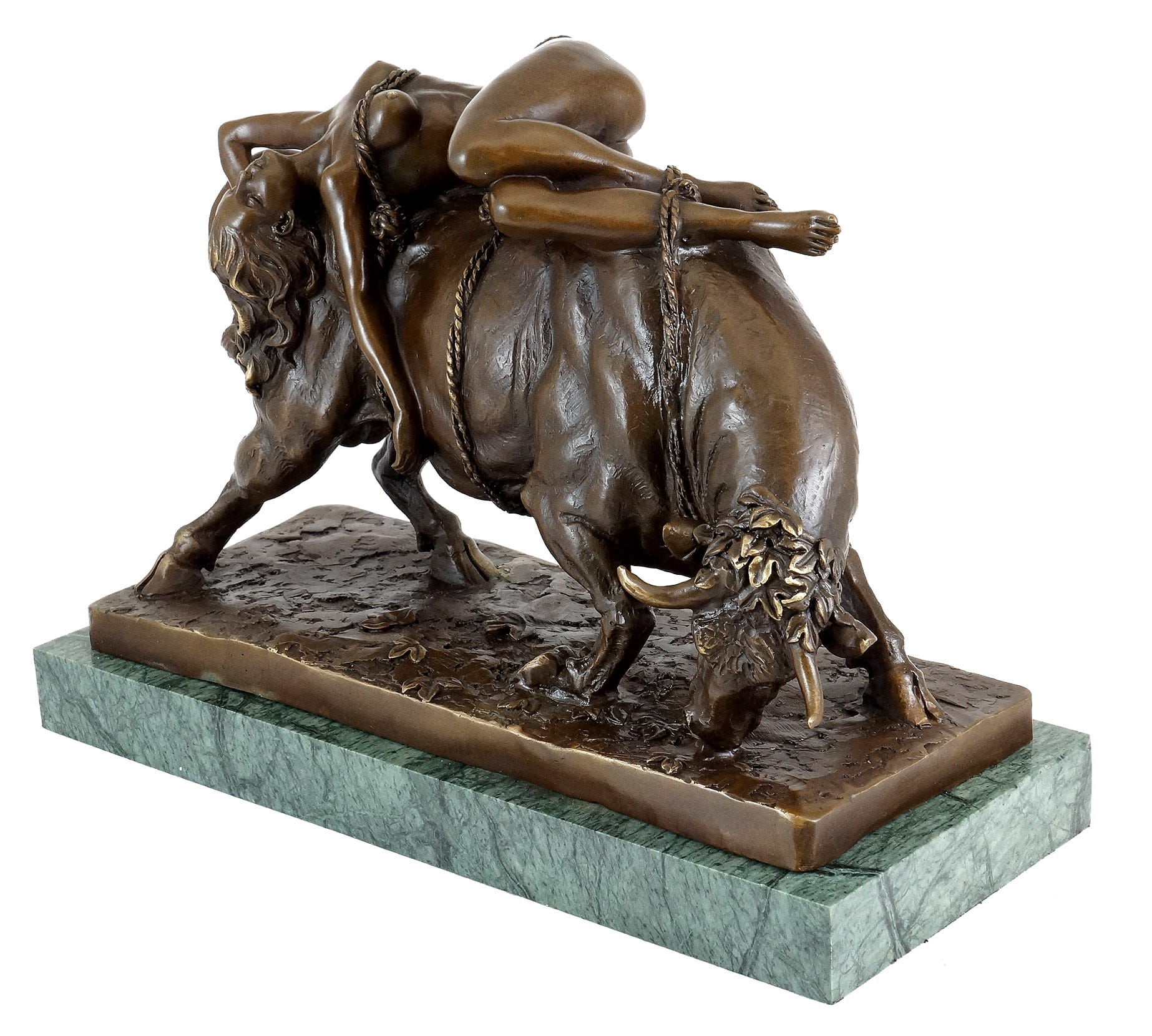
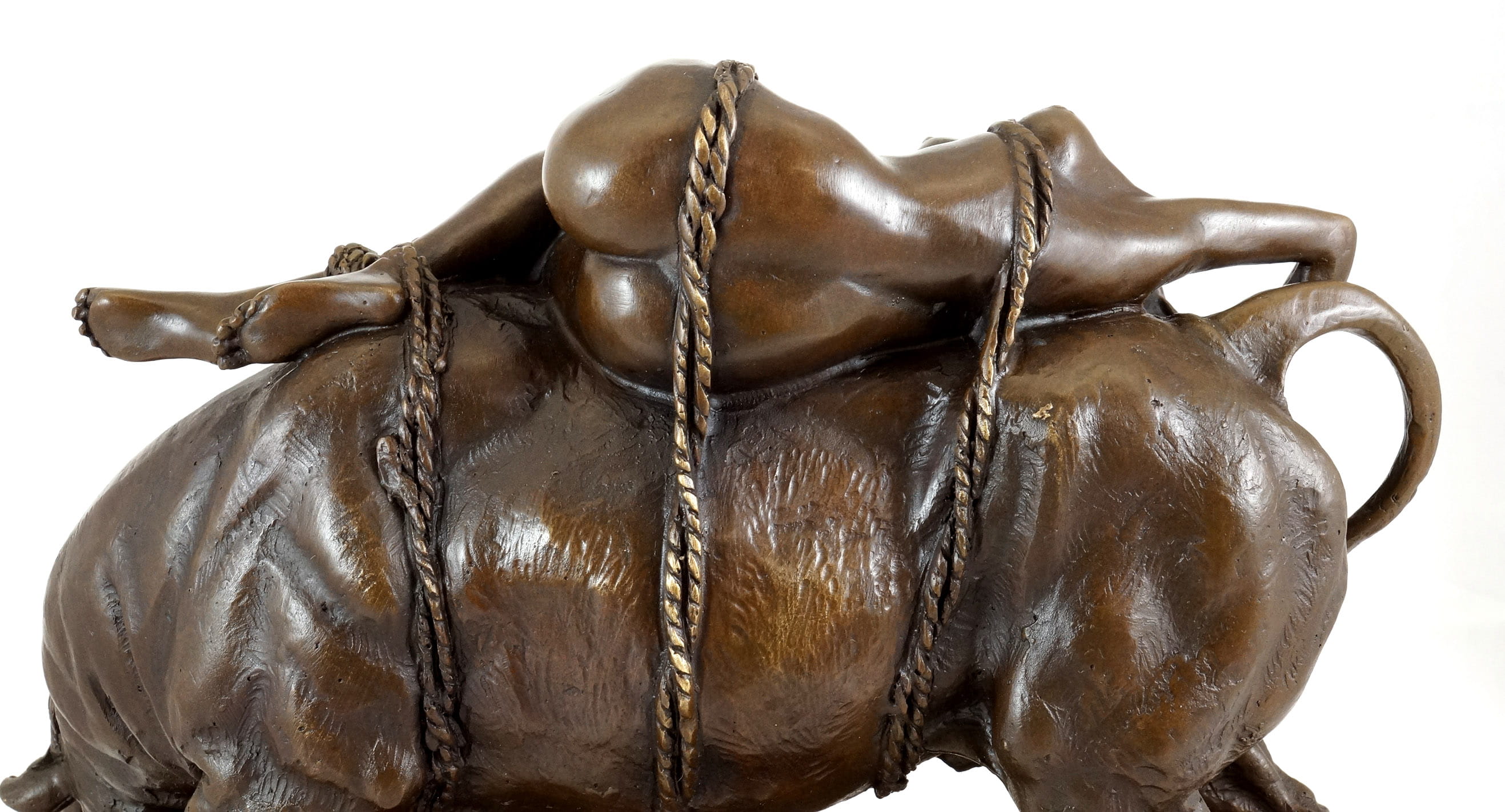
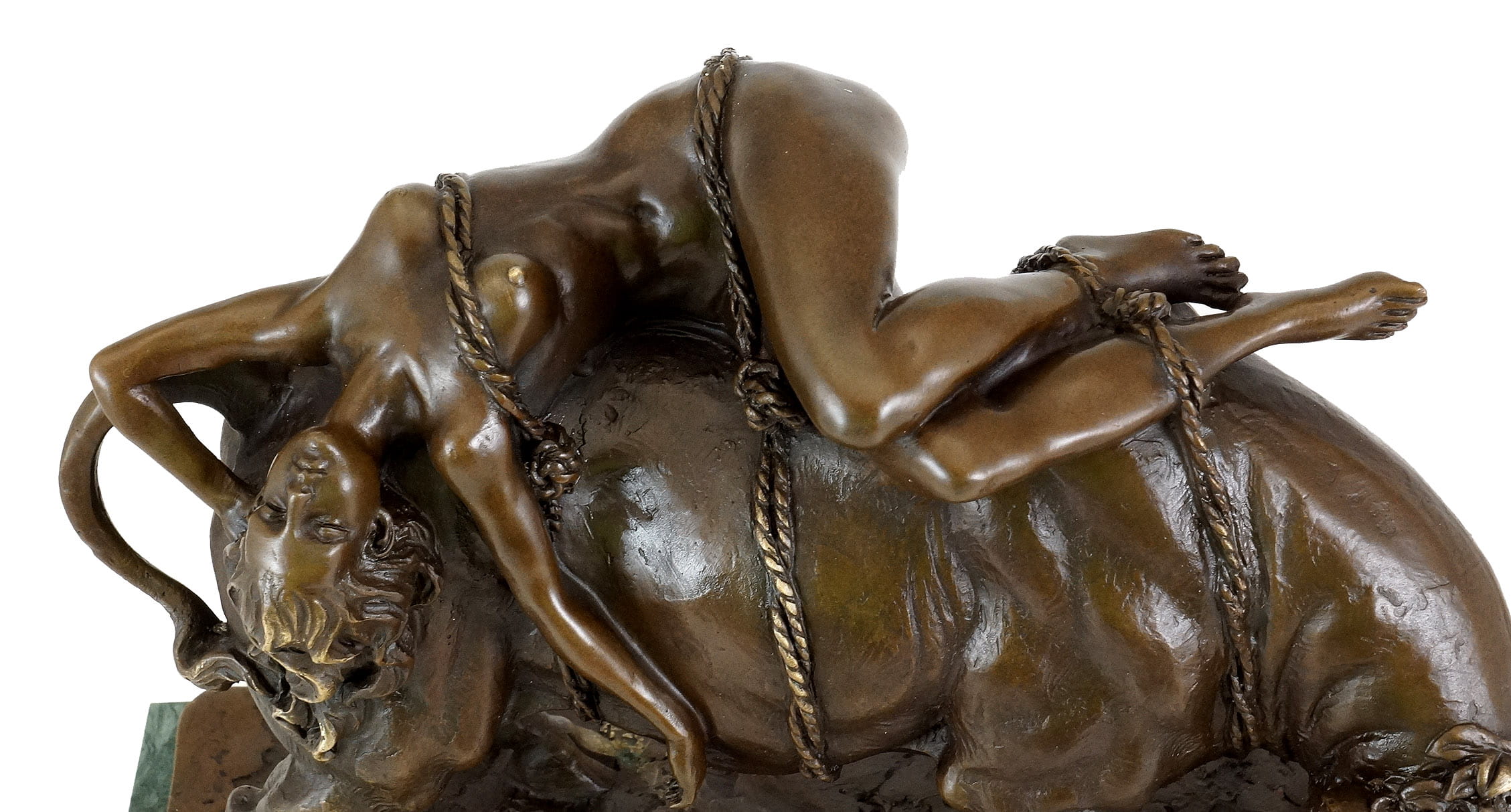
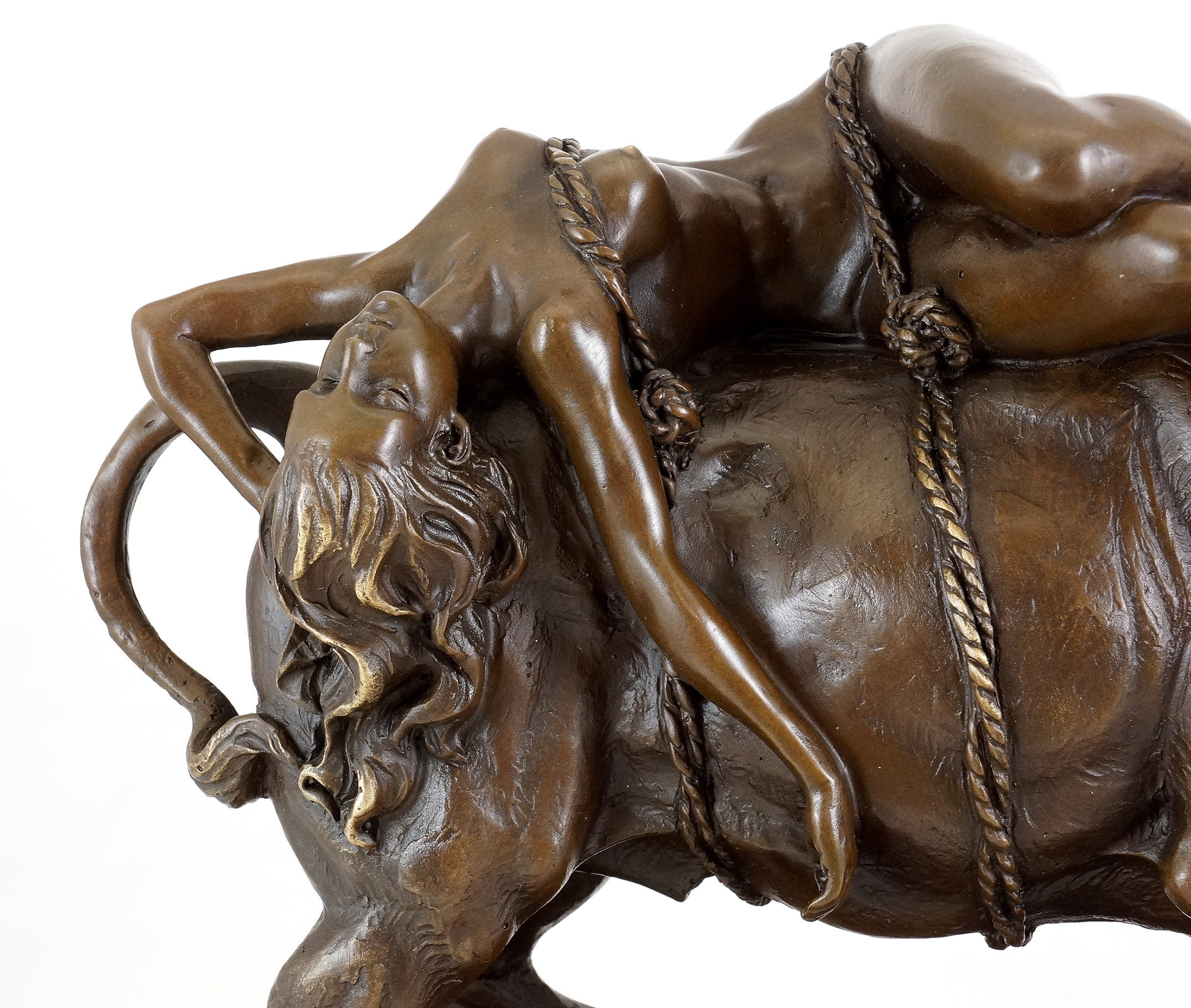
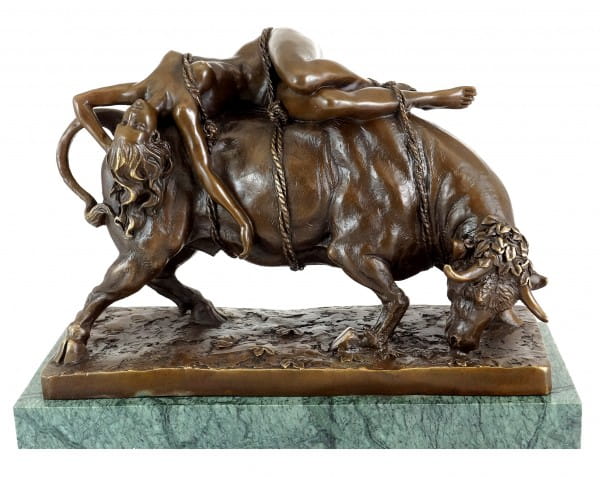
This limited-edition bronze captures the dramatic tension and sensual dynamism inherent in The Abduction of Europa, one of the most enduring narratives within Europa Greek Mythology. The figure of Europa is shown draped over the powerful body of the bull, her limbs extended in a gesture that reveals both surrender and astonished resistance. The muscular build of the animal, rendered with deep anatomical precision, amplifies the raw force of the moment and reinforces the symbolic nature of the metamorphosed Zeus. As a Europa and the Bull Sculpture, this work conveys the interplay between divinity and mortal vulnerability, exploring the boundary between desire, fate and transformation. The piece establishes a compelling dialogue between mythic storytelling and sculptural realism, making it a remarkable contribution to the tradition of European bronze craftsmanship.
A composition shaped by tension and sensual detail
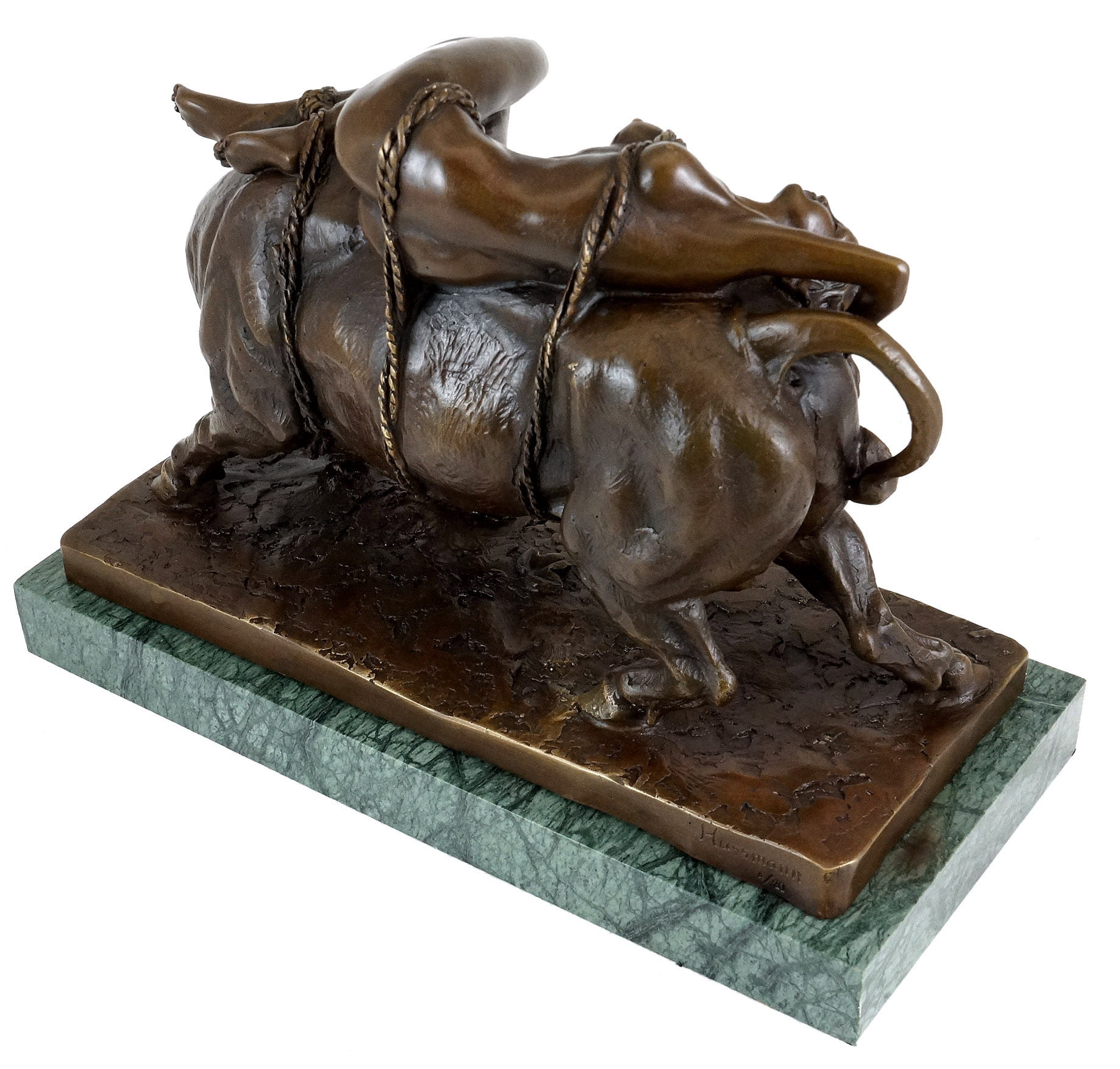
The sculptural group emphasizes the flowing movement of Europa’s body, which contrasts vividly with the tense forward thrust of the bull as it charges across the textured base. Her hair tumbles downward in meticulously carved strands, reinforcing the sense that she is caught between terror and ecstasy in this moment of abduction. Details such as the taut ropes, the bending of the bull’s legs and the expressive tilt of Europa’s head give this Europa and the Bull Statue a narrative richness that rewards close observation. The surface alternates between smooth expanses of skin and the rugged textures of hide, heightening the tactile contrasts that make the composition so compelling. The entire ensemble radiates an emotional intensity characteristic of The Abduction of Europa, merging mythical grandeur with the immediacy of human feeling.
The mythological symbolism behind the dramatic pose
Within Europa Greek Mythology, the abduction by Zeus in the form of a bull symbolizes both seduction and the birth of cultural identity, themes clearly reflected in the sculptural arrangement. The decision to place Europa’s body arching across the bull suggests both an offering and a moment of transition, a threshold between her former life and the destiny awaiting her. The grounded stance of the bull, its head turned downward and muscles flexed, evokes the unstoppable momentum of divine intervention. As an expressive Europa and the Bull Sculpture, the scene embodies not only physical transport but also spiritual displacement, a journey in which Europa becomes a foundational figure of an entire continent’s mythic heritage. This layered symbolism makes the bronze especially resonant for collectors interested in classical narratives.
Material presence and ideal placement in contemporary interiors
Cast in a warm, nuanced patina, the bronze carries a timeless weight that lends dignity and emotional depth to various display environments. On a stone pedestal or a solid wooden console, the figure commands immediate attention, its dramatic lines interacting beautifully with natural or directional lighting. Because The Abduction of Europa is rendered with such strong horizontals and diagonals, the sculpture benefits from placement where viewers can move around it and observe the shifting play of shadow across the bull’s powerful frame. In modern interiors, especially those with muted tones or classical elements, the work functions as a striking centerpiece that provokes contemplation and conversation. Whether integrated into private collections or displayed in refined public spaces, this Europa and the Bull Statue elevates its surroundings with its mythic energy.
Where important examples of Europa bronzes can be seen
Significant interpretations of Europa Greek Mythology appear in several European museums, including institutions in Berlin, Hamburg and Vienna, where mythological bronzes by renowned sculptors continue to attract scholarly interest. Hussmann’s own works, including related variations on The Abduction of Europa, are preserved in collections dedicated to German sculpture of the late nineteenth and early twentieth centuries. These settings provide valuable context for understanding how the motif evolved and why the image of Europa and the bull continues to fascinate contemporary audiences. The interplay of myth, motion and material has ensured that every Europa and the Bull Sculpture maintains a revered position within the broader landscape of figurative bronze art. For enthusiasts, the ability to compare different interpretations across institutions enriches the appreciation of this limited edition even further.
Albert Hinrich Hussmann and his sculptural language
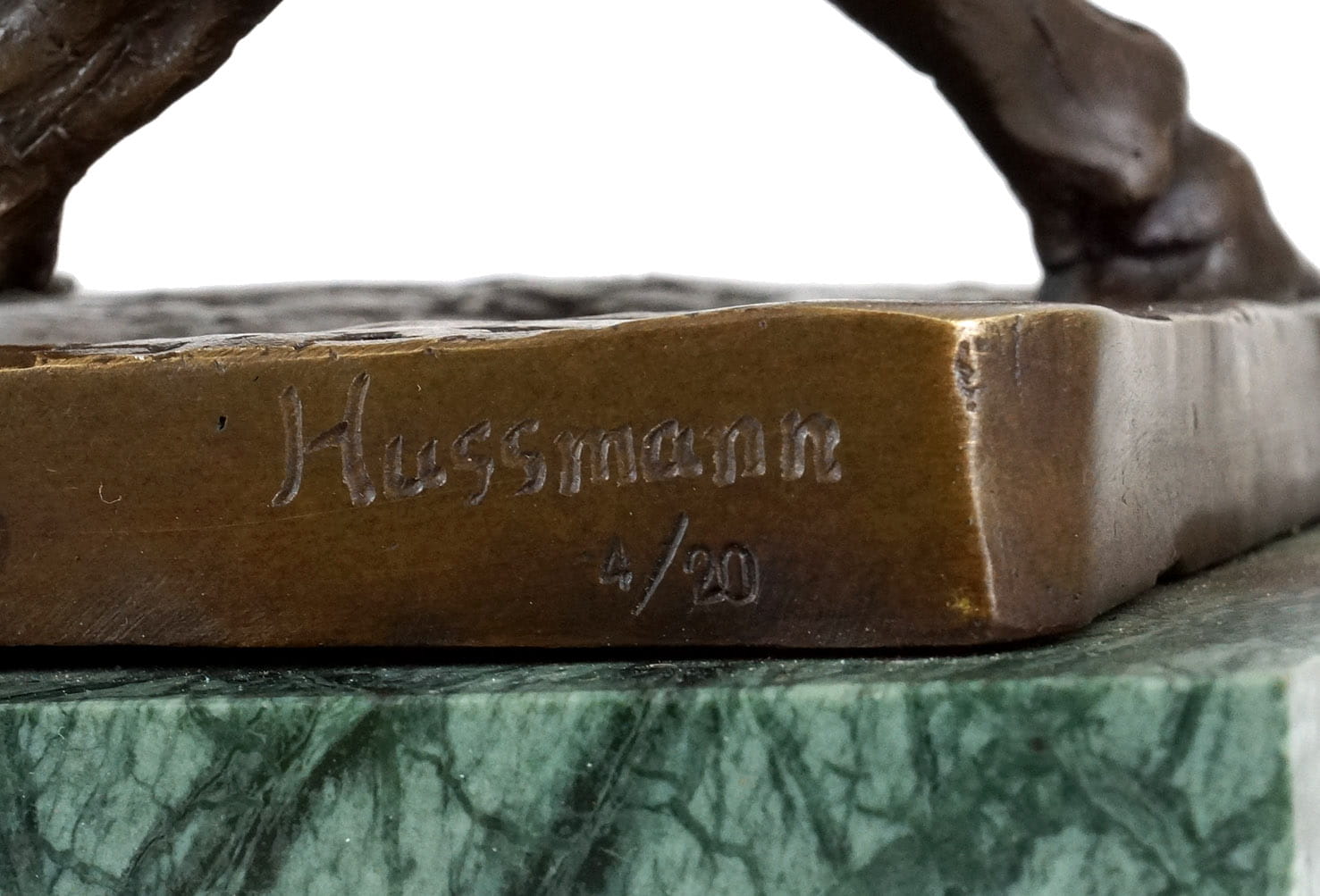
Albert Hinrich Hussmann, born on 3 March 1874 in Lüdingworth near Cuxhaven, grew up in a family deeply connected to rural northern Germany, a setting that would shape his sensitivity to expressive, grounded forms. After early encouragement in drawing and modeling, he pursued formal study at the Akademie der Künste in Berlin, where he refined his command of anatomy, movement and emotional expression. Hussmann became well known for his equestrian sculptures, mythological themes and dynamic representations of human and animal synergy, qualities that resonate strongly in this portrayal of The Abduction of Europa. His career included numerous exhibitions and commissions, and despite the political upheavals of his time, he remained committed to a sculptural language rooted in clarity, motion and psychological depth. He died in Fürstenberg on 15 November 1946, leaving behind a body of work that continues to shape discussions of German figurative sculpture.
The enduring expressive strength of the composition
This limited edition of twenty exemplifies the technical mastery and narrative sensitivity that define exceptional bronze sculpture. The expressive motion of the bull paired with the fluid vulnerability of Europa creates a scene that feels alive even in complete stillness, inviting viewers to engage with every detail from multiple angles. The bronze’s balanced proportions allow it to integrate seamlessly into a refined interior, where it becomes not only a decorative element but also a contemplative object that encourages deep reflection. Collectors value such a Europa and the Bull Sculpture for its ability to communicate myth, motion and emotion with equal force. The work remains profoundly affecting in its silent evocation of a transformative moment.
This limited-edition bronze captures the dramatic tension and sensual dynamism inherent in The Abduction of Europa, one of the most enduring narratives within Europa Greek Mythology. The figure of Europa is shown draped over the powerful body of the bull, her limbs extended in a gesture that reveals both surrender and astonished resistance. The muscular build of the animal, rendered with deep anatomical precision, amplifies the raw force of the moment and reinforces the symbolic nature of the metamorphosed Zeus. As a Europa and the Bull Sculpture, this work conveys the interplay between divinity and mortal vulnerability, exploring the boundary between desire, fate and transformation. The piece establishes a compelling dialogue between mythic storytelling and sculptural realism, making it a remarkable contribution to the tradition of European bronze craftsmanship.
A composition shaped by tension and sensual detail
The sculptural group emphasizes the flowing movement of Europa’s body, which contrasts vividly with the tense forward thrust of the bull as it charges across the textured base. Her hair tumbles downward in meticulously carved strands, reinforcing the sense that she is caught between terror and ecstasy in this moment of abduction. Details such as the taut ropes, the bending of the bull’s legs and the expressive tilt of Europa’s head give this Europa and the Bull Statue a narrative richness that rewards close observation. The surface alternates between smooth expanses of skin and the rugged textures of hide, heightening the tactile contrasts that make the composition so compelling. The entire ensemble radiates an emotional intensity characteristic of The Abduction of Europa, merging mythical grandeur with the immediacy of human feeling.
The mythological symbolism behind the dramatic pose
Within Europa Greek Mythology, the abduction by Zeus in the form of a bull symbolizes both seduction and the birth of cultural identity, themes clearly reflected in the sculptural arrangement. The decision to place Europa’s body arching across the bull suggests both an offering and a moment of transition, a threshold between her former life and the destiny awaiting her. The grounded stance of the bull, its head turned downward and muscles flexed, evokes the unstoppable momentum of divine intervention. As an expressive Europa and the Bull Sculpture, the scene embodies not only physical transport but also spiritual displacement, a journey in which Europa becomes a foundational figure of an entire continent’s mythic heritage. This layered symbolism makes the bronze especially resonant for collectors interested in classical narratives.
Material presence and ideal placement in contemporary interiors
Cast in a warm, nuanced patina, the bronze carries a timeless weight that lends dignity and emotional depth to various display environments. On a stone pedestal or a solid wooden console, the figure commands immediate attention, its dramatic lines interacting beautifully with natural or directional lighting. Because The Abduction of Europa is rendered with such strong horizontals and diagonals, the sculpture benefits from placement where viewers can move around it and observe the shifting play of shadow across the bull’s powerful frame. In modern interiors, especially those with muted tones or classical elements, the work functions as a striking centerpiece that provokes contemplation and conversation. Whether integrated into private collections or displayed in refined public spaces, this Europa and the Bull Statue elevates its surroundings with its mythic energy.
Where important examples of Europa bronzes can be seen
Significant interpretations of Europa Greek Mythology appear in several European museums, including institutions in Berlin, Hamburg and Vienna, where mythological bronzes by renowned sculptors continue to attract scholarly interest. Hussmann’s own works, including related variations on The Abduction of Europa, are preserved in collections dedicated to German sculpture of the late nineteenth and early twentieth centuries. These settings provide valuable context for understanding how the motif evolved and why the image of Europa and the bull continues to fascinate contemporary audiences. The interplay of myth, motion and material has ensured that every Europa and the Bull Sculpture maintains a revered position within the broader landscape of figurative bronze art. For enthusiasts, the ability to compare different interpretations across institutions enriches the appreciation of this limited edition even further.
Albert Hinrich Hussmann and his sculptural language
Albert Hinrich Hussmann, born on 3 March 1874 in Lüdingworth near Cuxhaven, grew up in a family deeply connected to rural northern Germany, a setting that would shape his sensitivity to expressive, grounded forms. After early encouragement in drawing and modeling, he pursued formal study at the Akademie der Künste in Berlin, where he refined his command of anatomy, movement and emotional expression. Hussmann became well known for his equestrian sculptures, mythological themes and dynamic representations of human and animal synergy, qualities that resonate strongly in this portrayal of The Abduction of Europa. His career included numerous exhibitions and commissions, and despite the political upheavals of his time, he remained committed to a sculptural language rooted in clarity, motion and psychological depth. He died in Fürstenberg on 15 November 1946, leaving behind a body of work that continues to shape discussions of German figurative sculpture.
The enduring expressive strength of the composition
This limited edition of twenty exemplifies the technical mastery and narrative sensitivity that define exceptional bronze sculpture. The expressive motion of the bull paired with the fluid vulnerability of Europa creates a scene that feels alive even in complete stillness, inviting viewers to engage with every detail from multiple angles. The bronze’s balanced proportions allow it to integrate seamlessly into a refined interior, where it becomes not only a decorative element but also a contemplative object that encourages deep reflection. Collectors value such a Europa and the Bull Sculpture for its ability to communicate myth, motion and emotion with equal force. The work remains profoundly affecting in its silent evocation of a transformative moment.
Height: 23 cm
Width: 32 cm
Depth: 14 cm
Weight: 8,7 kg
100% bronze
Related links to "Europa and the Bull Sculpture - Bronze Statue"
Read, write and discuss reviews... more
Customer evaluation for "Europa and the Bull Sculpture - Bronze Statue"
Write an evaluation
Evaluations will be activated after verification.
Our advantages
free shipping
Worldwide free shipping
14 days money back
You can cancel your order
within 14 days
secure payment services
Paypal, Master Card, Visa, American Express and more
NEW
NEW
NEW
NEW
NEW
NEW
NEW
NEW
NEW