Prices incl. VAT, free shipping worldwide
Ready to ship today,
Delivery time appr. 3-6 workdays

Product description
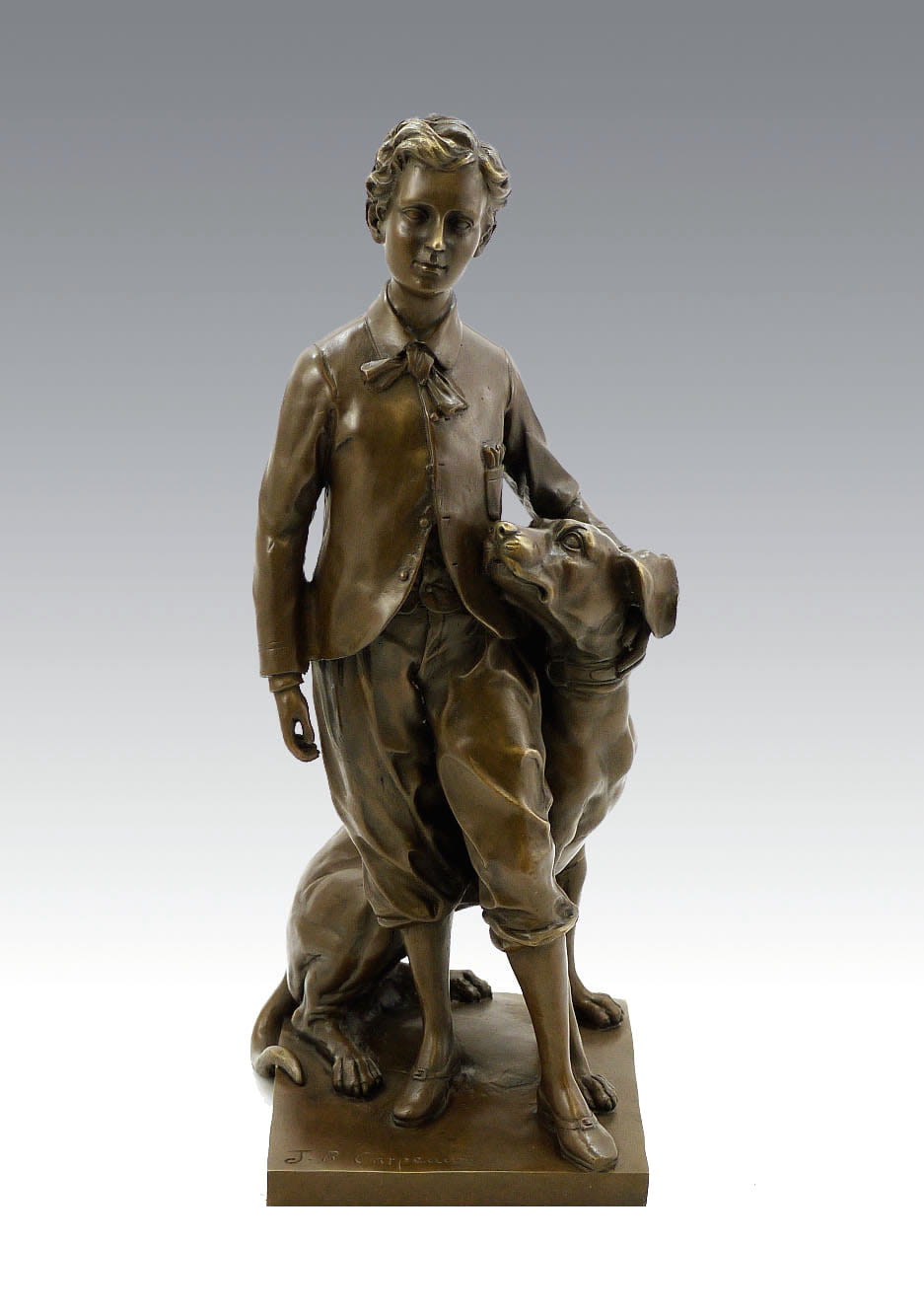
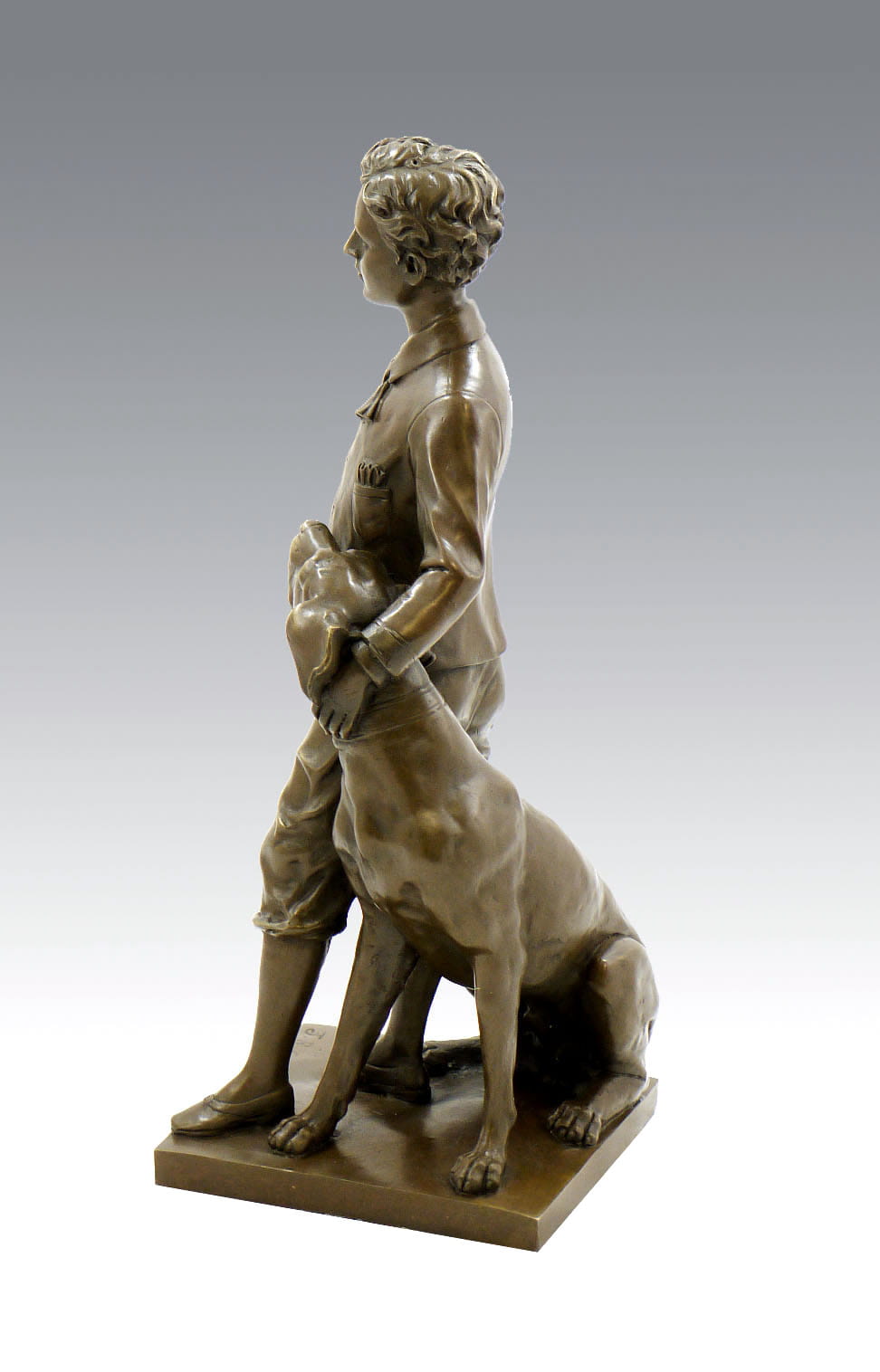
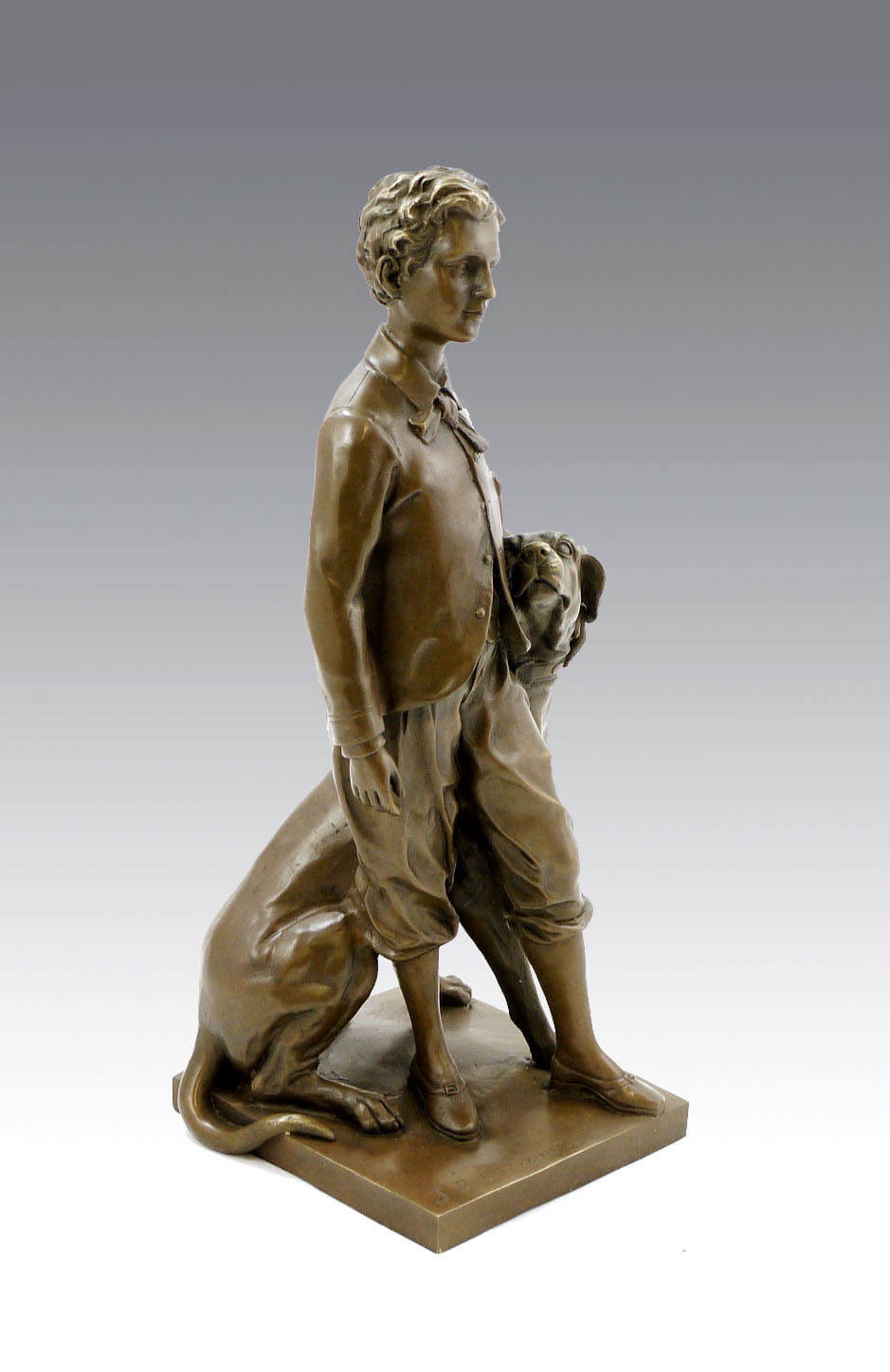
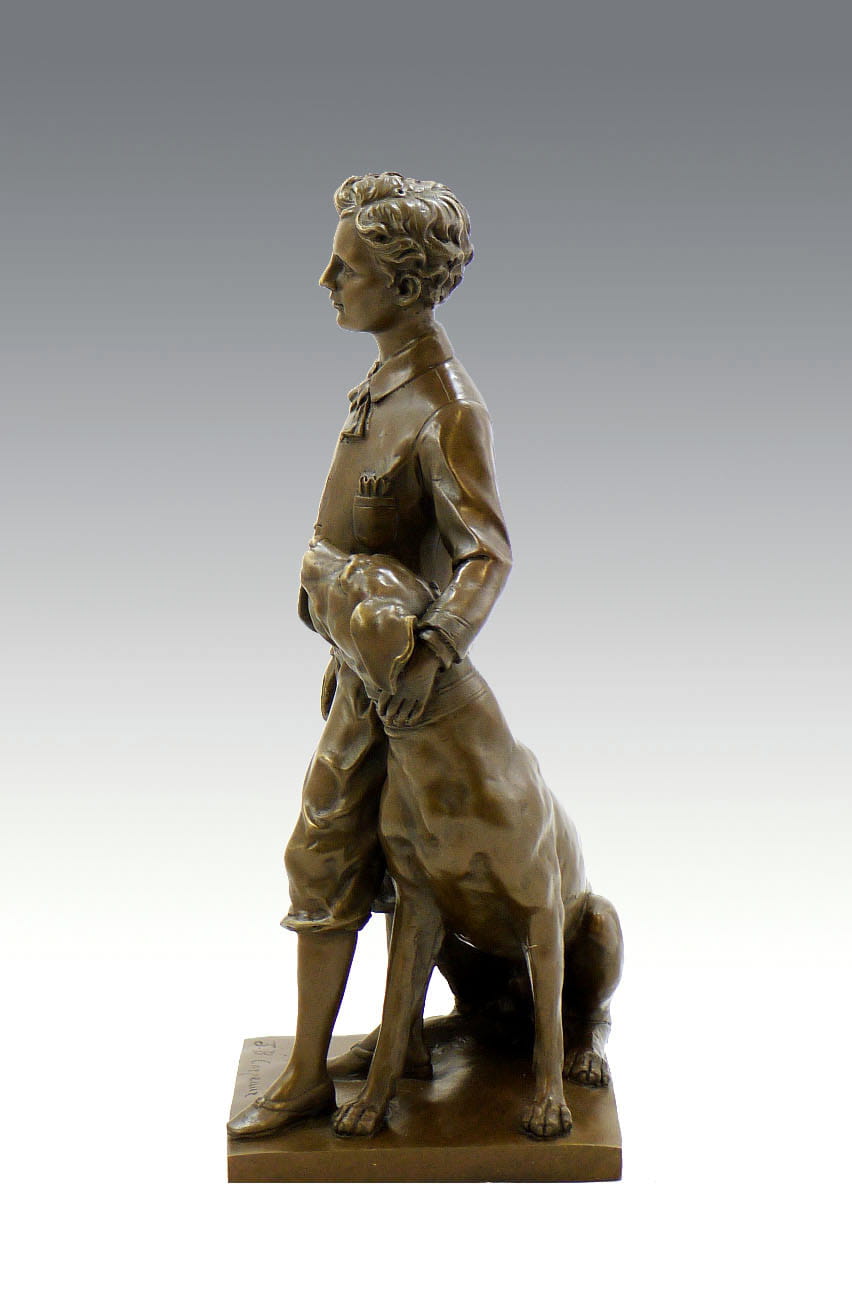
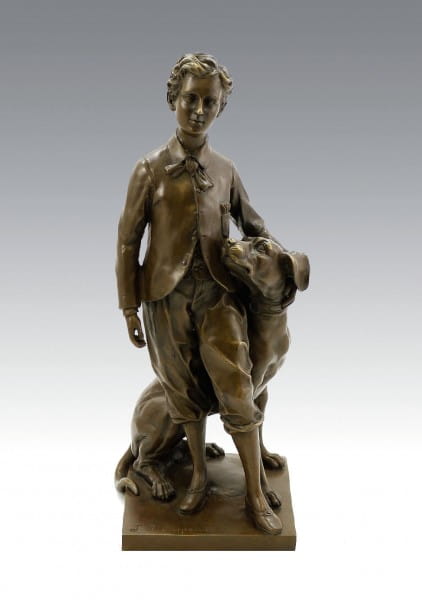
"Bronze Sculpture - The Prince Impérial with His Dog Néro"
| Weight | 3,8 kg |
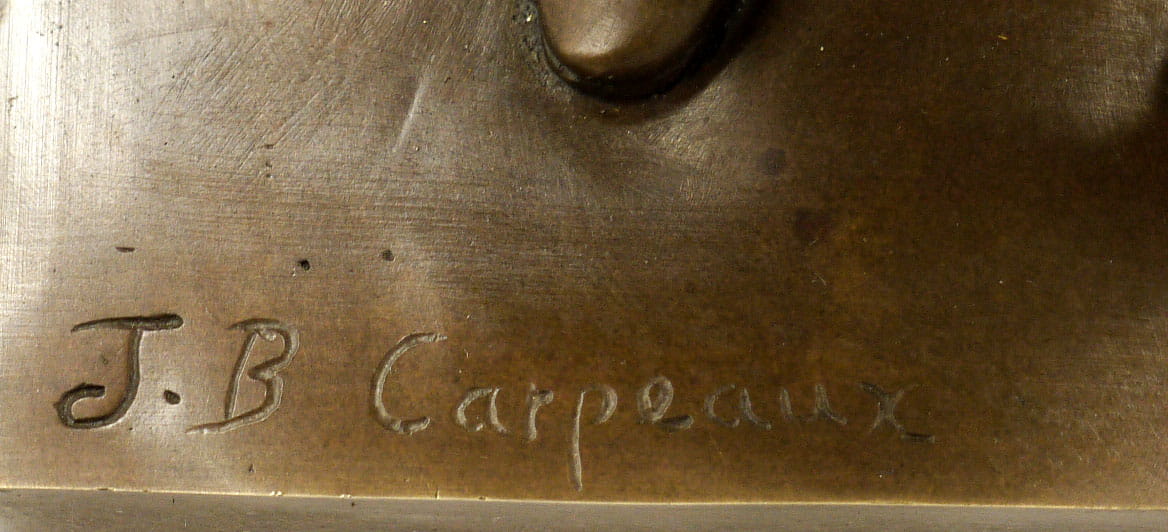
The Prince Impérial with His Dog Néro – Bronze Sculpture – Signed Jean-Baptiste Carpeaux
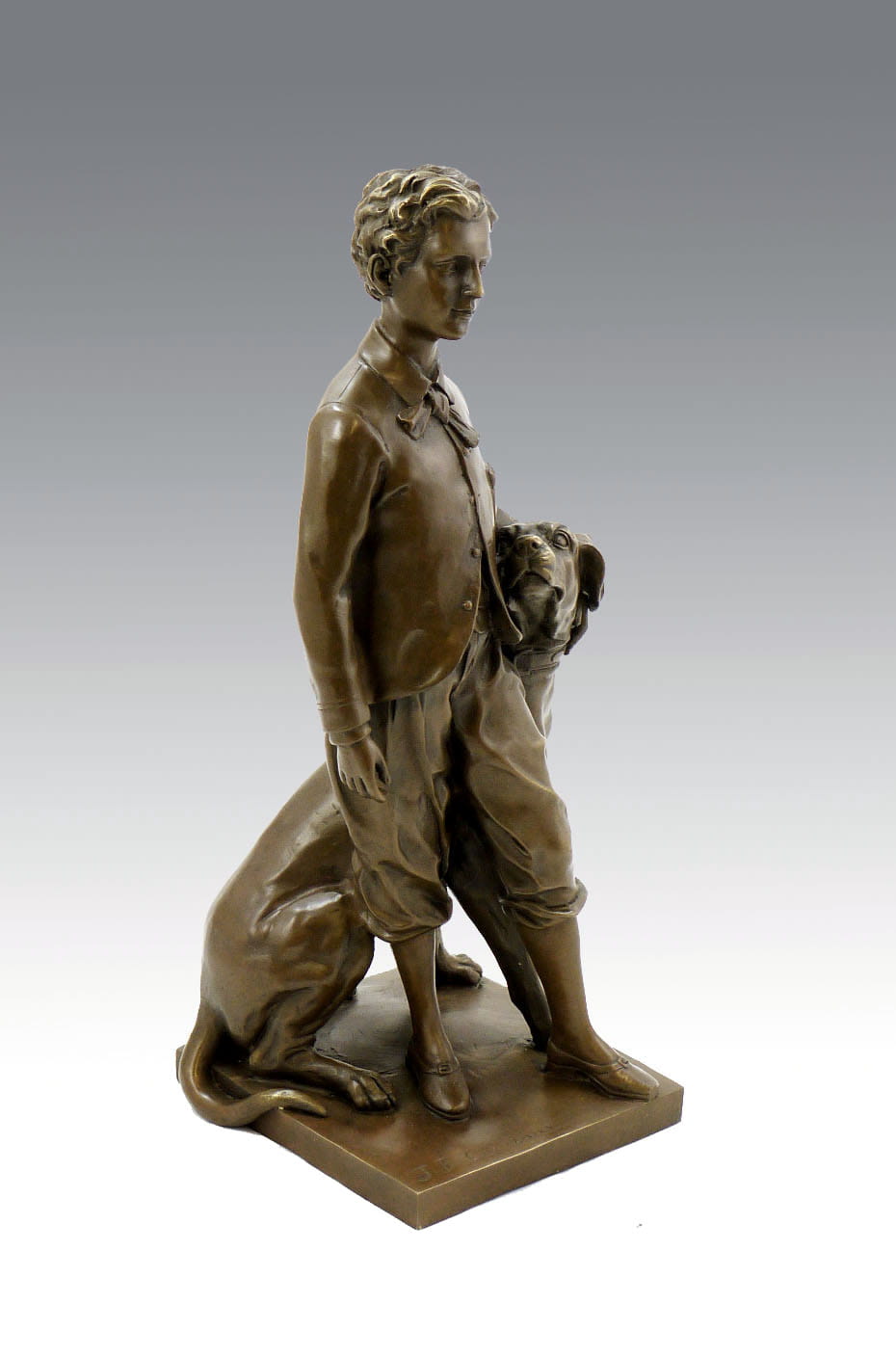
The bronze sculpture The Prince Impérial with His Dog Néro presents an intimate and remarkably natural portrayal of childhood, loyalty, and quiet authority. The young prince stands in a relaxed yet self-possessed posture, his body slightly turned as if pausing mid-step. At his side, the dog Néro presses close, gazing upward with unmistakable devotion and trust. The interaction between boy and animal forms the emotional core of the composition, transforming a formal portrait into a living moment. The figure avoids stiffness or ceremonial distance, instead conveying warmth, youth, and personal connection. This balance between dignity and intimacy defines the sculpture’s enduring appeal.
A Portrait of Youth and Presence
Carpeaux captures the Prince Impérial not as a distant symbol of power, but as a thoughtful child on the threshold of maturity. The relaxed tilt of the head and the soft modeling of the face suggest introspection rather than command. His clothing is rendered with careful attention, from the gently creased trousers to the fitted jacket, grounding the figure in contemporary reality. The stance is natural, with weight shifted subtly onto one leg, creating a sense of movement and immediacy. This informality was revolutionary in portrait sculpture of the time. It allows the viewer to encounter the prince as a human presence rather than a dynastic emblem.
The Dog as Emotional Counterpart
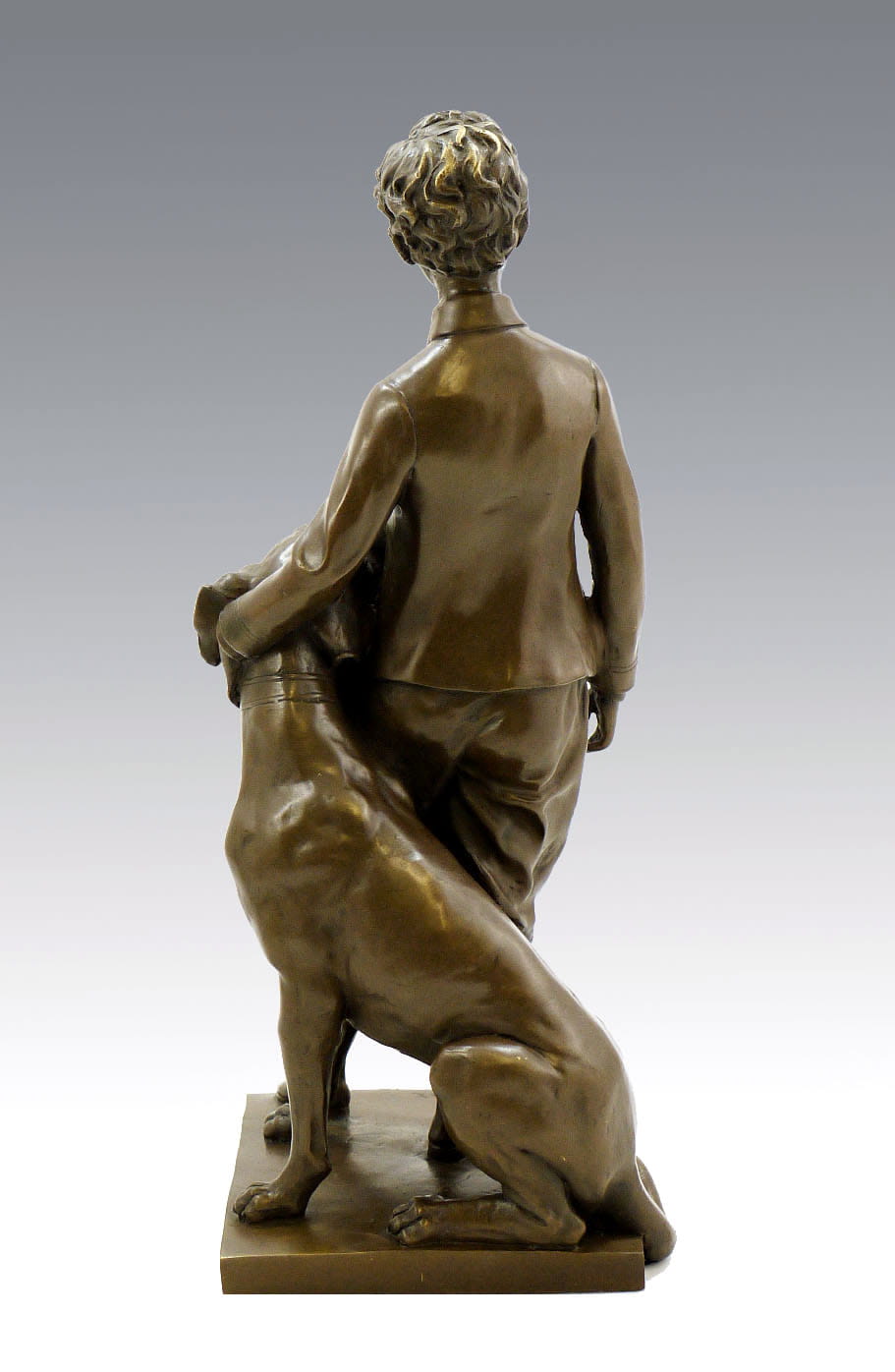
Néro is not a secondary accessory but an equal participant in the composition. The dog’s upward gaze establishes a strong emotional axis between the two figures. Its body presses protectively against the prince’s leg, reinforcing themes of loyalty and companionship. Carpeaux models the animal with anatomical precision while preserving softness and warmth in the form. The dog’s posture conveys attentiveness without tension, suggesting trust rather than obedience. This relationship elevates the sculpture beyond portraiture into a study of human–animal connection.
Modeling, Surface, and Bronze Character
The bronze surface displays a refined balance between smooth passages and subtly worked textures. Light moves gently across the youthful face and hands, while deeper tonal variations settle into folds of clothing and the dog’s musculature. This interplay enhances depth without distracting from form. Carpeaux’s modeling avoids rigid finish, allowing traces of the sculptor’s hand to remain visible. These nuances contribute to the sculpture’s sense of vitality. The material becomes a medium for presence rather than polish.
Historical Context and Creation
Created in 1865, Le Prince impérial et son chien Néro was an immediate success upon its presentation and quickly captured public attention. The sculpture depicts the nine-year-old Prince Louis-Napoléon Bonaparte accompanied by his beloved dog Néro, presenting the heir not as a formal symbol but as a living child. Carpeaux conceived the work explicitly as a portrait, emphasizing personality, youth, and private intimacy over ceremonial representation. Due to its popularity, the subject was also realized in several portrait variations and poses, exploring different nuances of posture and interaction. The sculpture resonated strongly with contemporary audiences for its realism and emotional accessibility. It reflects a decisive moment in which portrait sculpture moved toward observed life and psychological presence.
Placement and Interior Harmony
This sculpture is ideally displayed where close viewing is encouraged, such as on a console table, pedestal, or within a library or study. Positioned at eye level, the exchange between the prince and the dog becomes especially engaging. The vertical format allows it to stand confidently without dominating a room. Neutral surroundings enhance the subtle interplay of posture and expression. The work integrates naturally into both historic and contemporary interiors. Its presence introduces narrative and warmth rather than formality.
Museum Presence and Legacy
Versions of this sculpture are preserved in major museum collections, including institutions in Paris and other European cities. These examples continue to be admired for their psychological depth and technical mastery. Museums value the work as a key example of nineteenth-century portrait sculpture that bridges tradition and modern sensibility. Collectors continue to seek bronze casts for their historical significance and emotional resonance. The sculpture remains widely recognized as one of Carpeaux’s most human and approachable works. Its continued visibility underscores its lasting importance.
Jean-Baptiste Carpeaux
Jean-Baptiste Carpeaux was born on May 11, 1827, in Valenciennes, France, into a modest family. He studied at the École nationale supérieure des beaux-arts de Paris, where he developed a strong foundation in classical sculpture while cultivating a personal expressive style. Carpeaux became known for his ability to infuse academic forms with movement, emotion, and realism. His career was marked by both public monuments and intimate portrait works. Despite his early death on October 12, 1875, in Courbevoie, his influence on modern sculpture was profound. He is remembered for bringing life, character, and humanity into bronze.
Width: 14 cm
Height: 35 cm
Depth: 14 cm
Weight: 3,8 kg
100% Bronze
Our advantages
free shipping
Worldwide free shipping
14 days money back
You can cancel your order
within 14 days
secure payment services
Paypal, Master Card, Visa, American Express and more