Prices incl. VAT, free shipping worldwide
Ready to ship today,
Delivery time appr. 3-6 workdays

Product description
"Vienna Bronze - Carpet Bronze - Bedouin Art"
| Height | 18 cm |
| Width | 36 cm |
| Length | 18 cm |
| Weight | 6 kg |
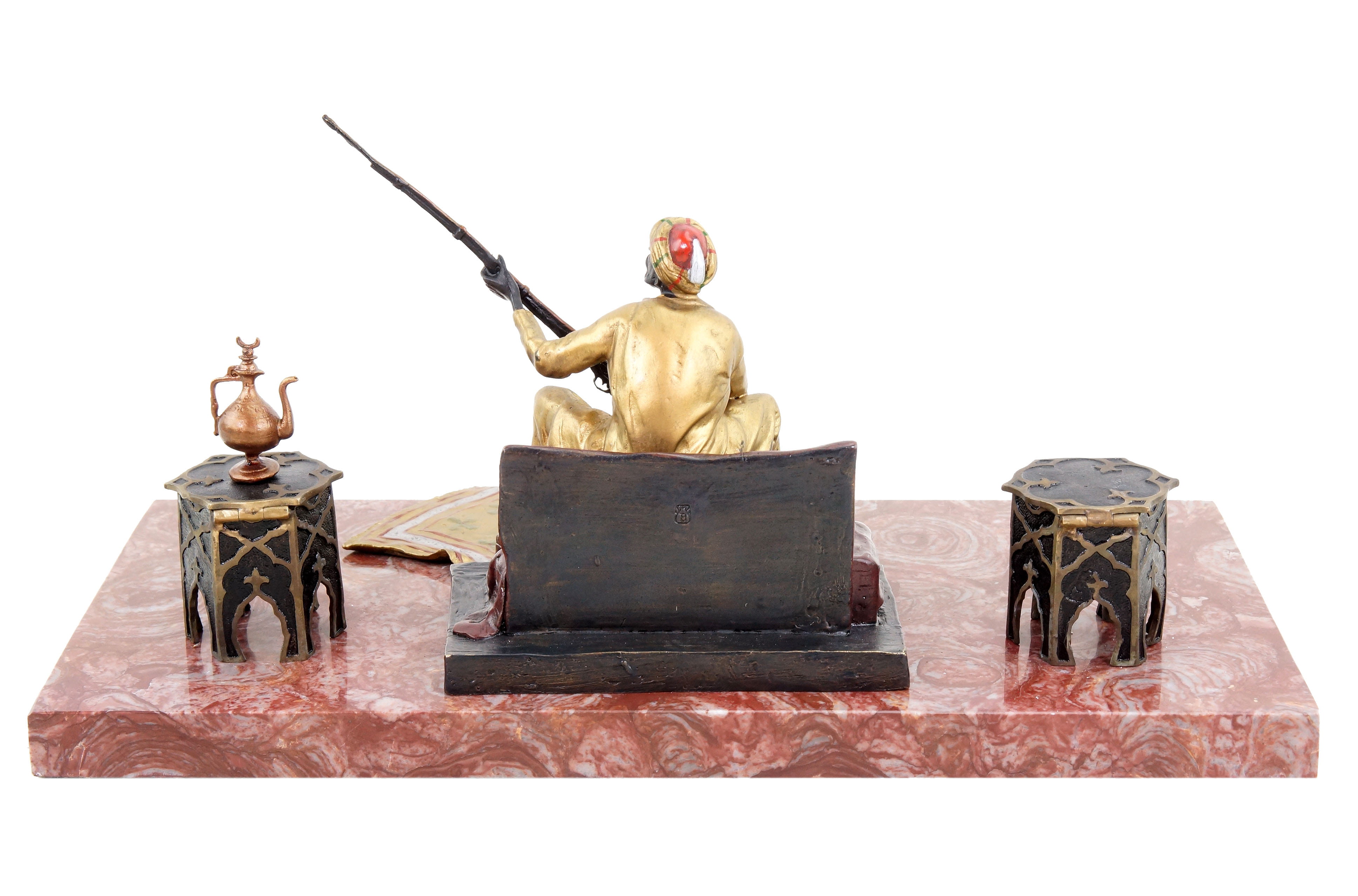
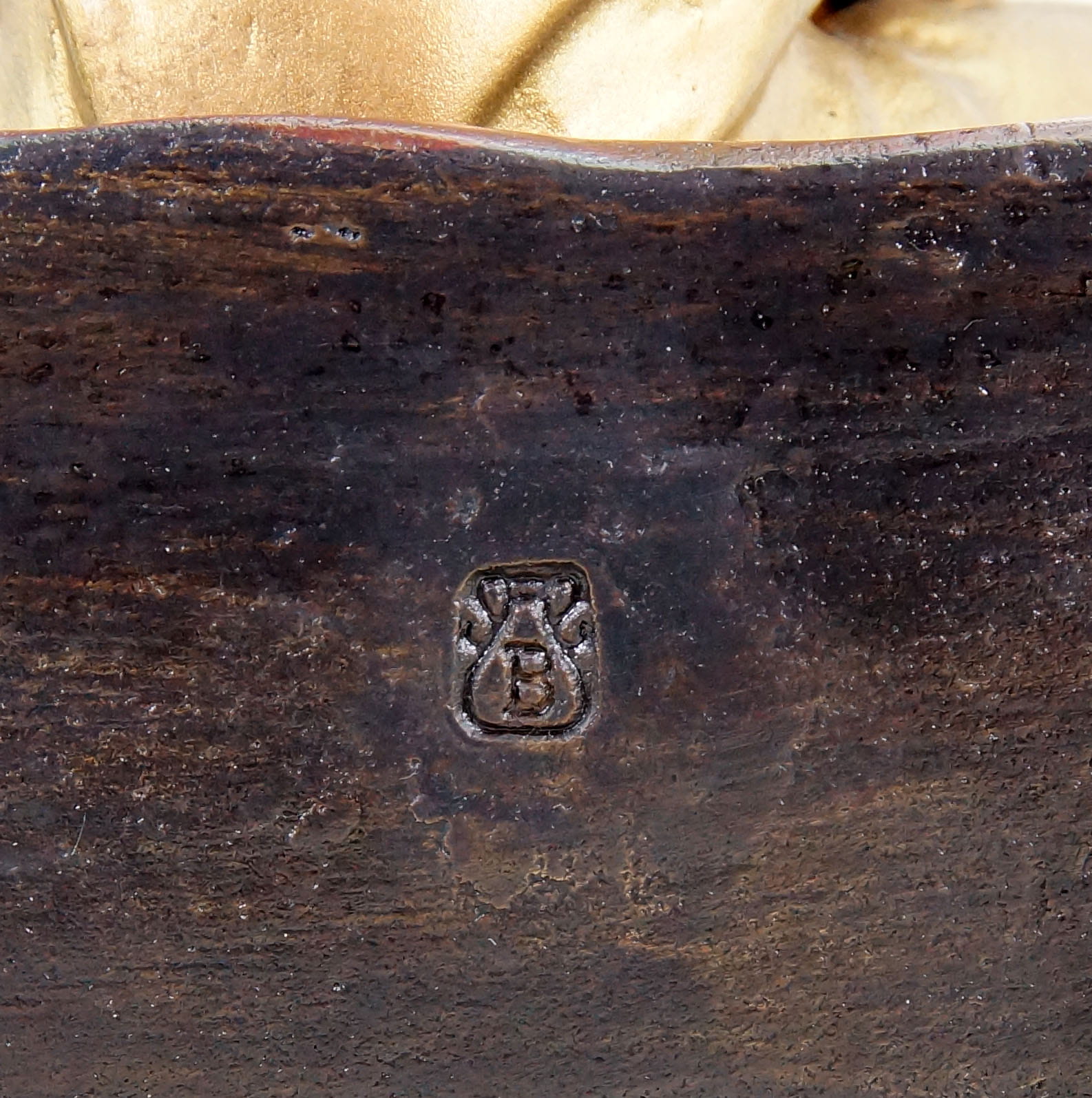
Viennese Bronze Arab Figurine - Carpet Bronze - Bergmann Stamp
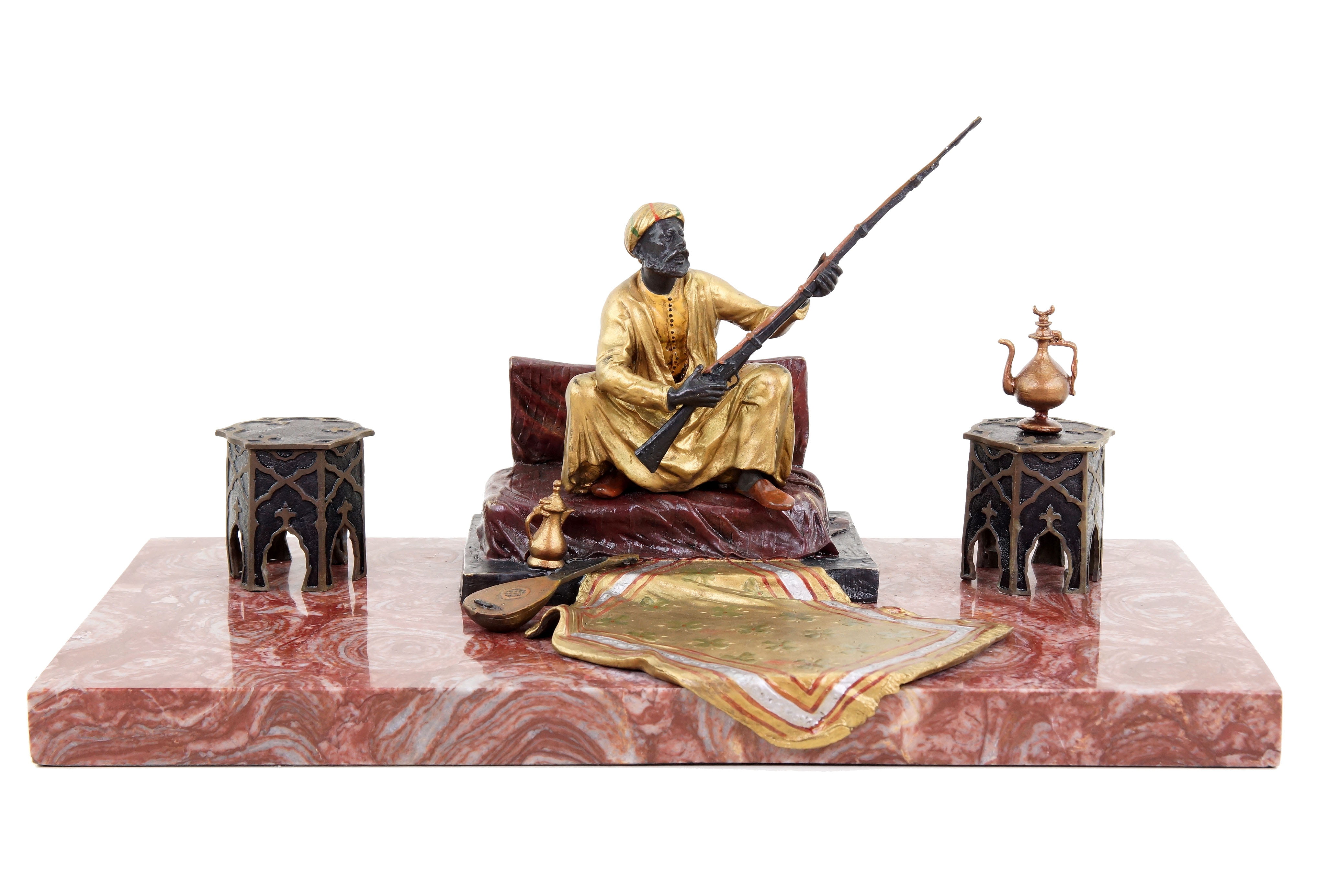
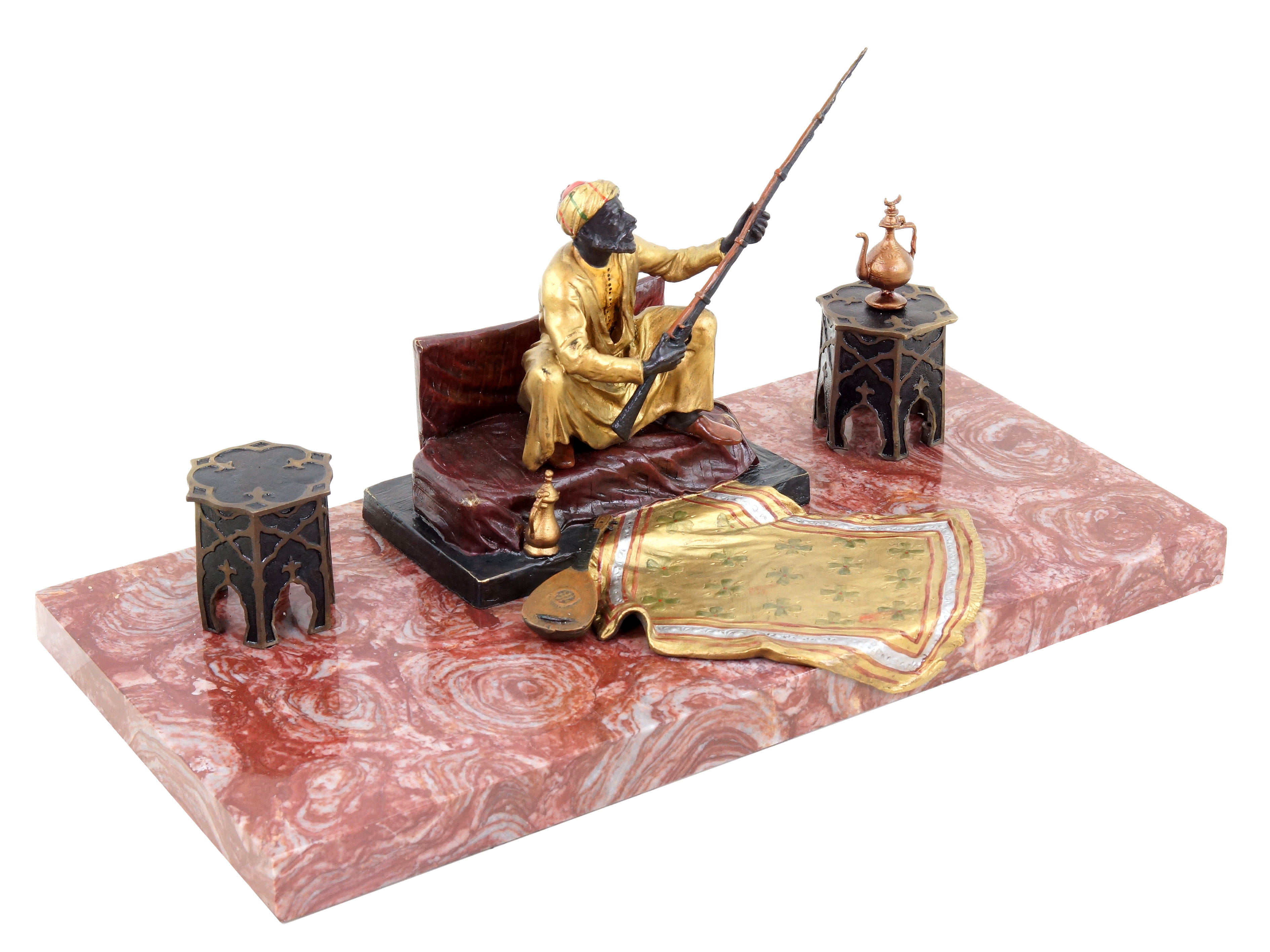
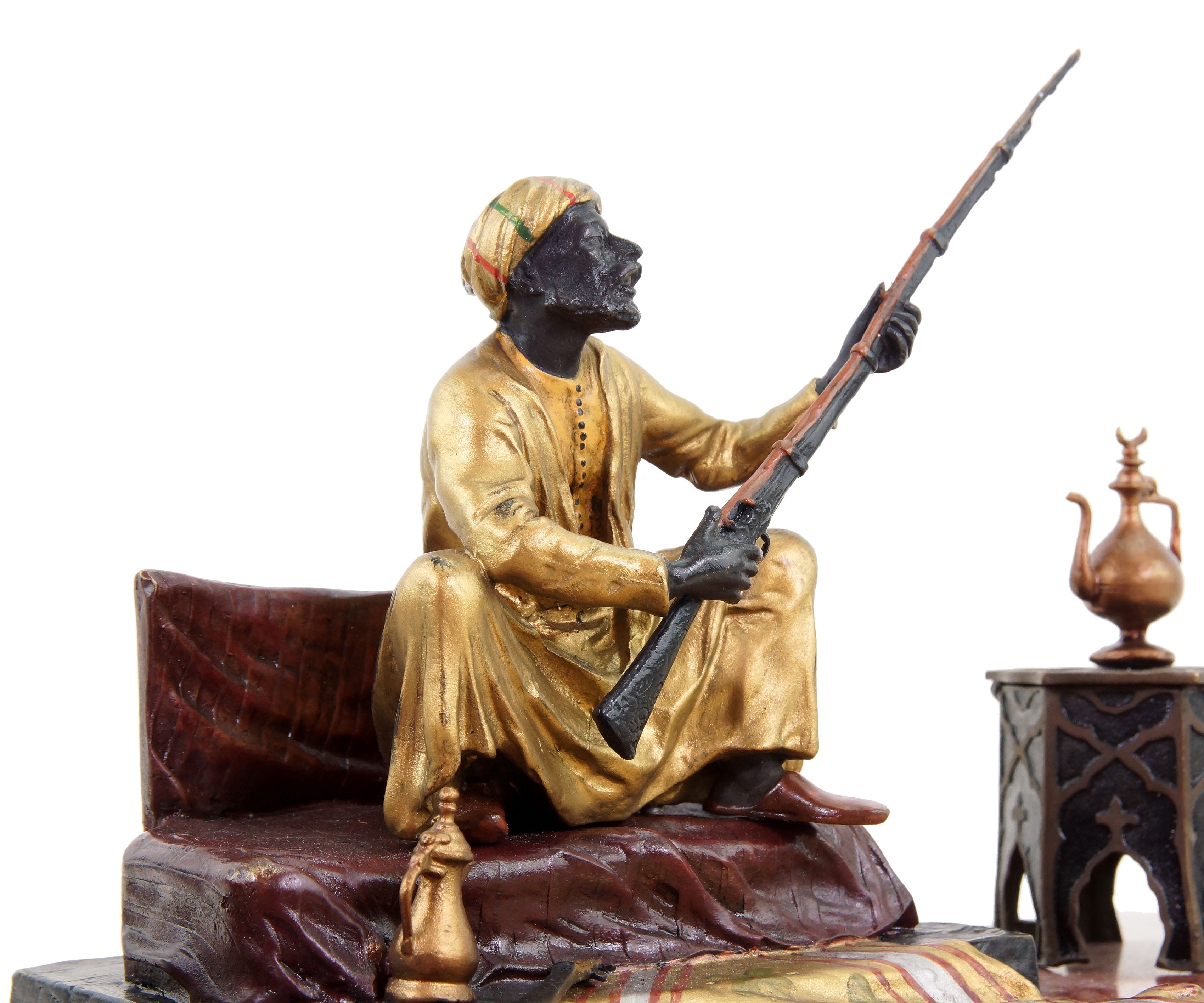
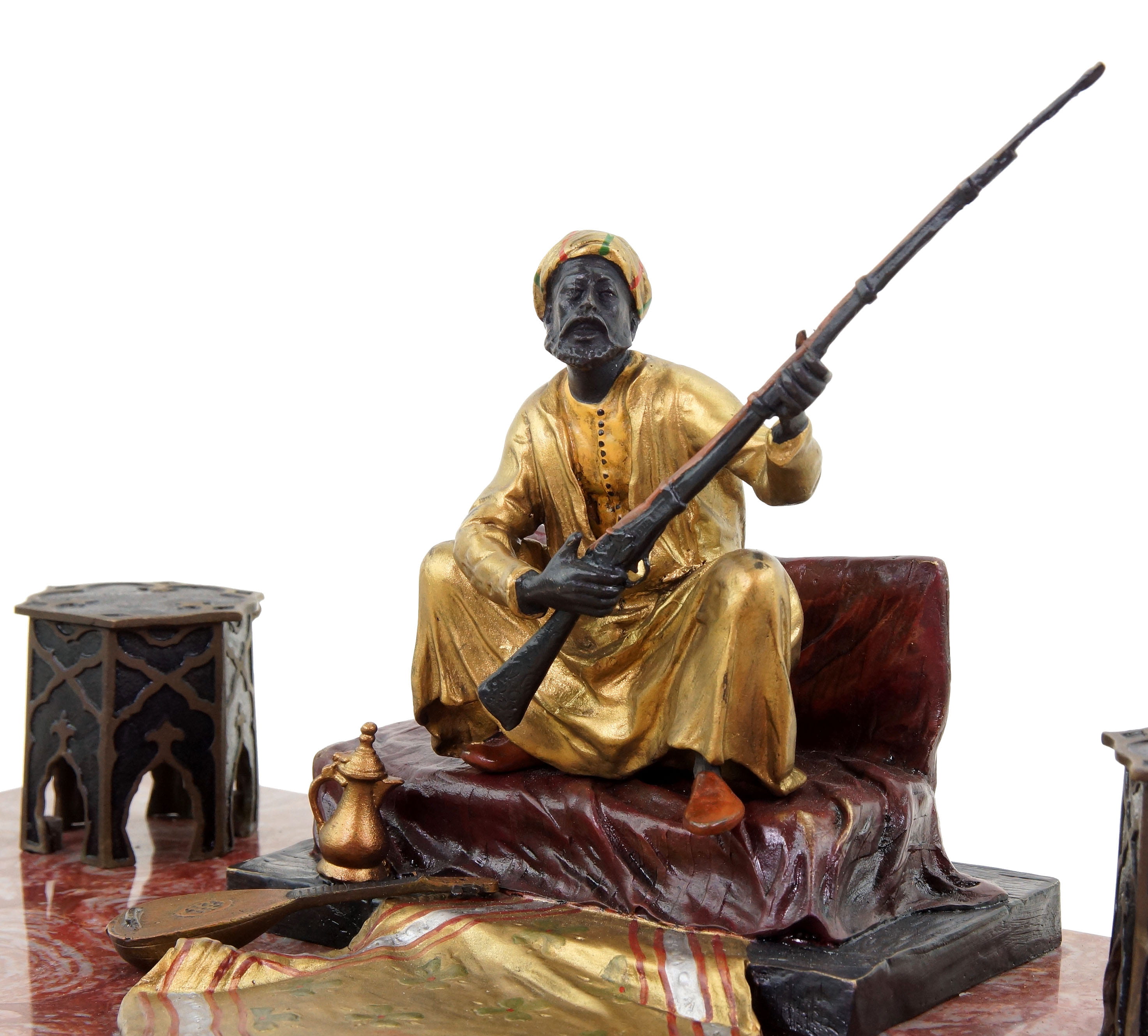
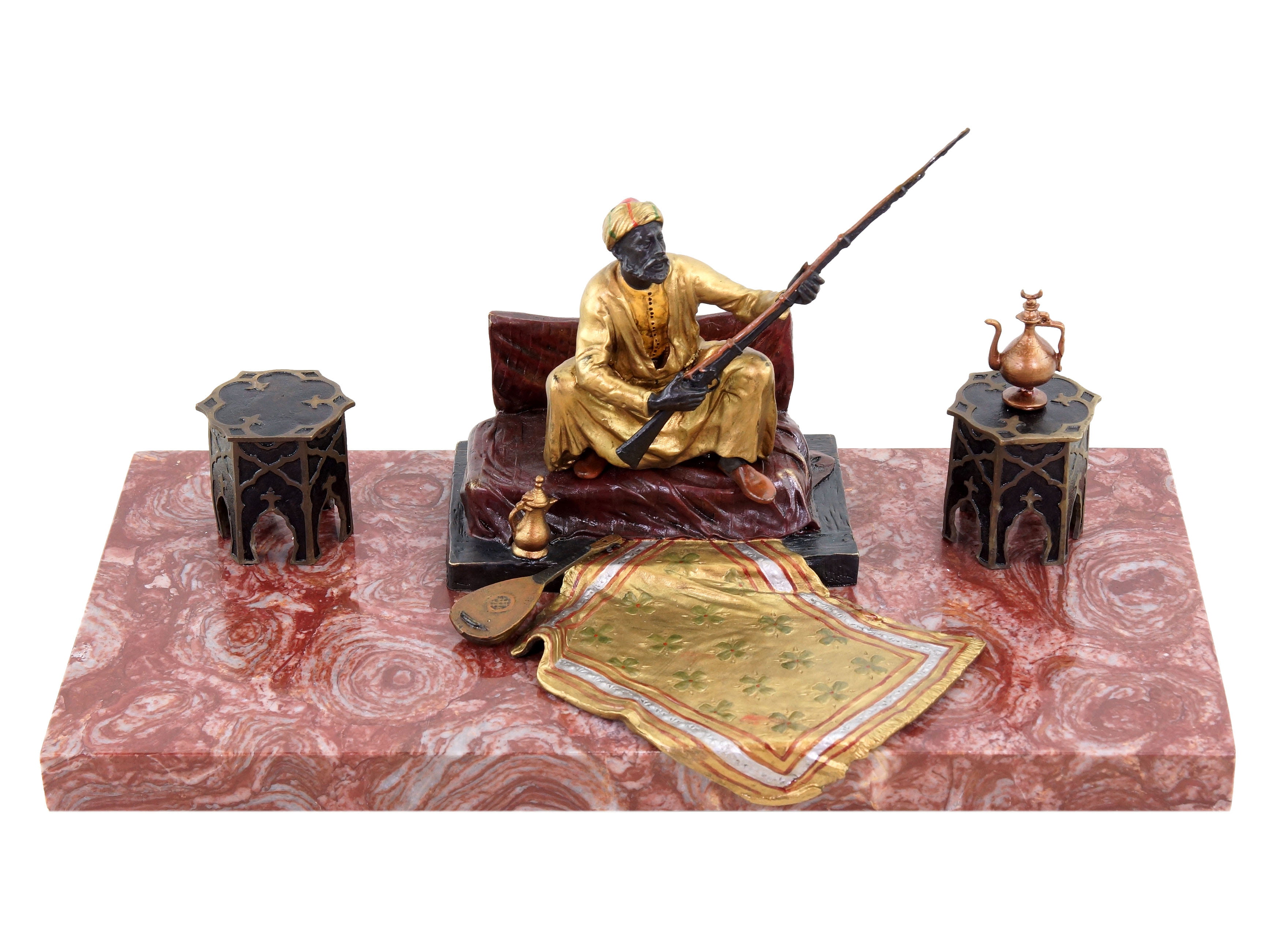
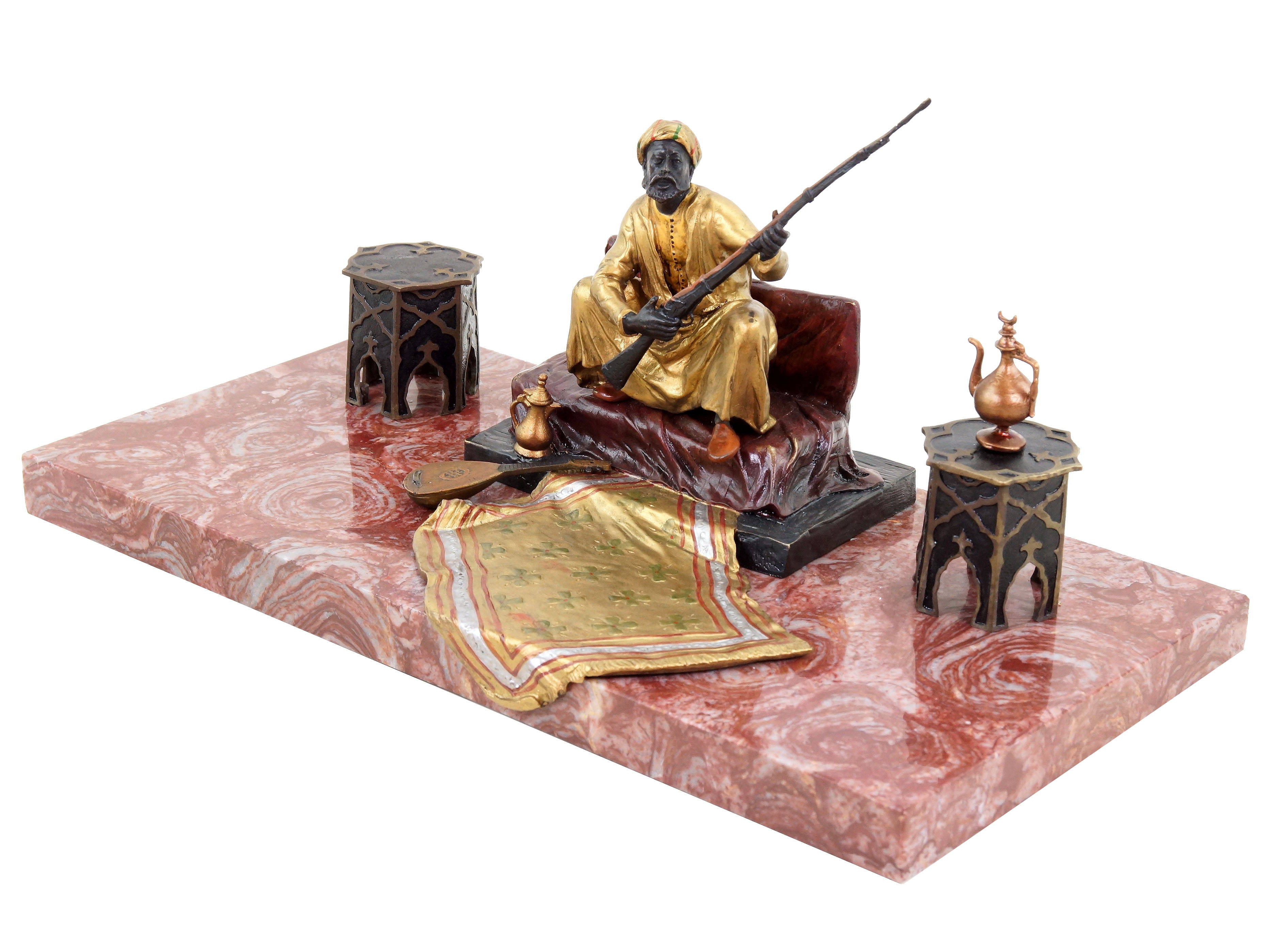
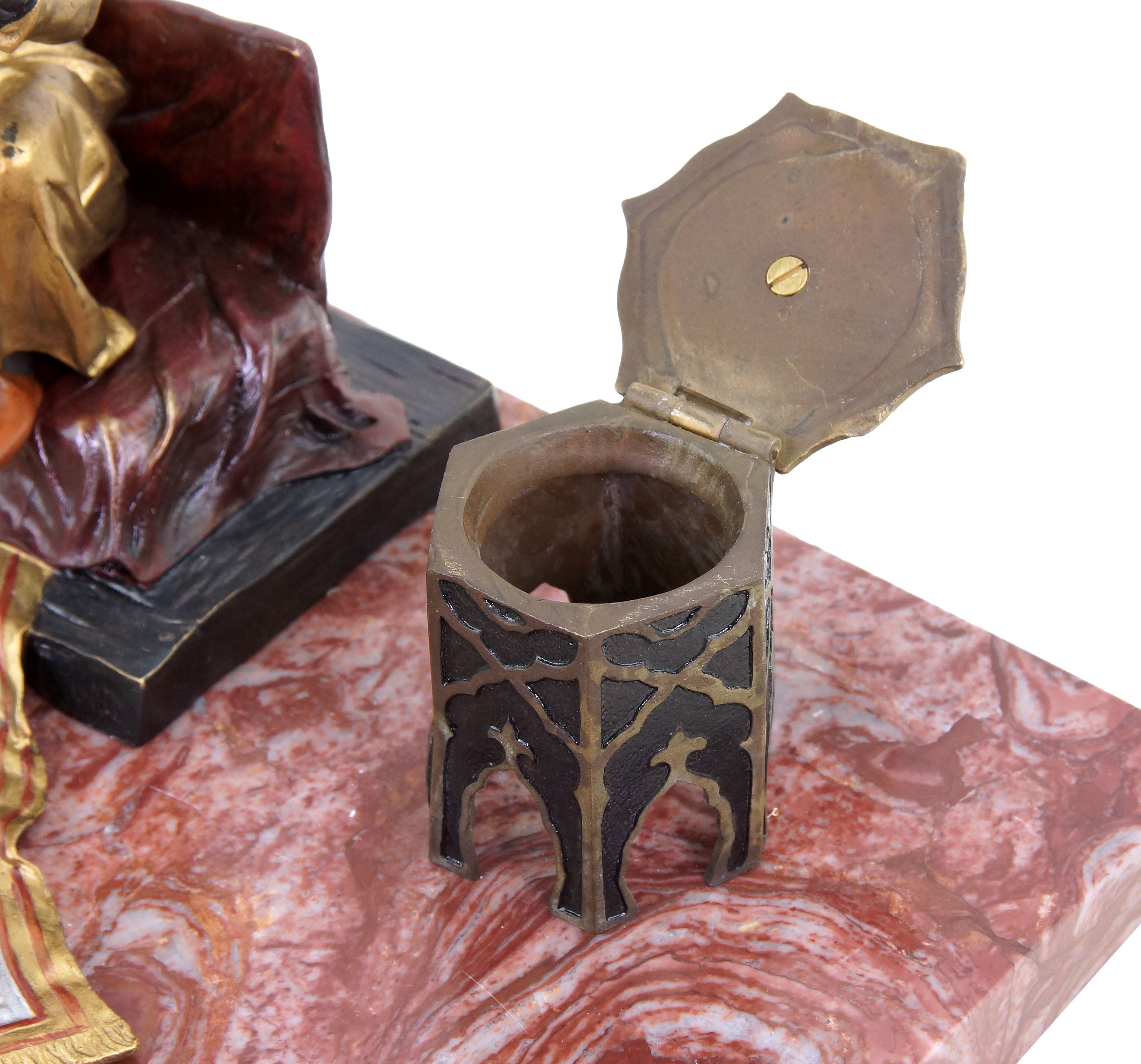
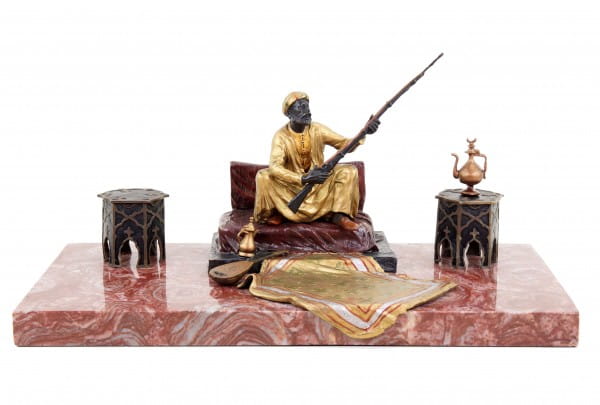
This exceptional Viennese bronze captures an Arab figure seated in calm concentration, holding a long rifle with measured confidence. The posture is relaxed yet alert, suggesting vigilance rather than rest, and the composition draws the viewer into a world defined by patience and control. Every element is carefully balanced, from the grounded pose to the gentle turn of the head, creating a scene that feels intimate and contemplative. As a Vienna Bronze, the sculpture exemplifies precision and narrative density within a compact format. The figure appears neither posed nor theatrical, but naturally embedded in his surroundings. This restrained intensity gives the work its enduring presence.
Franz Xaver Bergmann and the World of Viennese Bronze
Franz Xaver Bergmann was born on 27 July 1861 in Vienna into a family closely connected to metalworking and decorative arts. He trained at the Vienna Academy of Fine Arts before establishing his own foundry, where he developed a distinctive style defined by meticulous detail and rich polychromy. Bergmann became one of the most influential figures in the tradition of Vienna Bronze, producing animals, allegories, and Orientalist scenes that achieved international acclaim. His workshop often concealed signatures beneath removable elements, making the Bergmann stamp a mark of authenticity. Family discipline, academic training, and entrepreneurial vision shaped his career. Today, his work stands as a benchmark of quality and imagination.
Polychromy and the Poetry of Surface
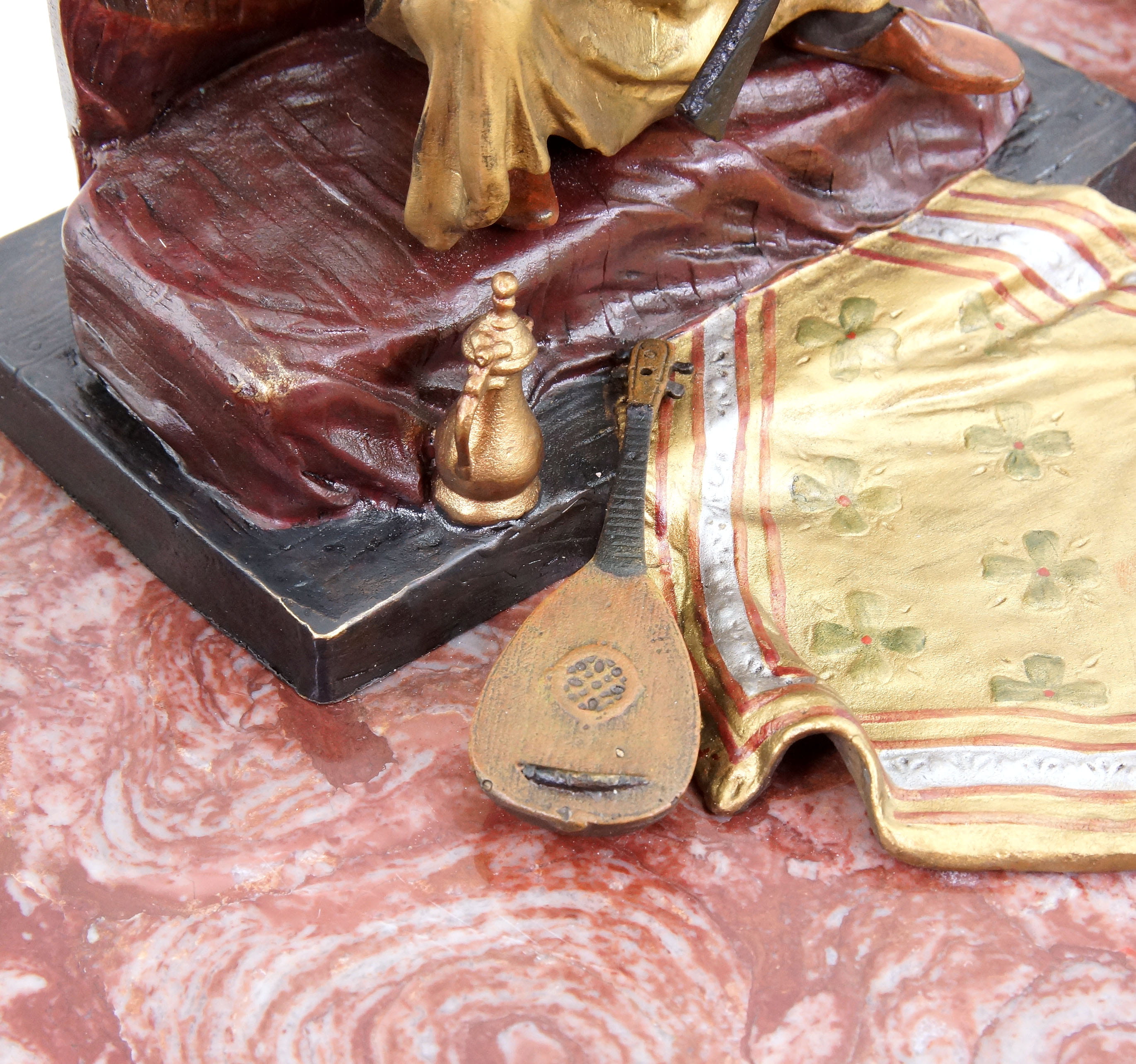
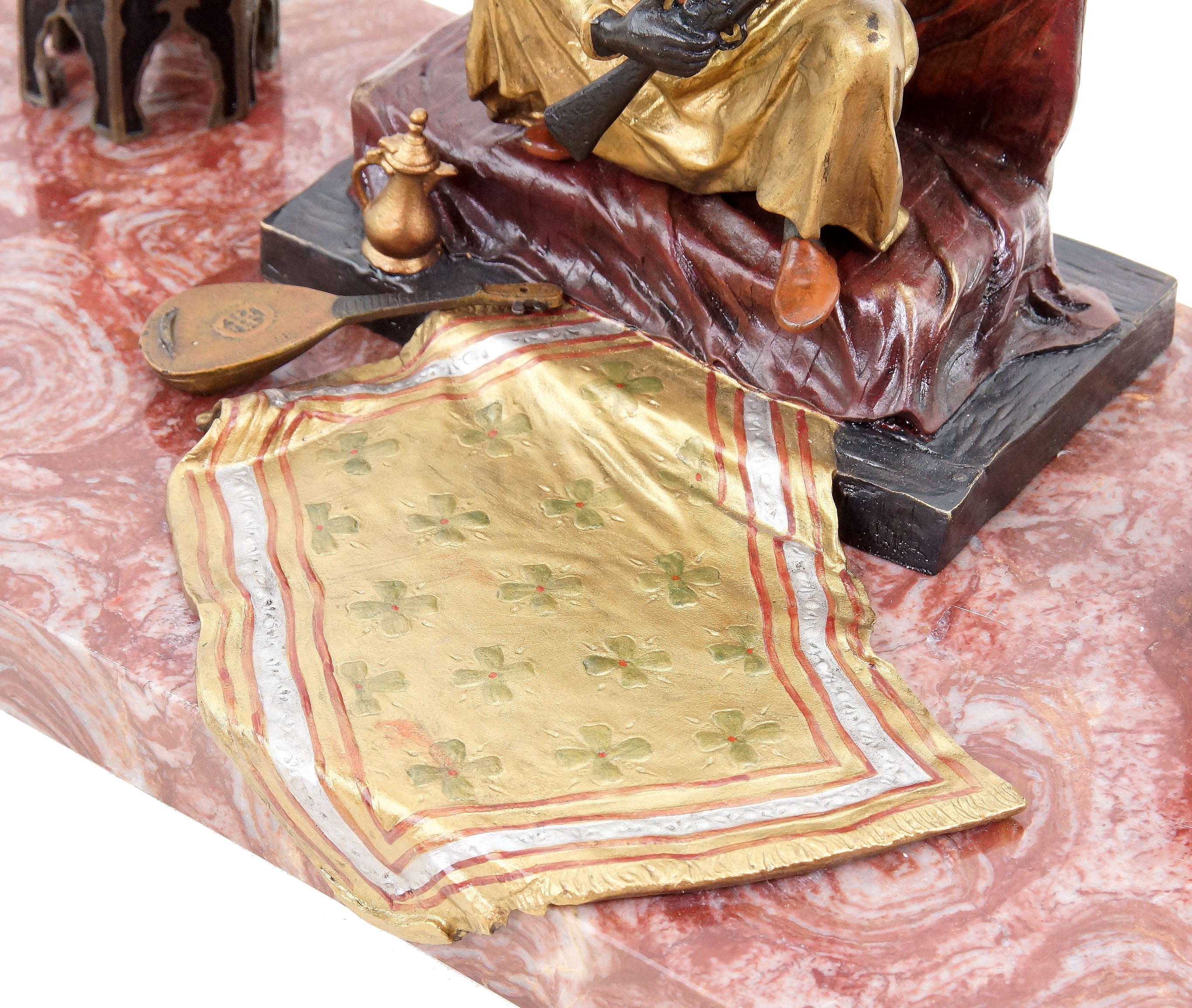
The finely applied coloration elevates this Vienna Bronze far beyond monochrome sculpture, transforming it into a miniature stage of texture and light. Rich gold tones of the robe contrast with darker skin and carefully defined facial features, while the patterned carpet beneath anchors the scene visually. This technique, often referred to as carpet bronze, is a hallmark of Franz Xaver Bergmann’s workshop and reflects the peak of technical mastery. The surfaces respond dynamically to light, revealing new details with every shift in perspective. Such refined polychromy also reinforces the narrative depth associated with Bedouin Art. The sculpture rewards slow viewing, revealing layers of craftsmanship over time.
Orientalist Imagery and Cultural Fantasy
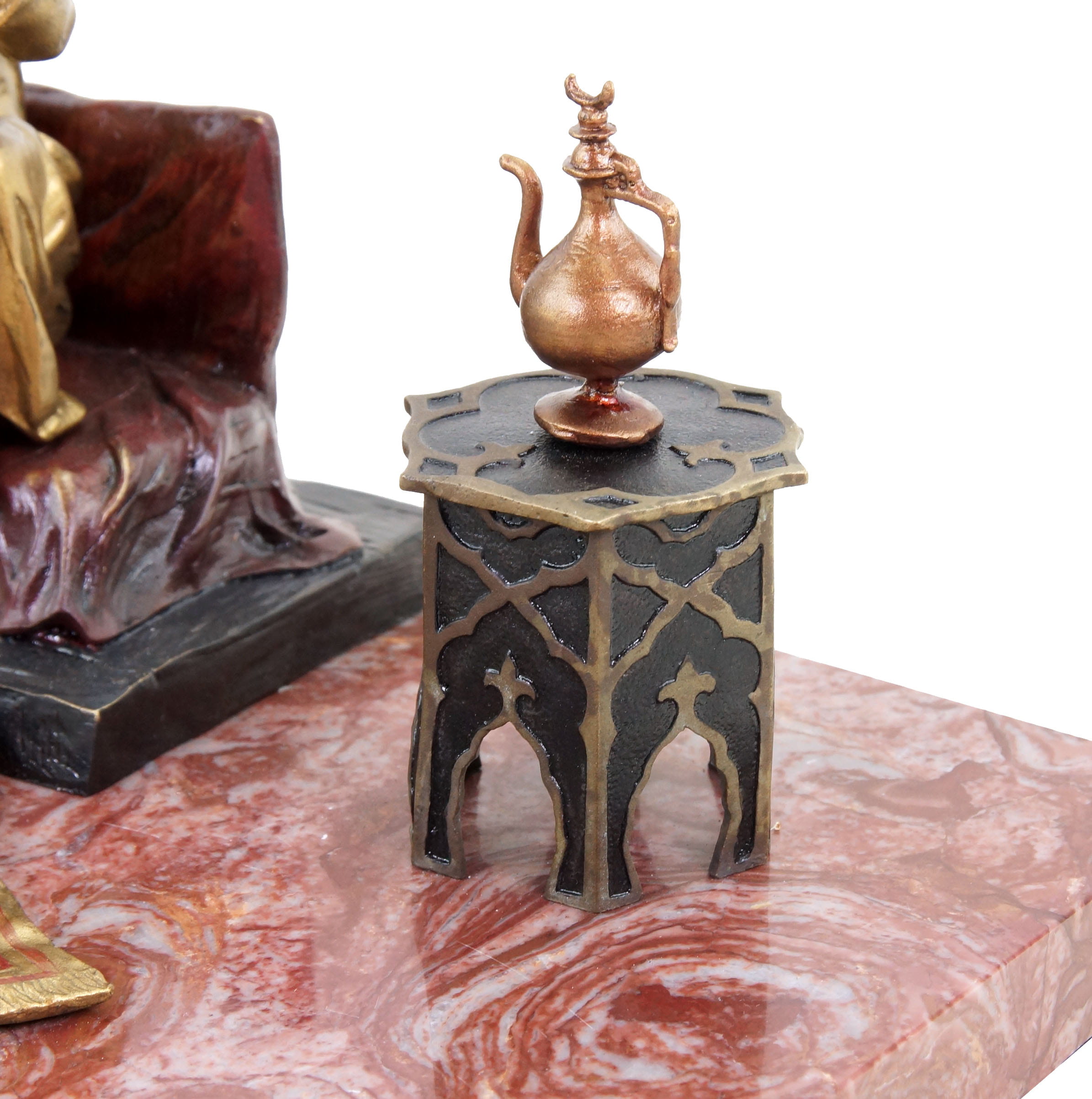
The subject belongs to a broader tradition of European fascination with imagined desert worlds, rendered here with elegance rather than exaggeration. This interpretation of Bedouin Art is less about exotic spectacle and more about atmosphere and mood. The seated figure, surrounded by everyday objects, suggests ritual, routine, and inner focus rather than action. Bergmann’s approach avoids caricature, instead offering a composed and dignified vision shaped by Western imagination. Within the context of Vienna Bronze, such scenes were prized for their storytelling quality and decorative richness. The sculpture functions as a visual narrative frozen in bronze.
Placement and Interior Dialogue
This Viennese bronze is ideally suited for display on a collector’s cabinet, sideboard, or curated shelf where its horizontal composition can unfold naturally. Placed at eye level, it invites close inspection, encouraging the viewer to explore details of costume, posture, and surface. In a study, library, or refined living space, it becomes a focal object that anchors its surroundings. The warm tones harmonize beautifully with wood, leather, and stone interiors, enhancing its decorative impact. As both Vienna Bronze and Bedouin Art, the piece bridges ornamental luxury and narrative sculpture. Its presence quietly transforms the atmosphere of a room.
Enduring Collectibility and Museum Presence
Comparable works by Bergmann are preserved in major collections in Vienna, Berlin, Paris, London, and New York, where Vienna Bronze is recognized as a distinct cultural phenomenon. Museums of decorative arts frequently display such figures to illustrate the technical brilliance and narrative appeal of late nineteenth and early twentieth-century bronze casting. Private collectors continue to prize these sculptures for their craftsmanship, condition, and storytelling power. This figure belongs to a lineage of objects created to delight, intrigue, and endure. Its quiet strength lies in balance rather than drama. Over time, it reveals itself as a companion piece that grows richer with familiarity.
Our advantages
free shipping
Worldwide free shipping
14 days money back
You can cancel your order
within 14 days
secure payment services
Paypal, Master Card, Visa, American Express and more