Prices incl. VAT, free shipping worldwide
Ready to ship today,
Delivery time appr. 3-6 workdays

Product description
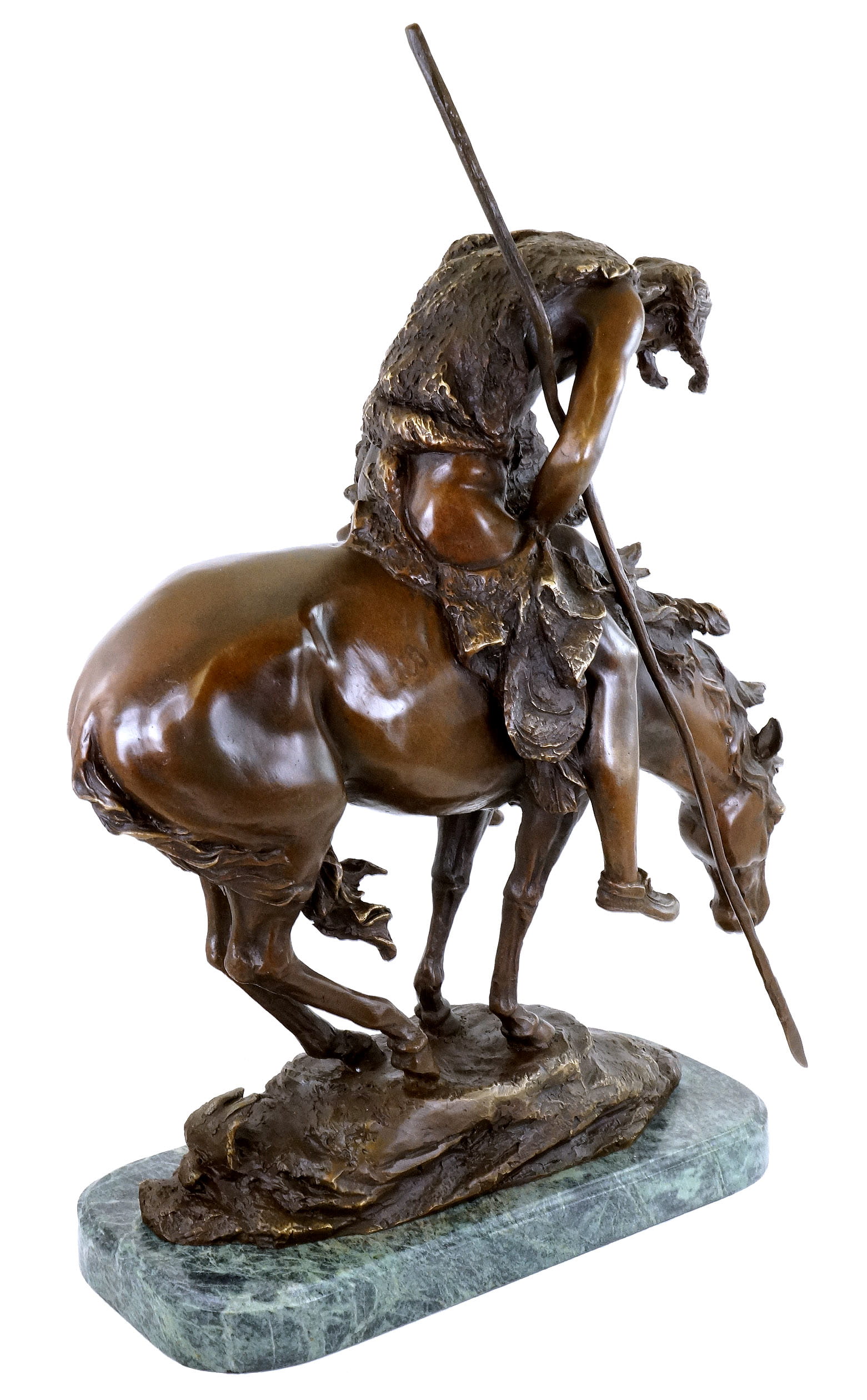
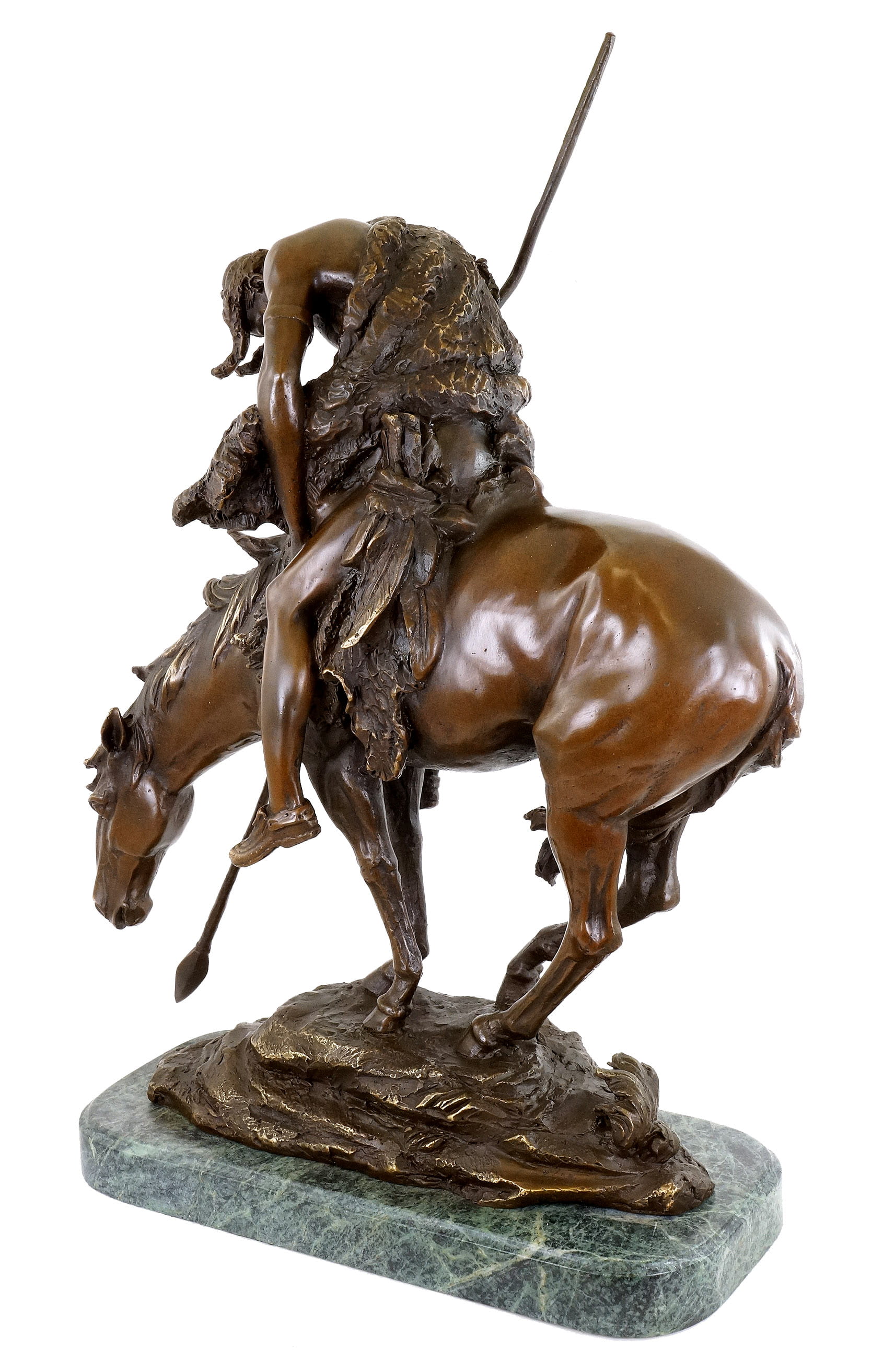
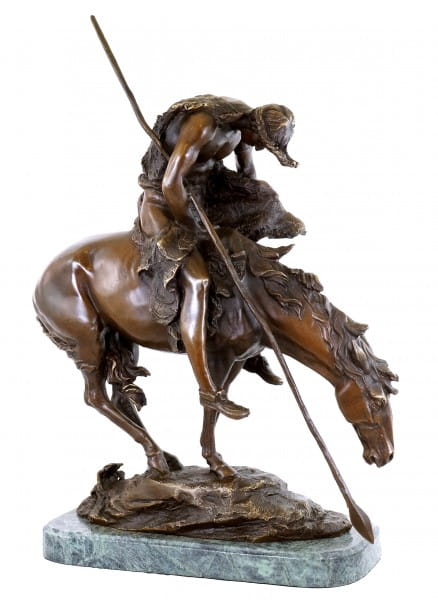
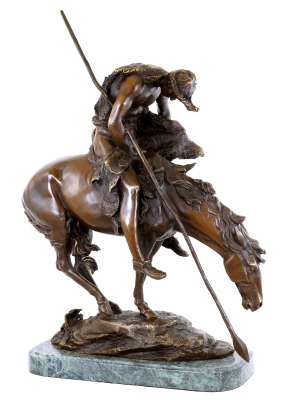
"James Earle Fraser - End of the Trail - Bronze Statue"
| Height | 50 cm |
| Width | 35 cm |
| Length | 14 cm |
| Weight | 12,8 kg |
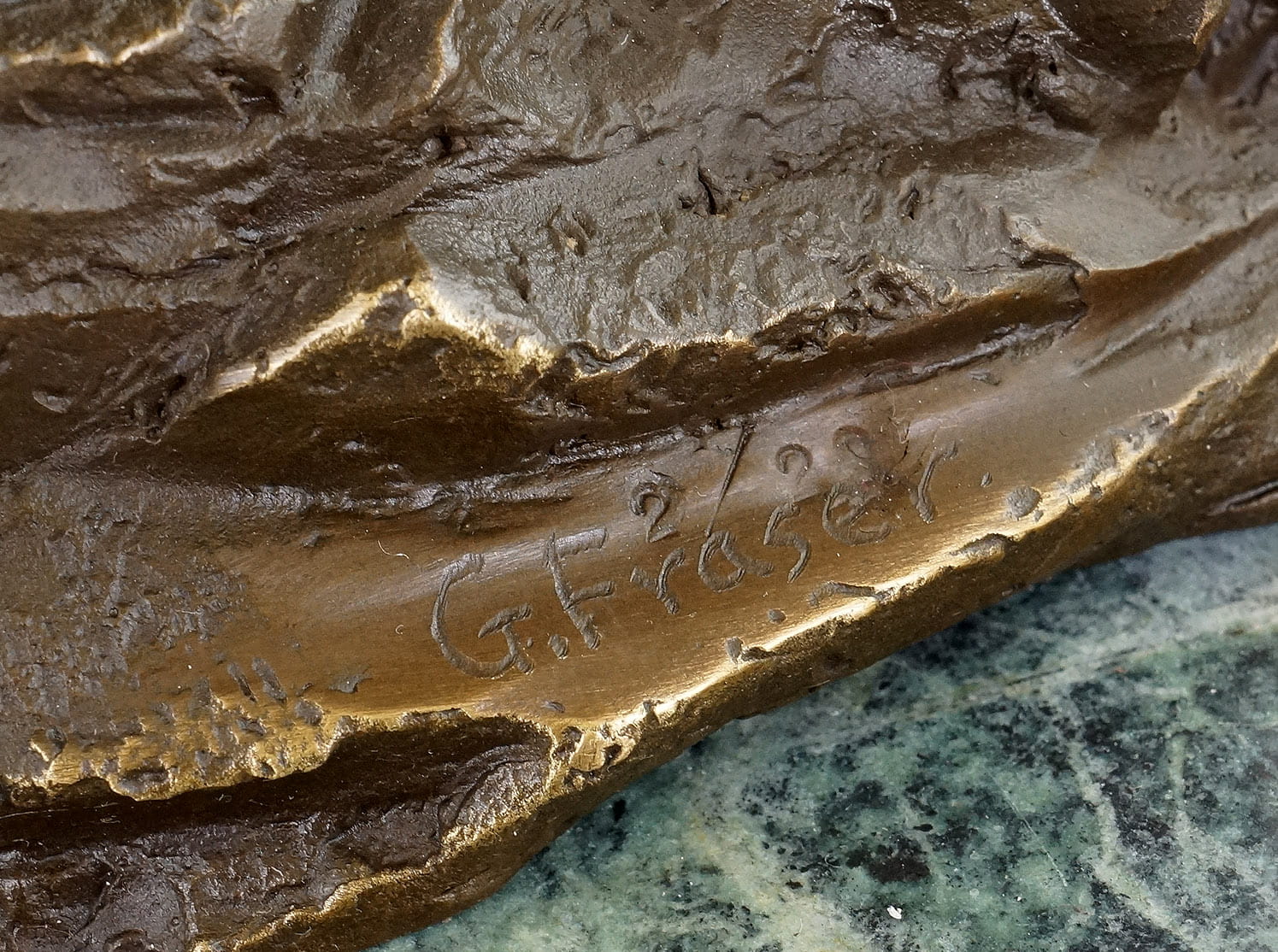
End of the Trail – A Monument to Resilience and Memory - Signed James Earle Fraser
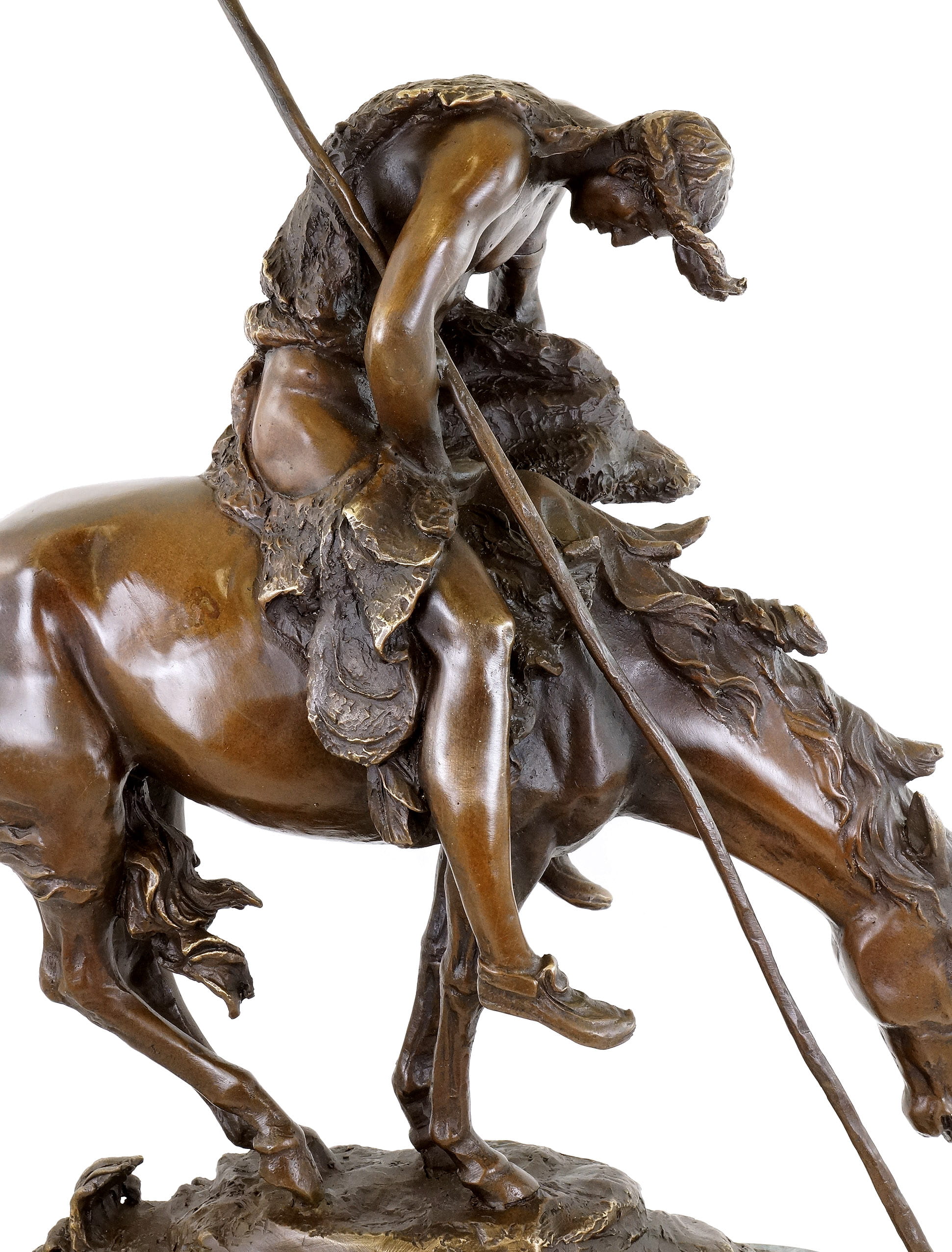
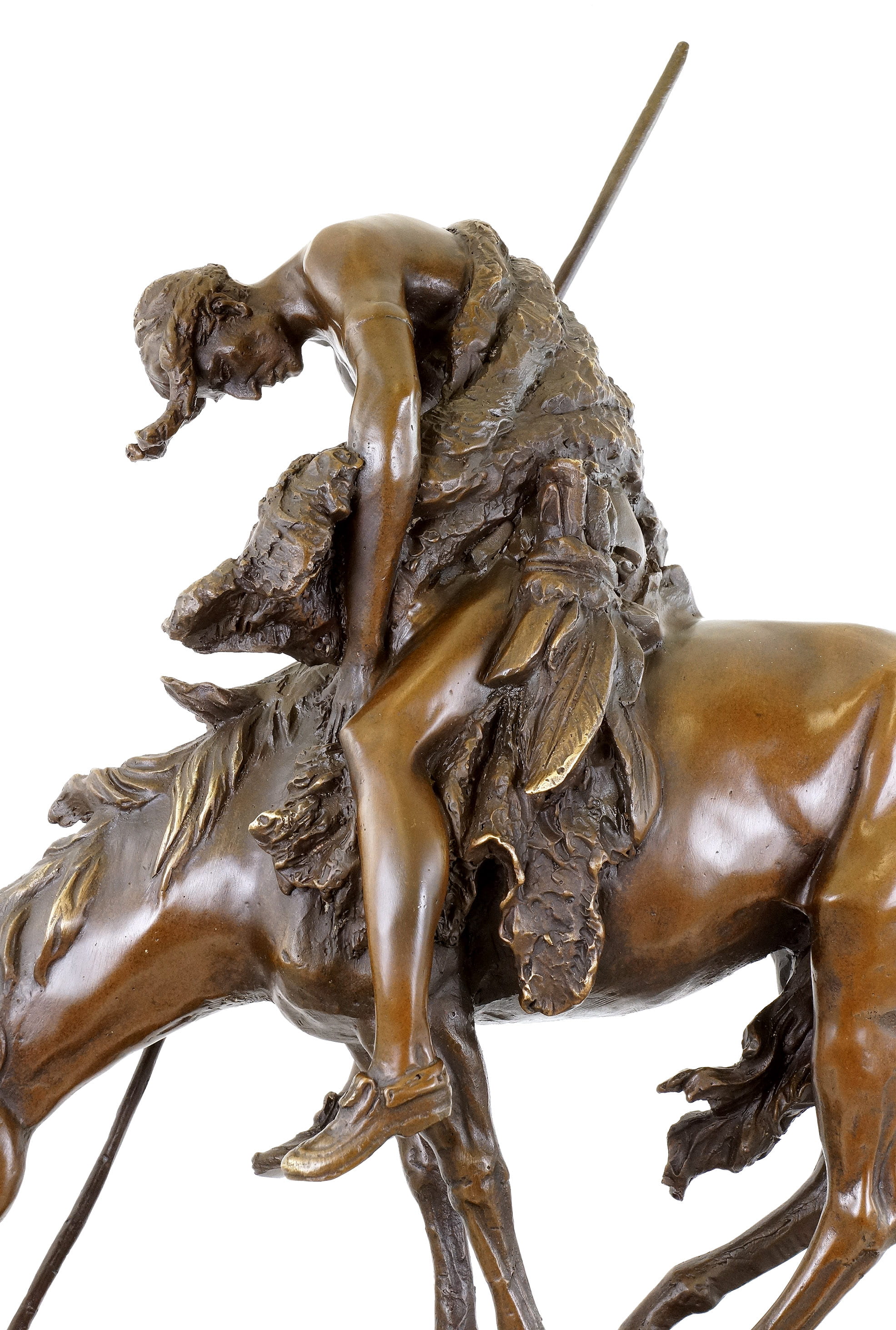
The limited bronze edition of End of the Trail captures one of the most hauntingly powerful silhouettes in American sculpture, rendered here with remarkable sensitivity and emotional depth. The rider’s bowed posture and the weary slump of his horse form a unified gesture of exhaustion, surrender and reflection, making this piece an immediate focal point in any refined interior. The sculpture’s finely modelled musculature, the flowing remnants of the rider’s garments and the downward-pointing spear create a rhythm of diagonal lines that guides the viewer across the entire composition. Placed on a marble base, the bronze gains an anchored presence that reinforces its solemn narrative while offering a timeless decorative impact. Whether displayed in a study, a library or a dedicated art alcove, the figure draws the room into its contemplative silence.
The Historical Weight of a National Icon
This bronze recreates one of the most celebrated works associated with James Earle Fraser end of the Trail, a motif that became an emblem of national reflection in the United States. Fraser first conceived the composition in 1894 at the age of just seventeen, modelling the idea from memories of his upbringing near frontier settlements and encounters with Native American culture. When the monumental version was showcased at the Panama-Pacific International Exposition in 1915, it was met with immediate acclaim for its poignant symbolism, elevating the theme to a central position in discussions of identity and loss. The sculpture’s downward momentum suggests not only physical fatigue but also the weight of historical displacements endured by Indigenous peoples. Through this bronze, the collector is invited into that deep lineage of interpretation, continuity and remembrance.
A Sculptor Formed by Frontier Landscapes
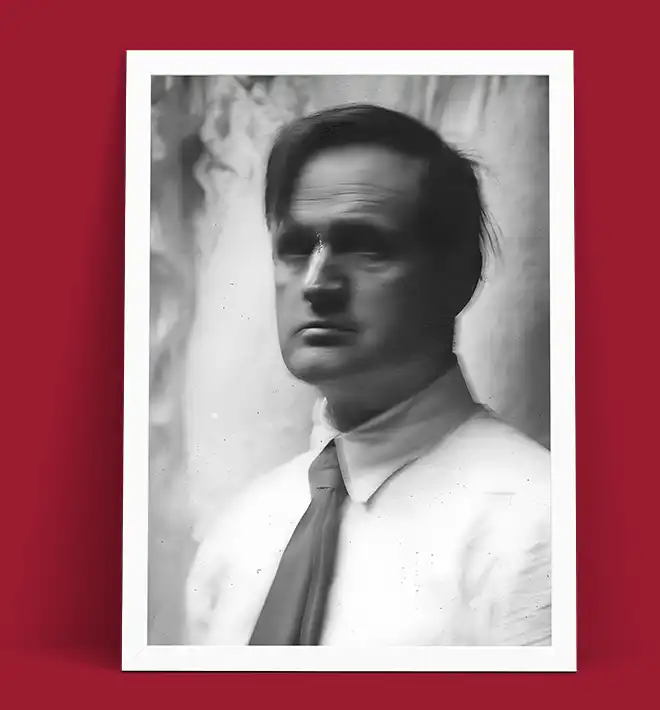
The life of James Earle Fraser began on 4 November 1876 in Winona, Minnesota, where his father—an engineer involved in railroad expansion—introduced him early to the realities of the changing American West. Growing up near frontier regions shaped the imagery that would later define James Earle Fraser Sculptures, instilling a sensitivity to the landscapes and peoples whose stories were transforming under the pressures of national progress. Fraser studied at the School of the Art Institute of Chicago, refining his ability to merge realistic modelling with expressive simplification, a hallmark of James Earle Fraser Art. His further training under Augustus Saint-Gaudens deepened his command of anatomy, drapery and emotional nuance, qualities that permeate James Earle Fraser Works to this day. Throughout his long career, he remained committed to themes of memory, endurance and cultural transition.
Interpreting the Motion and Message of the Form
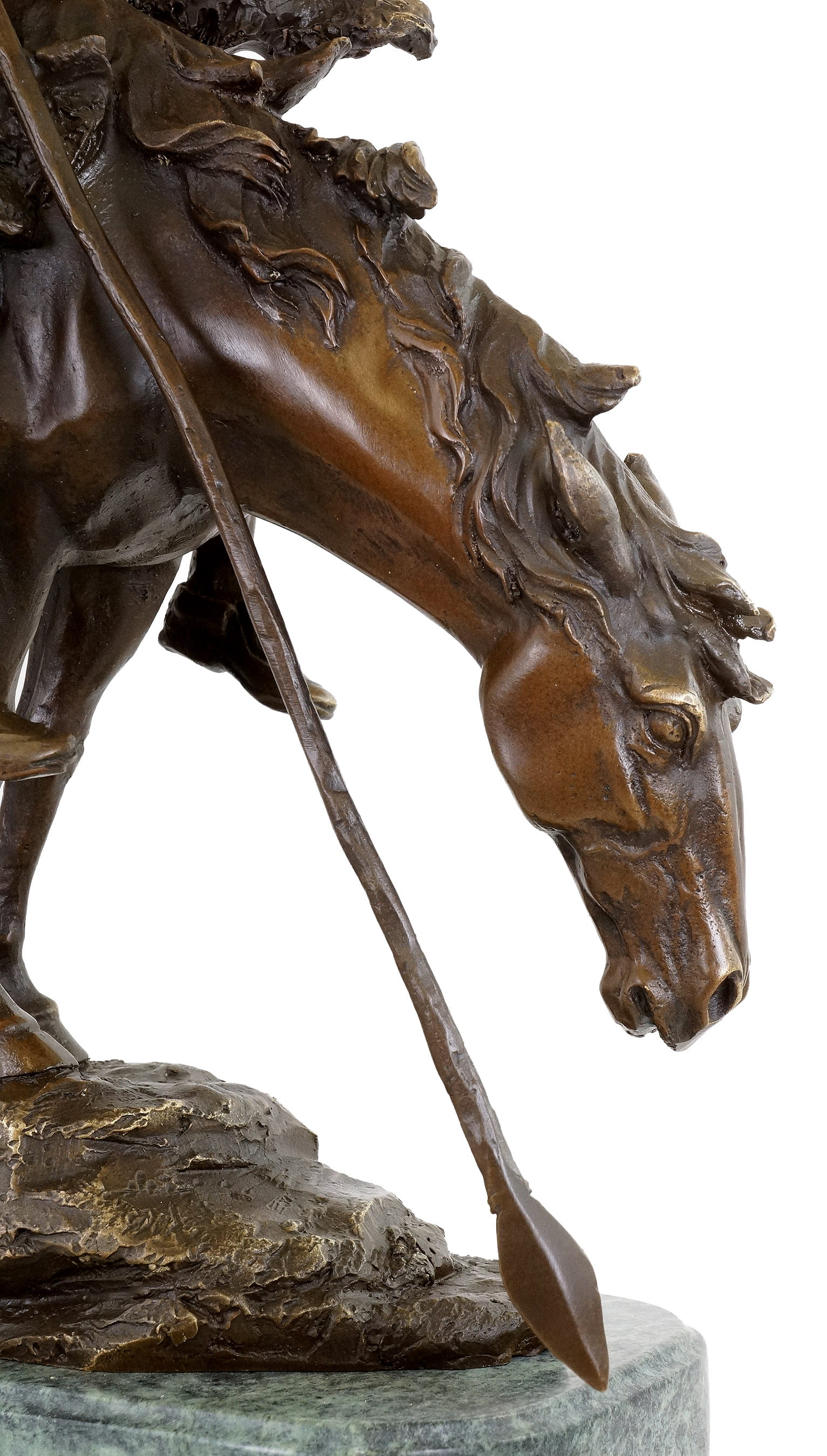
Seen up close, the bronze reveals subtle textural contrasts that animate the composition: the roughened cloak of the rider, the taut skin of the horse and the delicately incised hair framing the figure’s downcast face. The lean forward of both bodies suggests shared fatigue, forging a symbolic unity that defines James Earle Fraser end of the Trail as a meditation on collective struggle. The diagonal thrust of the spear underscores the direction of movement while simultaneously acting as a visual fulcrum that steadies the otherwise downward spiral of the pair. The rider’s limbs cling to the horse not in dominance but in dependence, communicating an emotional truth that has made James Earle Fraser Sculptures enduringly relevant. Displayed under soft directional lighting, the sculpture casts elongated shadows that amplify its message of waning strength and reflective stillness.
A Legacy Preserved Across Institutions
Today, major museums and public collections continue to display versions of this composition, ensuring that James Earle Fraser Art remains accessible to broad audiences. Notably, iconic casts and studies can be viewed at the National Cowboy & Western Heritage Museum in Oklahoma City and the Indianapolis Museum of Art, where they stand as touchstones of American sculptural heritage. These institutions highlight the ongoing significance of James Earle Fraser Works, situating them within the wider narratives of cultural memory and artistic innovation. Private collectors also prize limited bronzes such as this edition of twenty, which carry forward the lineage of Fraser’s most celebrated creation. Owning such a piece allows the viewer to engage directly with a story that continues to resonate across generations.
The Enduring Presence of a Masterwork
While rooted in a specific historical moment, the sculpture transcends time through the universality of its gesture, capturing resilience in the face of irreversible change. The clean lines, deeply modelled forms and expressive restraint characteristic of James Earle Fraser Artwork ensure that the composition remains visually compelling in both traditional and contemporary environments. Placed on a pedestal or a dedicated console table, the bronze commands attention without imposing on the surrounding space, offering a quiet but powerful meditative presence. Collectors drawn to narrative sculpture will find in this piece a rare balance of emotional depth and formal clarity. It stands not only as a testament to the sculptor’s mastery but also as a reminder that the human spirit continues to seek meaning even at life’s most difficult thresholds.
Our advantages
free shipping
Worldwide free shipping
14 days money back
You can cancel your order
within 14 days
secure payment services
Paypal, Master Card, Visa, American Express and more