Prices incl. VAT, free shipping worldwide
Ready to ship today,
Delivery time appr. 3-6 workdays

Product description
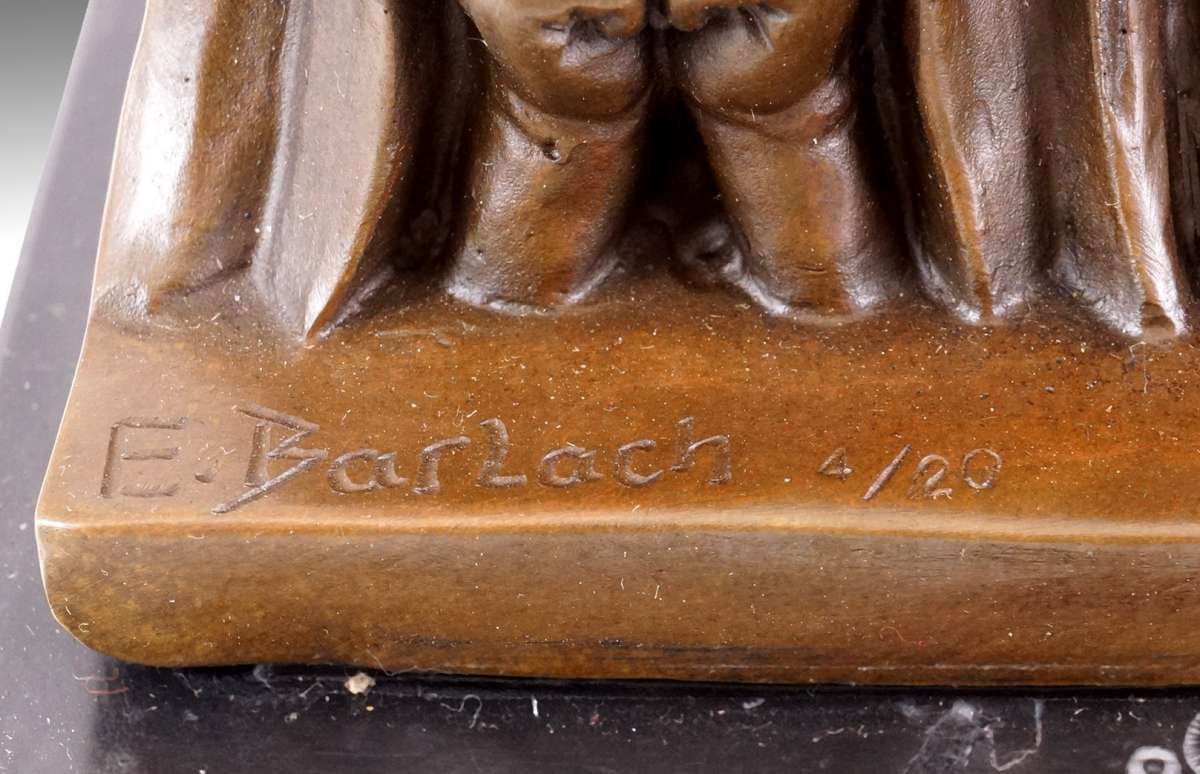
"Bronze Statue - Memorial (1928/29) - Ernst Barlach Art"
| Weight | 6,4 kg |
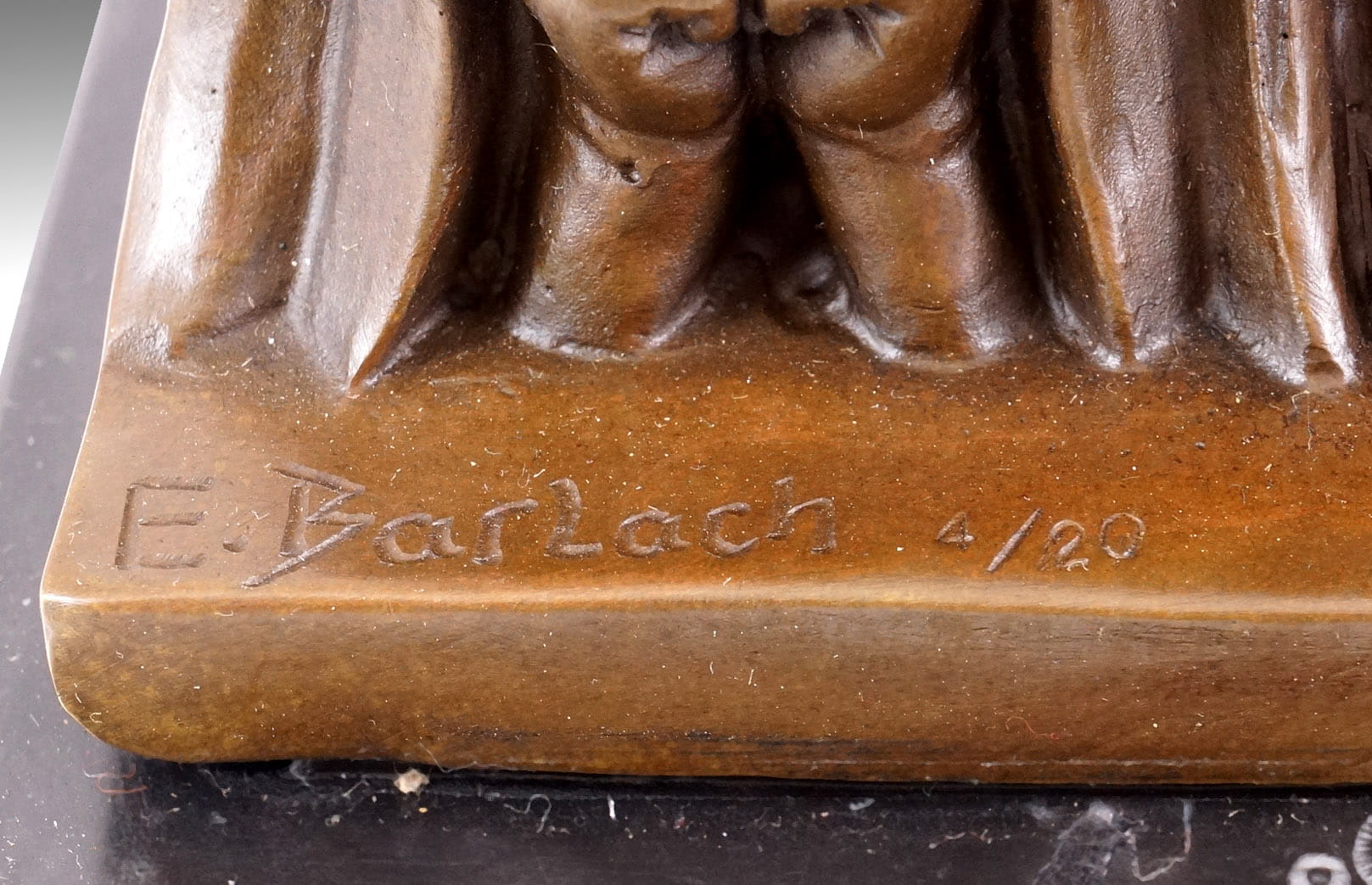
Bronze Figure – Memorial (1928/29) – A Profound Commemorative Work - Signed Ernst Barlach
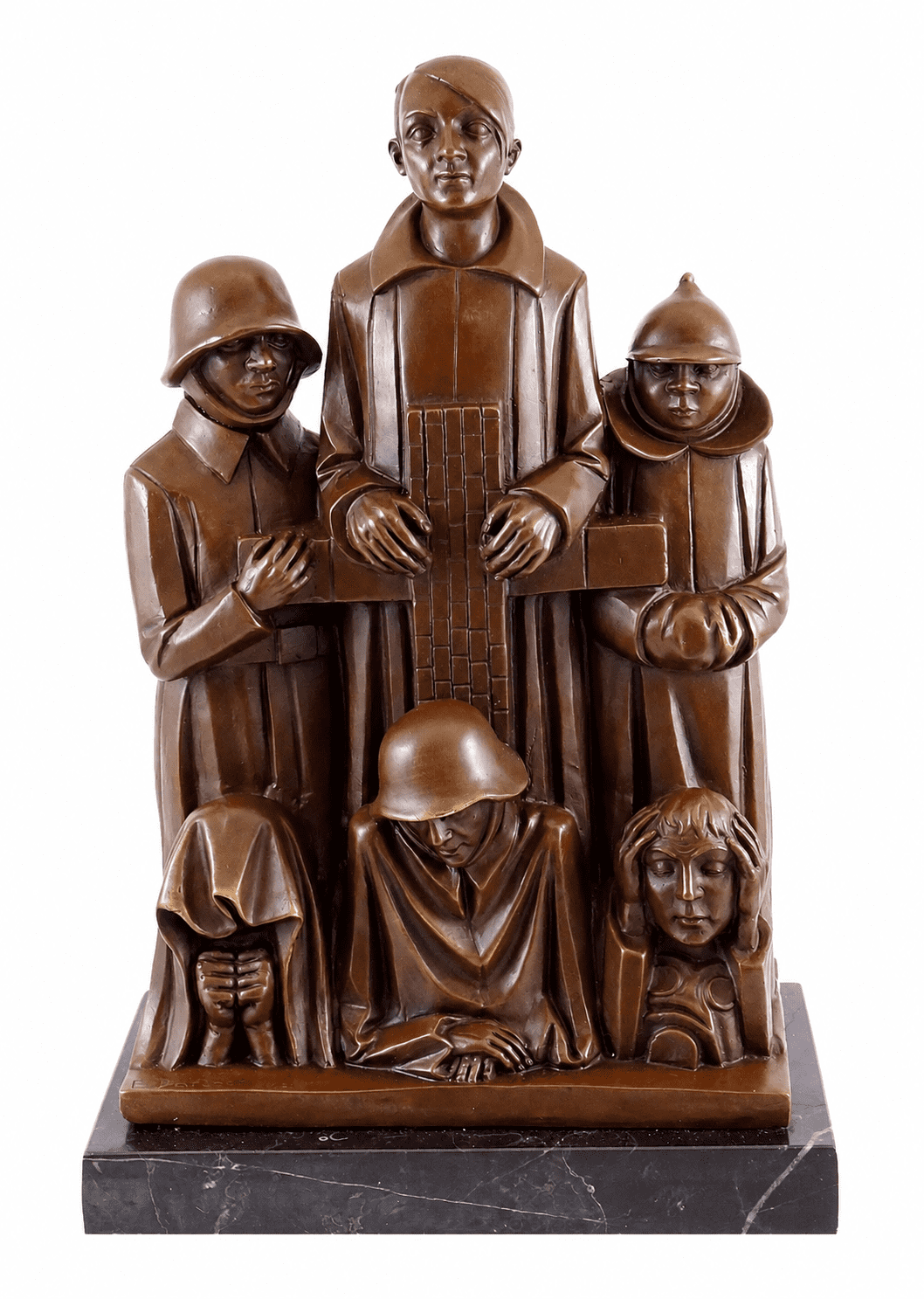
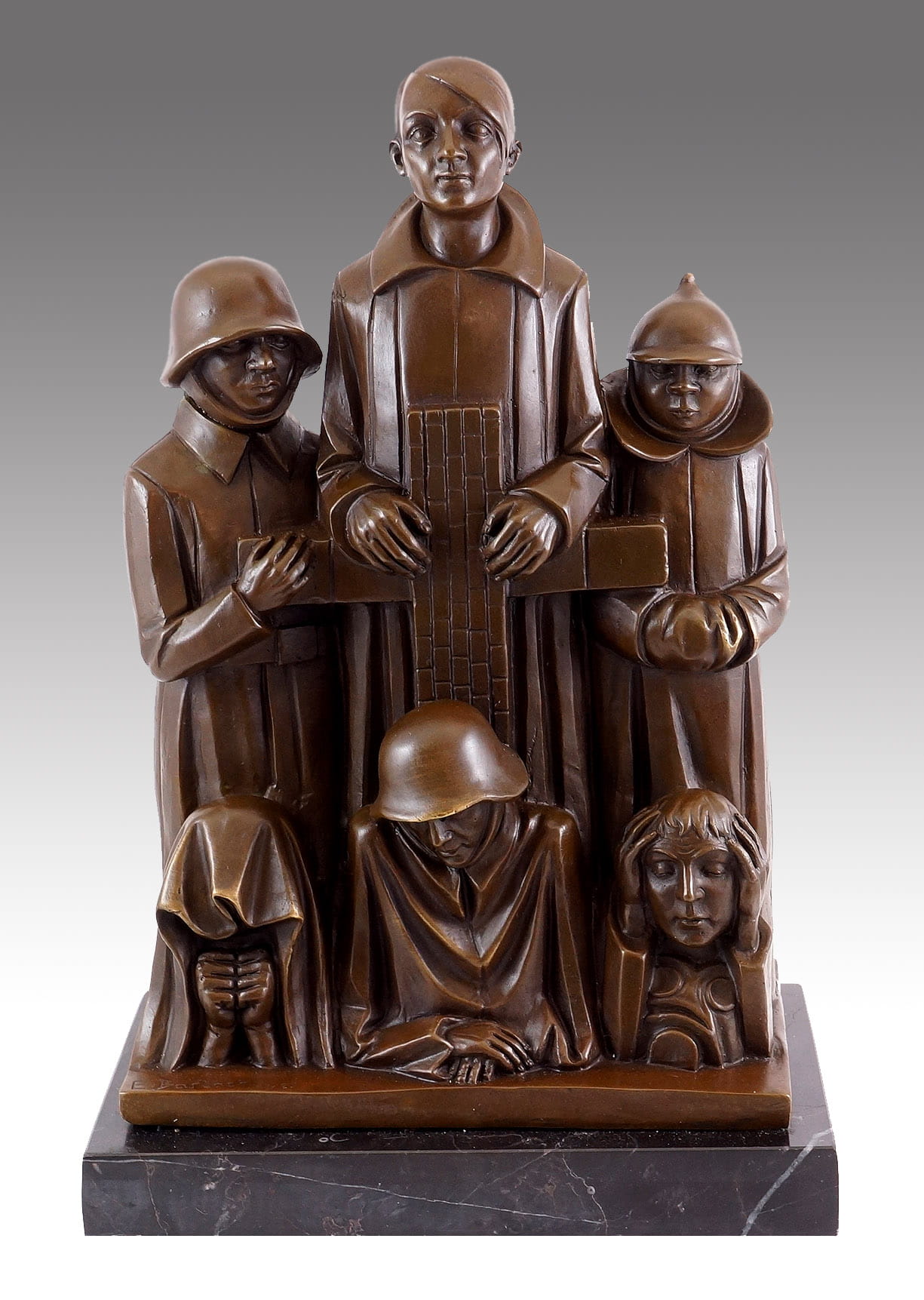
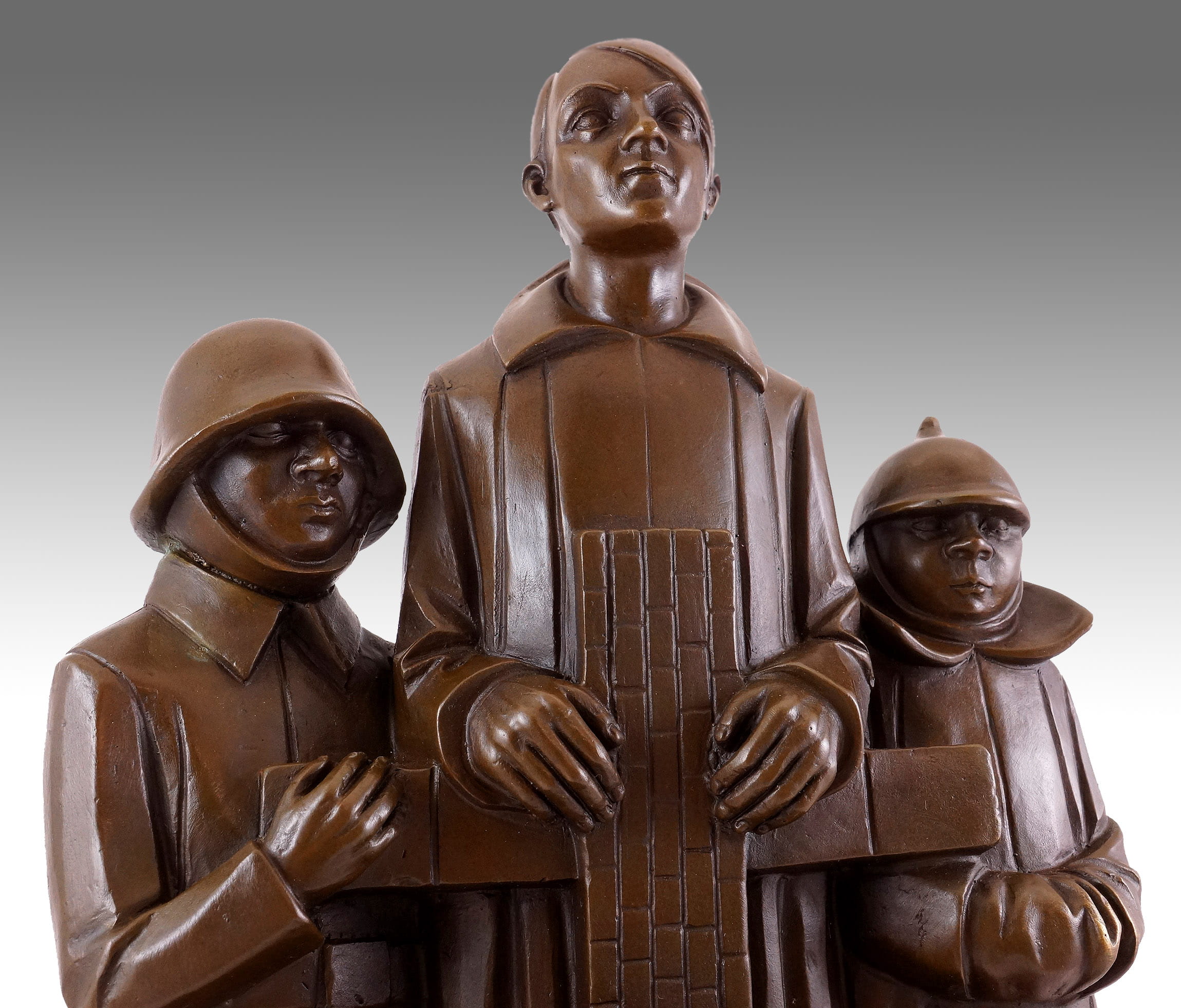
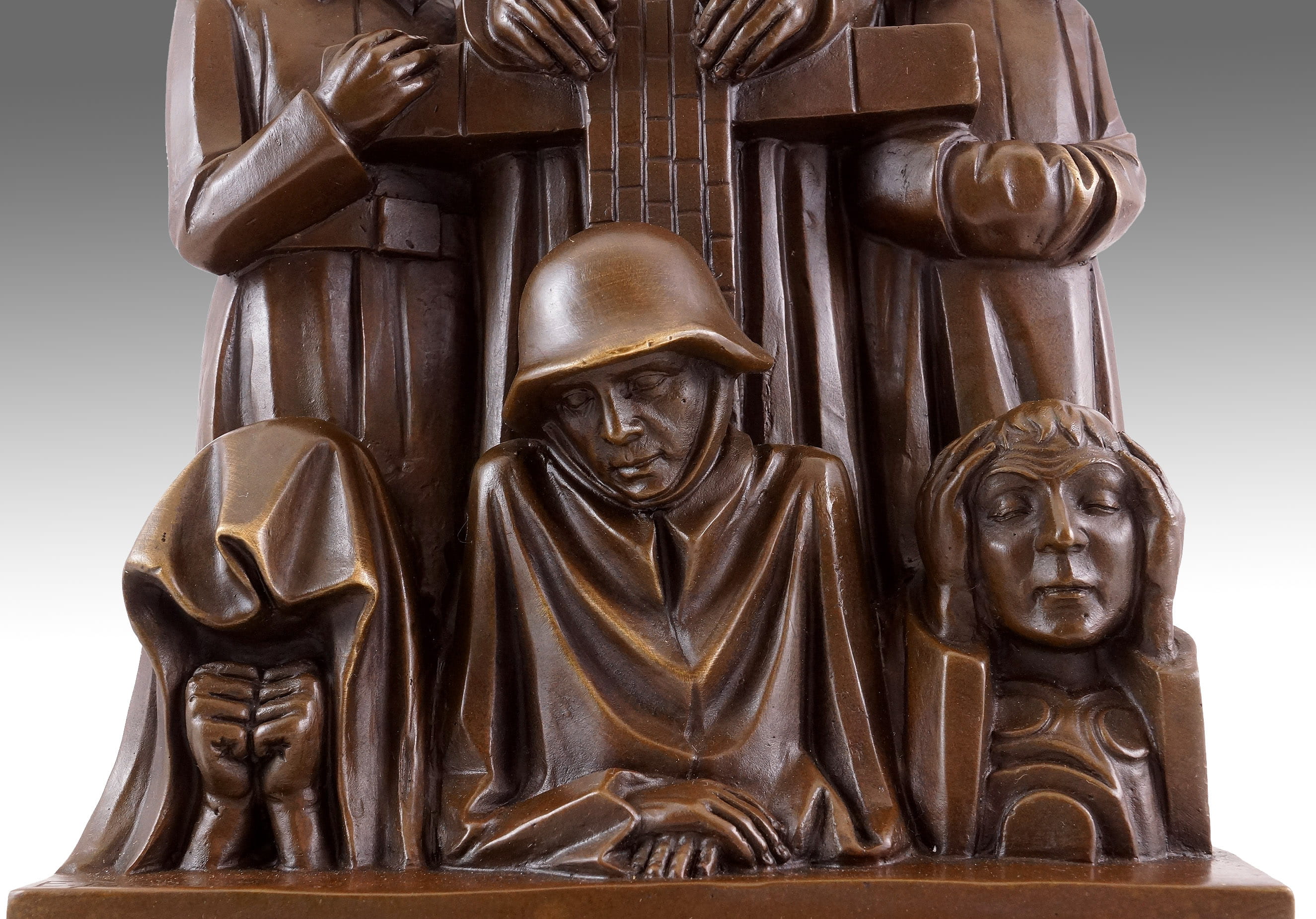
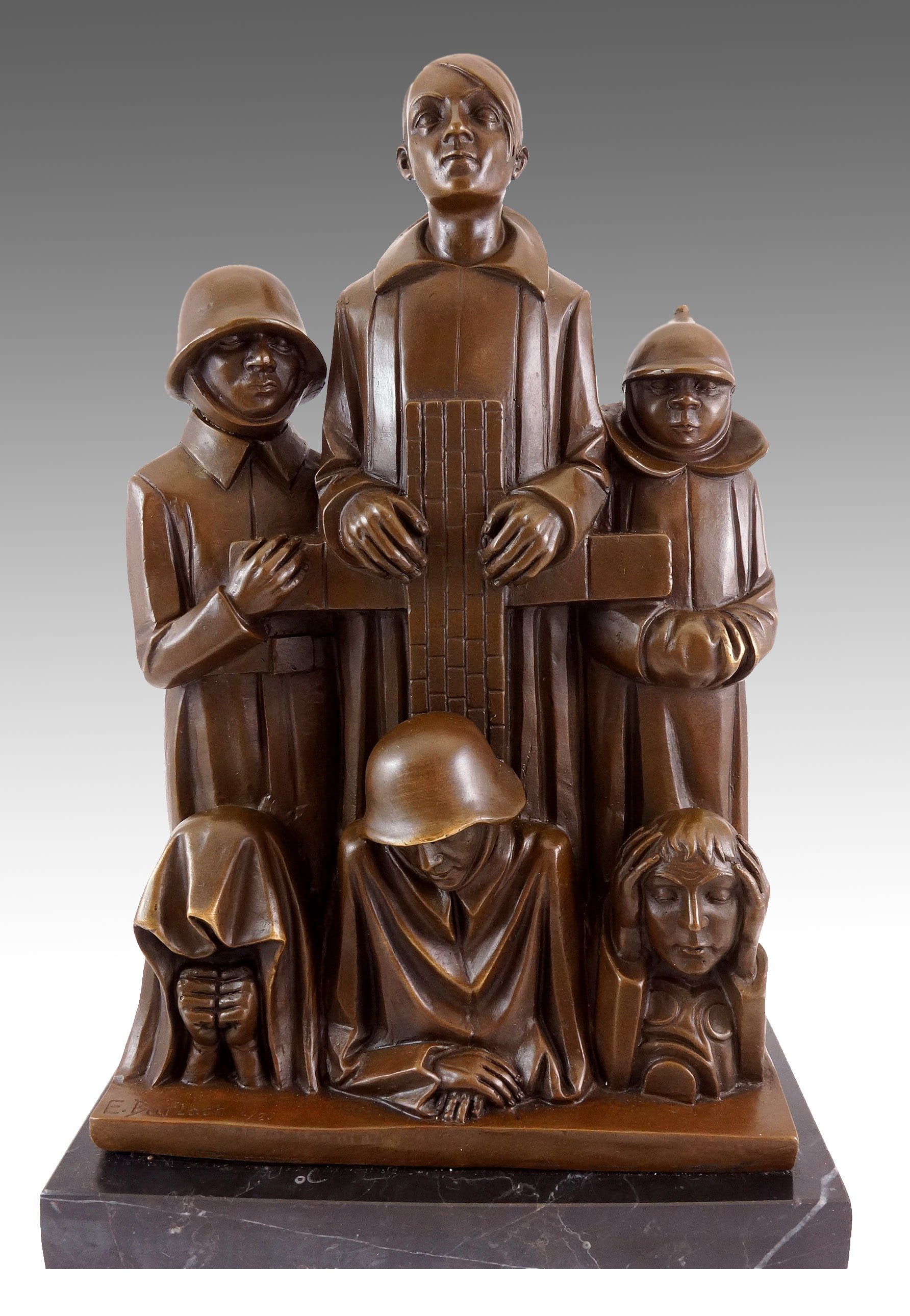
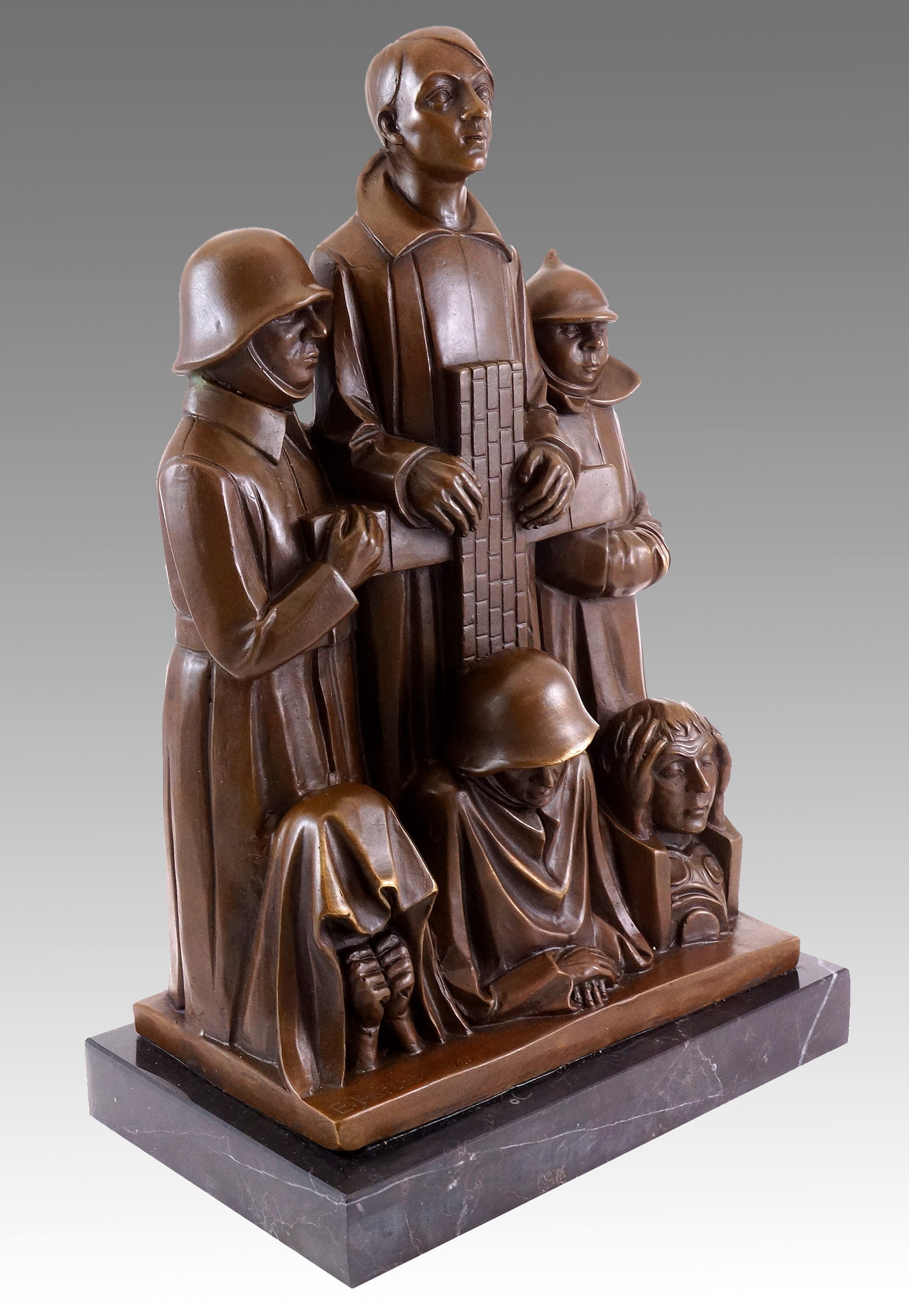
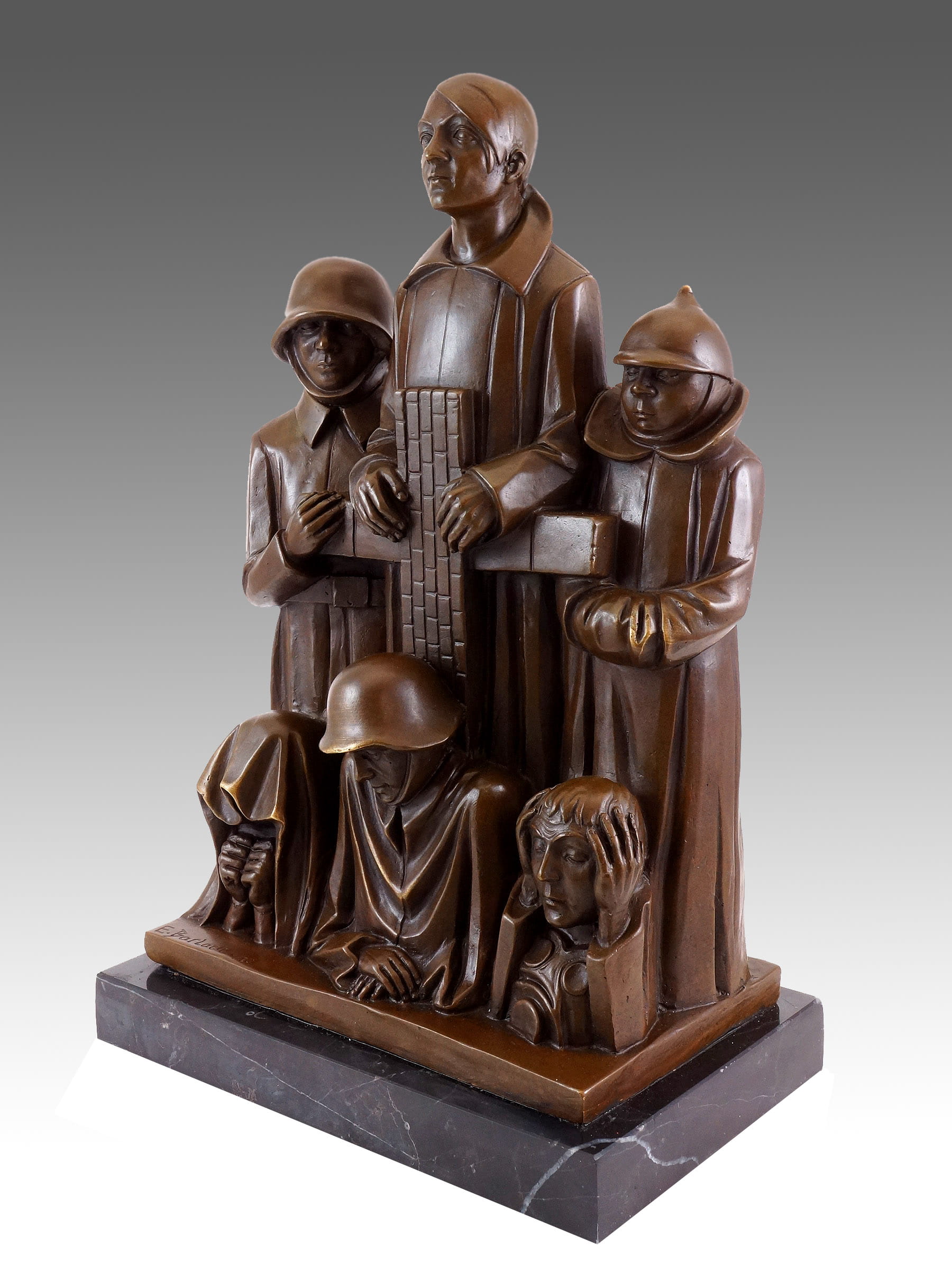
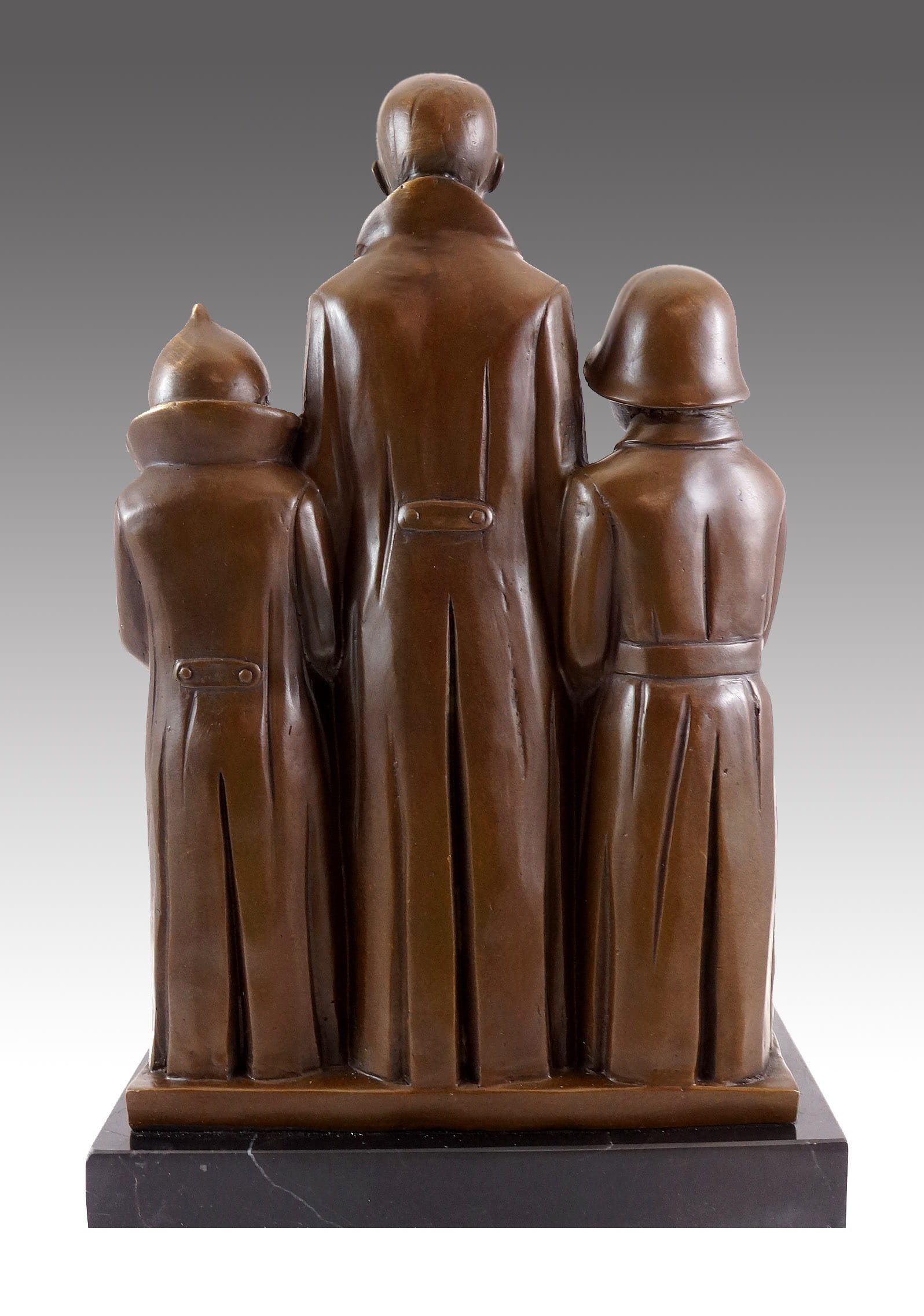
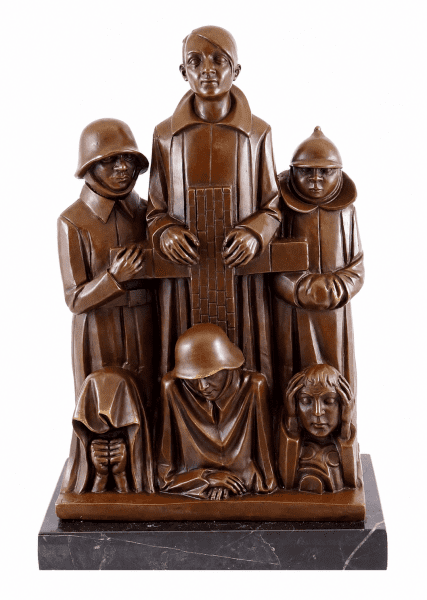
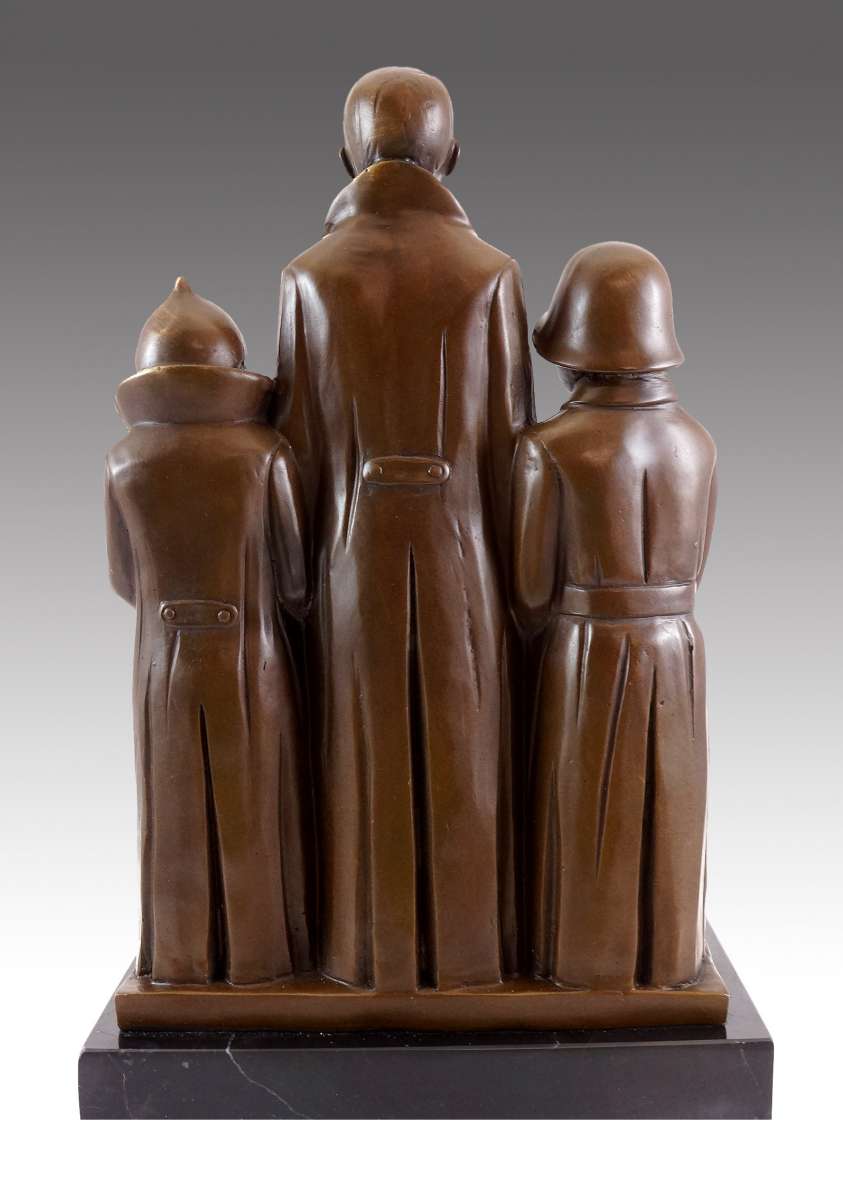
The Memorial (1928/29), signed by Ernst Barlach, stands among the most powerful sculptural responses to the trauma of the First World War, capturing a depth of emotion that resonates through its carefully arranged figures. Inspired by the Magdeburg Memorial unveiled in 1929 inside Magdeburg Cathedral, this bronze condenses the original multi-figure composition into an intimate yet monumental format. At the center stands a youthful figure holding a tall cross-shaped board, flanked by soldiers whose overlapping garments form a rhythmic vertical structure that intensifies the solemnity of the group. Below them, a dead soldier lies in quiet repose while two grieving figures—one cloaked, one with bowed head in her hands—anchor the ensemble in human suffering. The formal harmony of the arrangement reflects the expressive philosophy characteristic of Ernst Barlach Art, uniting dramatic restraint with profound emotional resonance in a way that defines much of Ernst Barlach Artwork.
An expressive language built on stillness and human dignity
The sculpture’s power emerges not from outward movement but from the inner tension carried in each figure’s posture. The upright stances of the standing figures contrast with the heavy downward pull embodied by the mourners below, creating a stark dialogue between endurance and grief. This sculptural rhythm, marked by simplified planes and deliberate symmetry, reveals the distilled emotional vocabulary that Barlach employed throughout his mature period. The soldiers’ helmets and elongated coats function visually as protective shells, reinforcing their anonymity while highlighting the vulnerability embodied in the grieving lower figures. Such contrasts illuminate the core of Ernst Barlach Art, where solemn form becomes a vessel for complex emotional truth. Through these choices, Barlach constructs a sculptural language that communicates mourning with extraordinary clarity and compassion.
A memorial rooted in the turbulent climate of the late 1920s
The original Magdeburg Memorial was conceived in a period of political tension and cultural fragmentation, and Barlach’s interpretation of loss defied prevailing expectations of heroic commemoration. Instead of glorifying war, he offered a composition centered on human suffering and moral introspection, reflecting values central to Ernst Barlach Artwork of this era. The placement of the sculpture in a cathedral niche intensified its contemplative impact, transforming the figures into quiet guardians of memory. The bronze version presented here preserves that atmosphere of solemn reflection, even when displayed outside its architectural context. Through its reduced scale, the work becomes more accessible for private contemplation while retaining the full emotional gravity intended by Barlach. In this way, the piece demonstrates how his sculptural voice reshaped the landscape of German memorial culture.
Ernst Barlach – formative experiences and artistic evolution
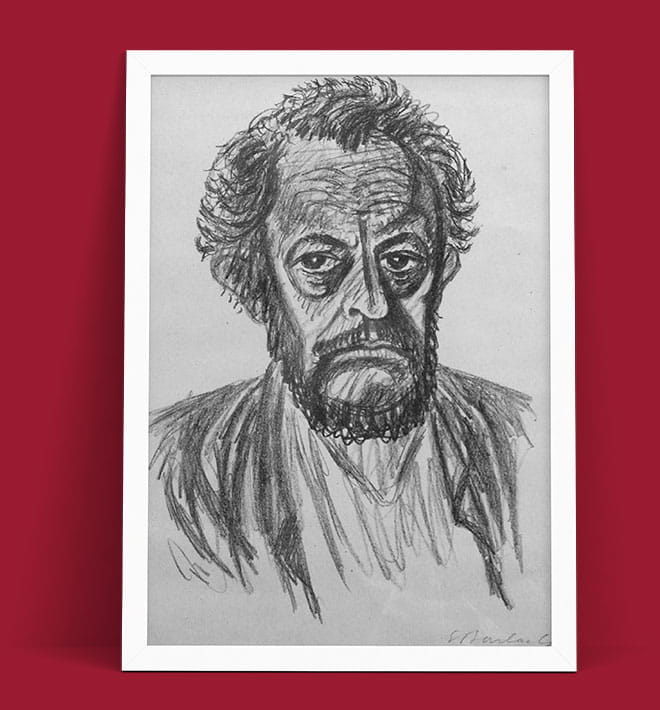
Born in 1870 in Wedel, Ernst Barlach grew up in a family shaped by intellectual curiosity and by the compassionate influence of his father, a country doctor. After early artistic training in Hamburg, he continued his studies at the Académie Julian in Paris, where exposure to European sculptural traditions broadened his understanding of formal expression. His pivotal journey through Russia in 1906 deepened his empathy for human hardship, an encounter that would redirect the thematic and stylistic trajectory of Ernst Barlach Art. Over the decades that followed, he developed a sculptural vocabulary grounded in expressive reduction and moral introspection, distilling emotional truth through simplified forms and concentrated gestures. His commitment to human dignity, often conveyed through vulnerable or grieving figures, shaped many enduring contributions to the body of work now known as Ernst Barlach Artwork.
Symbolic resonance within a tightly structured composition
One of the most compelling aspects of the Memorial lies in its careful orchestration of symbolic roles, each figure contributing to a narrative of loss, reflection and communal mourning. The central youth, serene and upright, embodies a quiet sentinel presence, offering a counterbalance to the bowed heads and heavy drapery of the surrounding figures. The sculptural clarity of each face—some withdrawn, some contemplative—invites viewers to recognize their own emotional responses within the ensemble. The positioning of the fallen soldier at the base introduces a somber foundation upon which the vertical ascent of the composition visually builds, creating a metaphorical bridge between death and remembrance. This multilayered structure reflects thematic concerns that recur throughout Ernst Barlach Art, where human vulnerability forms the basis of profound moral insight. Through this interplay of symbolic elements, the sculpture conveys an atmosphere of introspective commemoration that remains deeply moving.
A contemplative presence within architectural or private settings
When displayed in a quiet interior, the bronze allows its emotional subtleties to unfold through close observation, making it well suited for study rooms, galleries or reflective spaces within private collections. Its upright, compact form stands harmoniously against neutral backgrounds, encouraging viewers to focus on the expressive intensity of each figure. Today, the original Magdeburg Memorial remains in Magdeburg Cathedral, while related works can be found in the Barlach House in Hamburg and the Güstrow collections, preserving significant examples of Ernst Barlach Artwork. Collectors appreciate this bronze for the depth of its emotional language and its ability to bring solemn reflection into thoughtfully arranged environments.
Height: 32 cm
Width: 22 cm
Depth: 13 cm
Weight: 6,4 kg
100% bronze
Our advantages
free shipping
Worldwide free shipping
14 days money back
You can cancel your order
within 14 days
secure payment services
Paypal, Master Card, Visa, American Express and more