€1,199.00 *
Prices incl. VAT, free shipping worldwide
Ready to ship today,
Delivery time appr. 3-6 workdays

Laughing Old Woman – A Vibrant Bronze - Signed Ernst Barlach The 1937 bronze Laughing Old... more
Product description
"Bronze Statue - Laughing Woman (1937) - Ernst Barlach Art"
| Weight | 3,7 kg |
Laughing Old Woman – A Vibrant Bronze - Signed Ernst Barlach
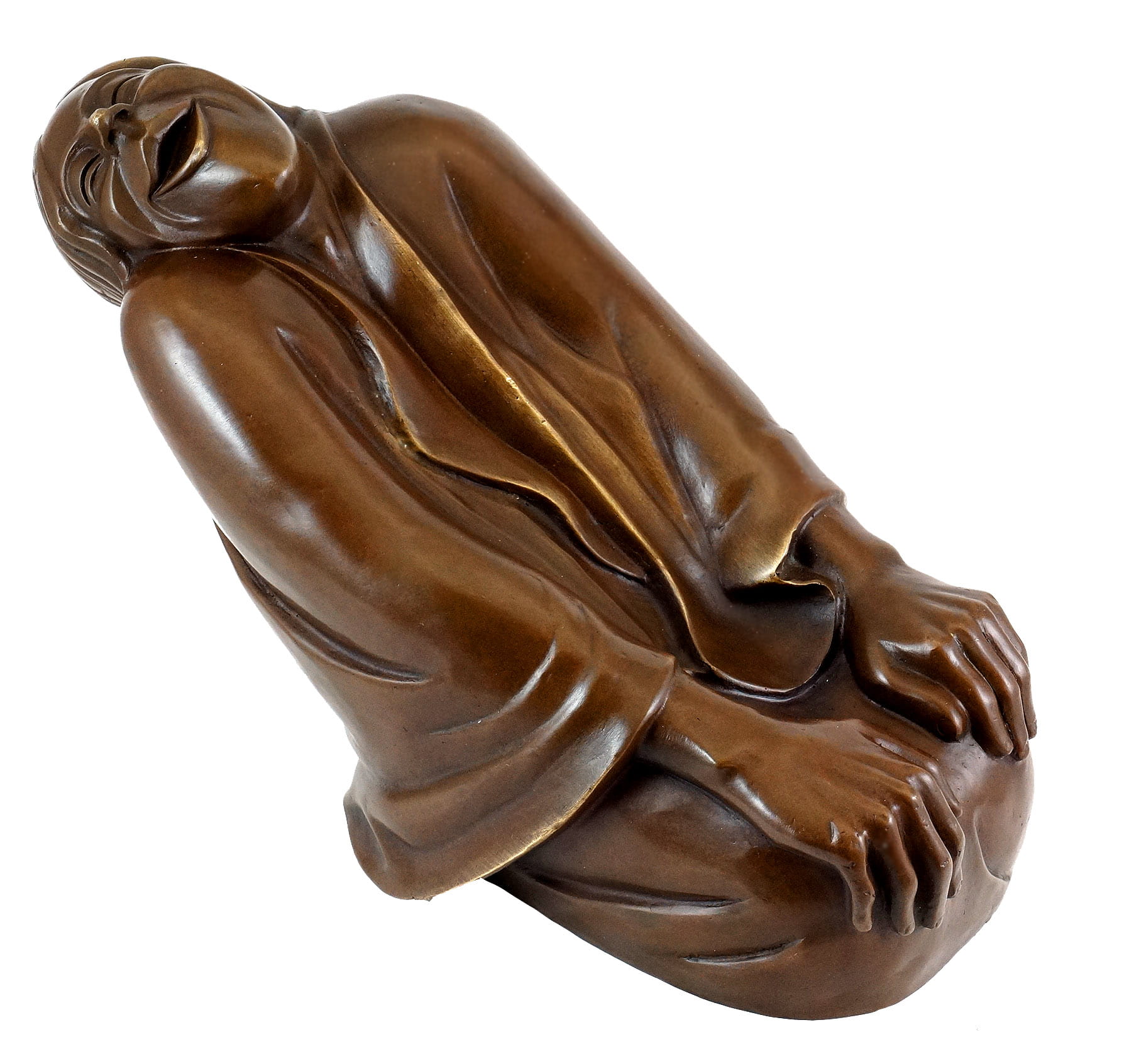
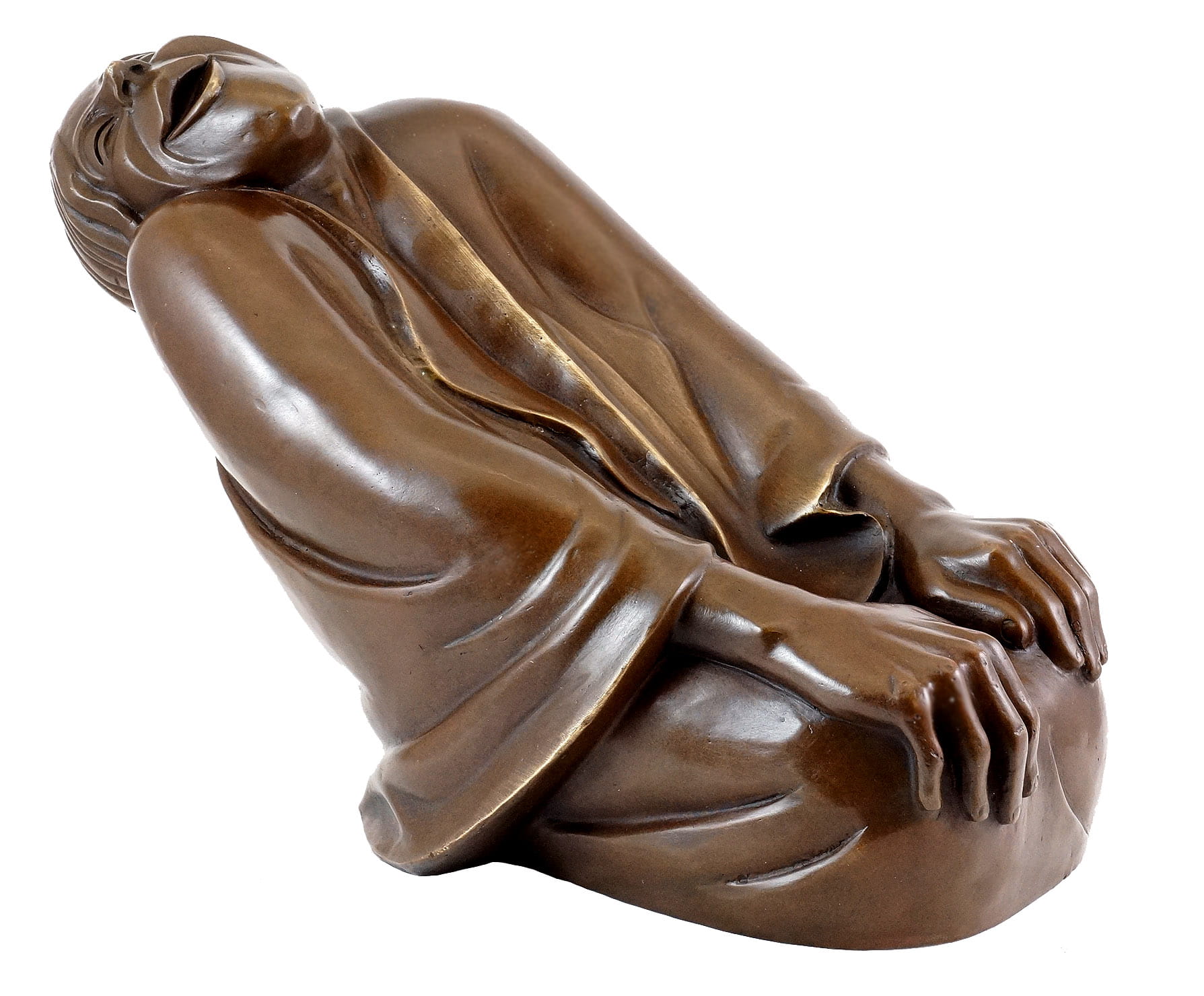
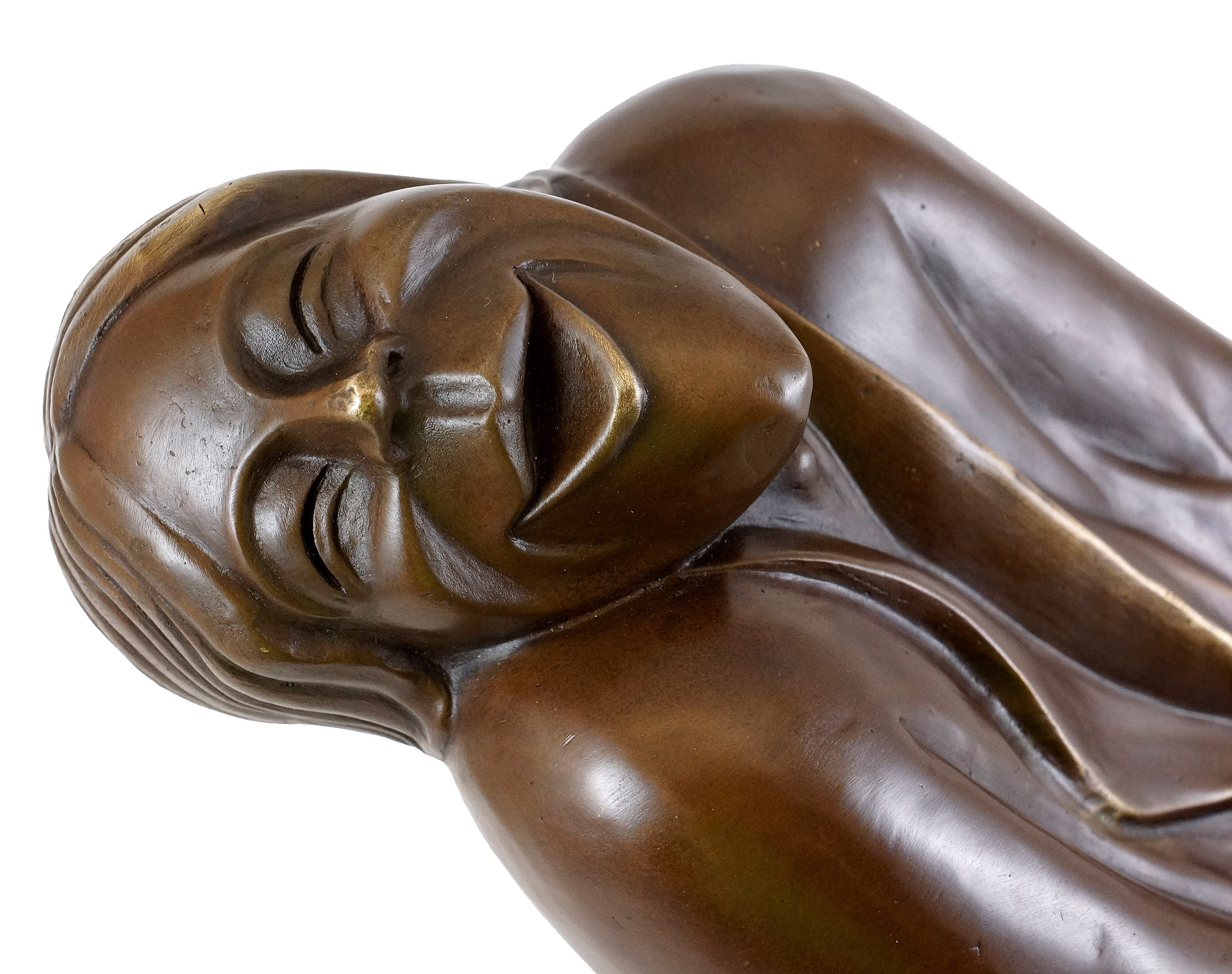
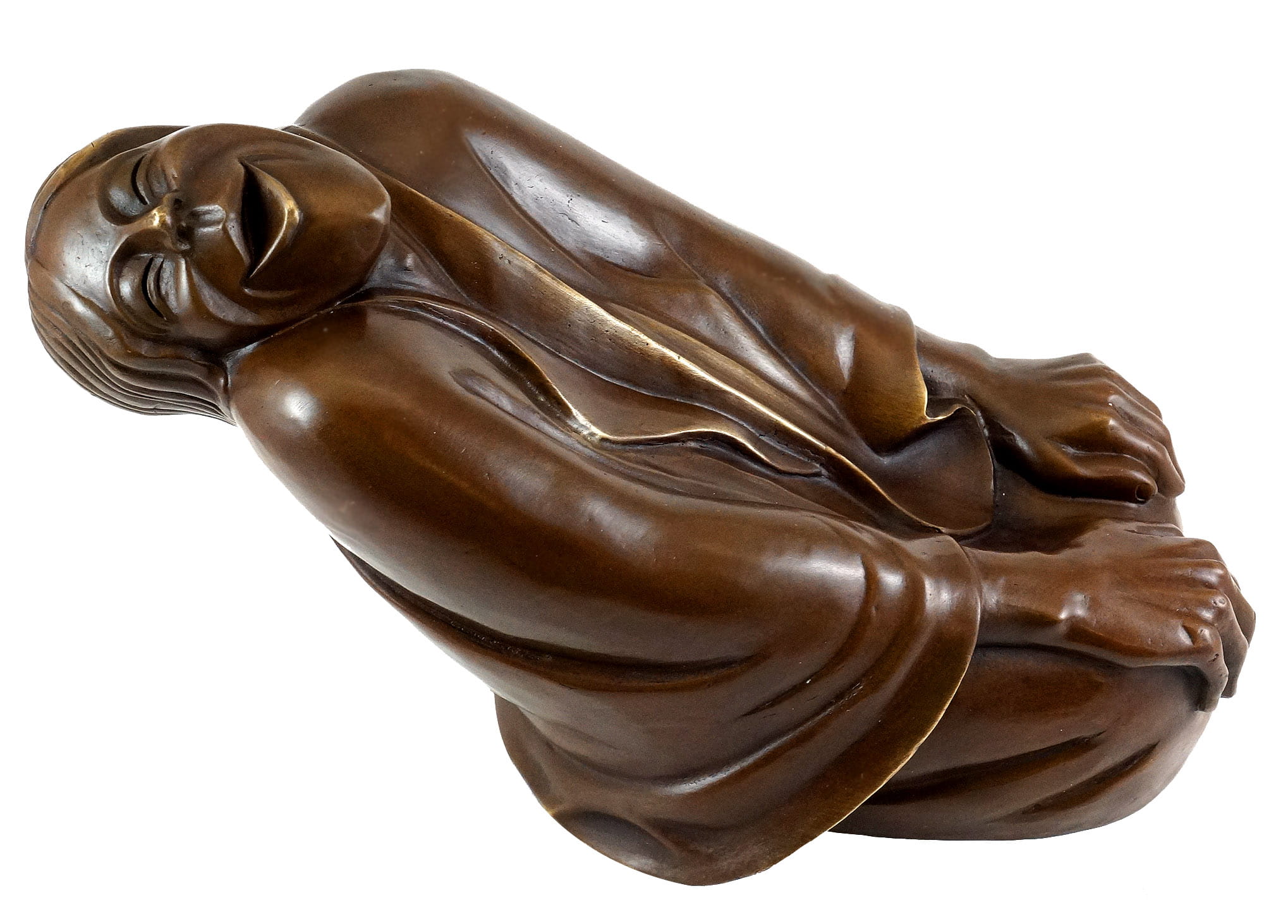
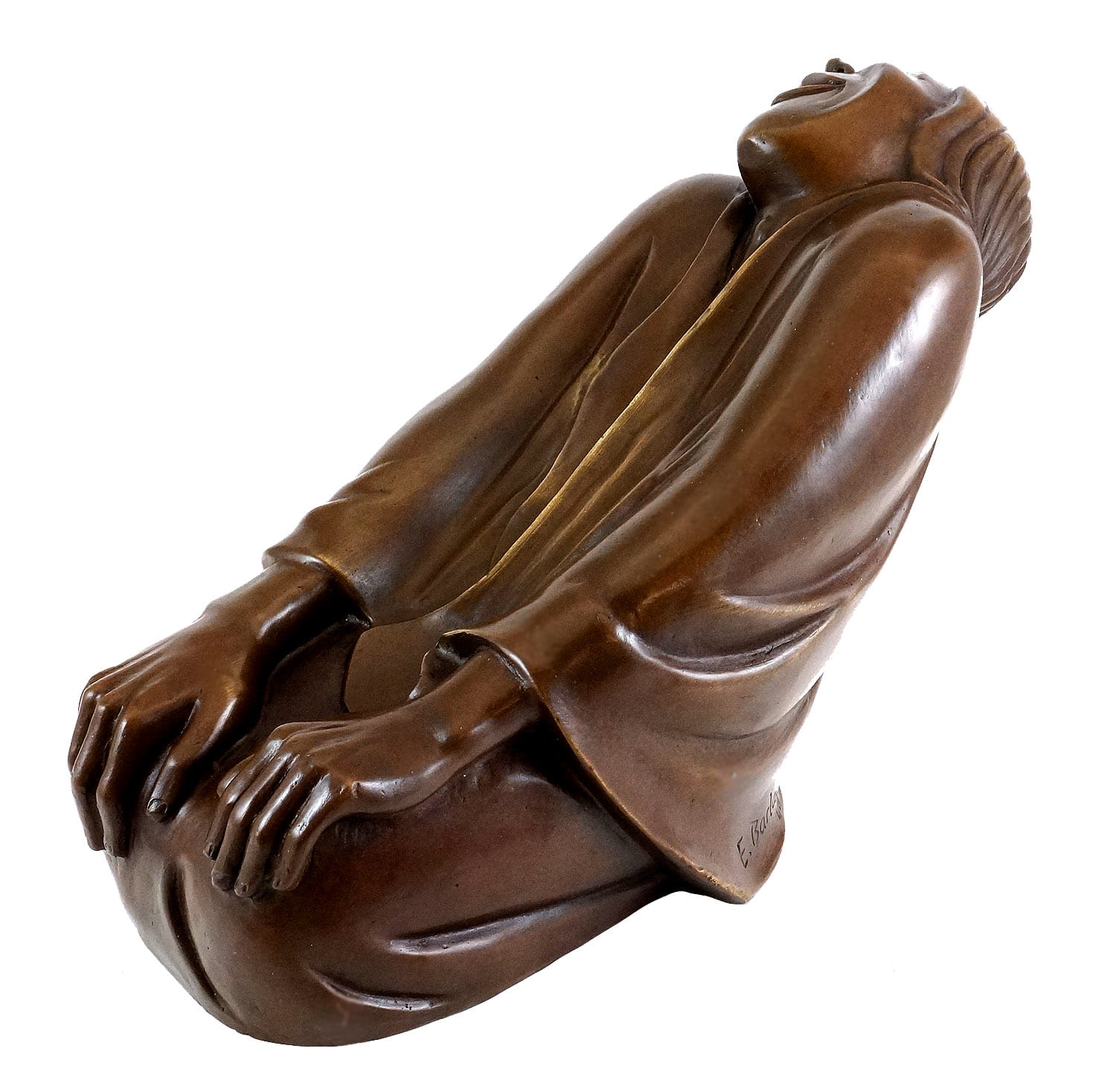
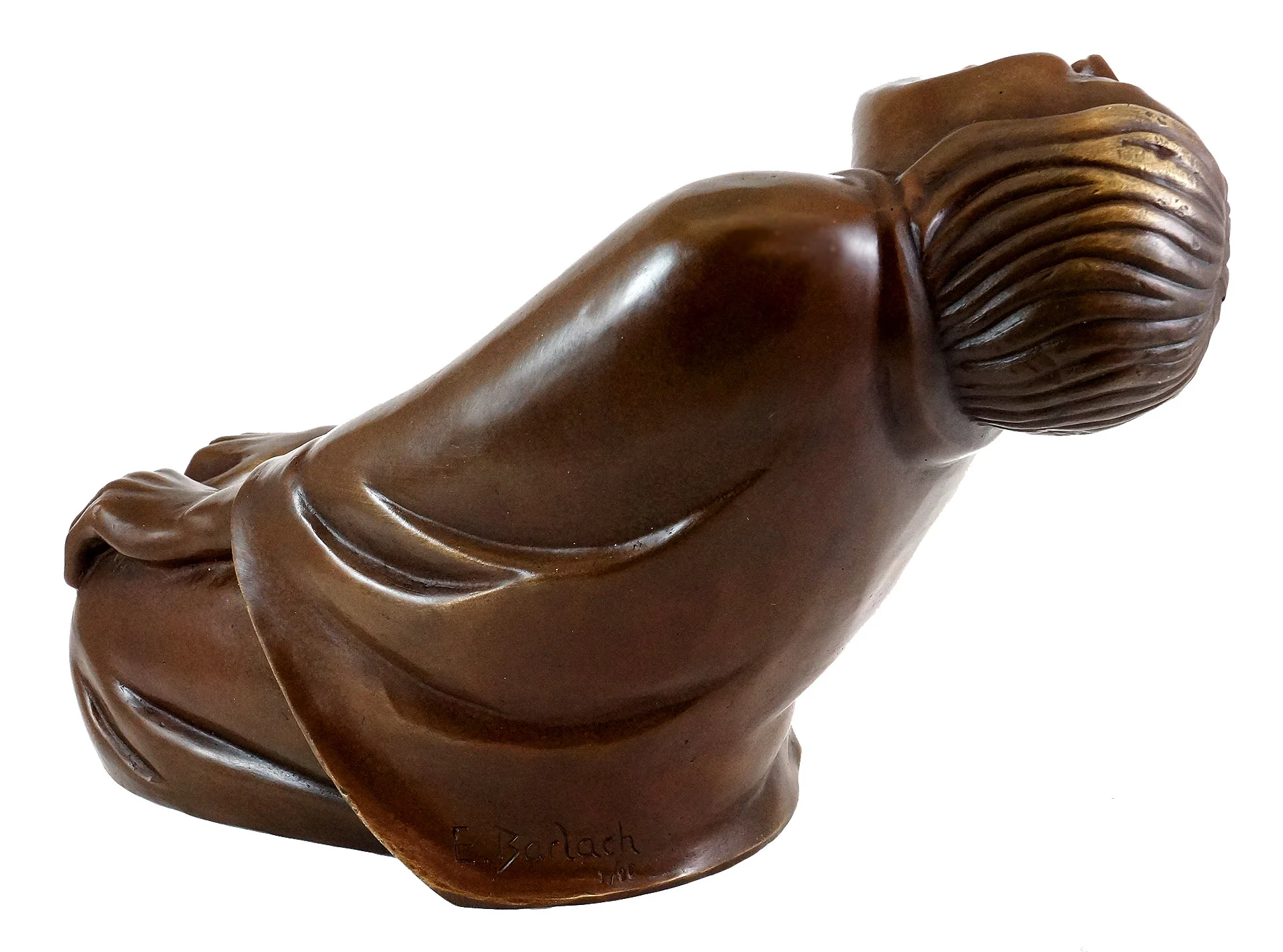
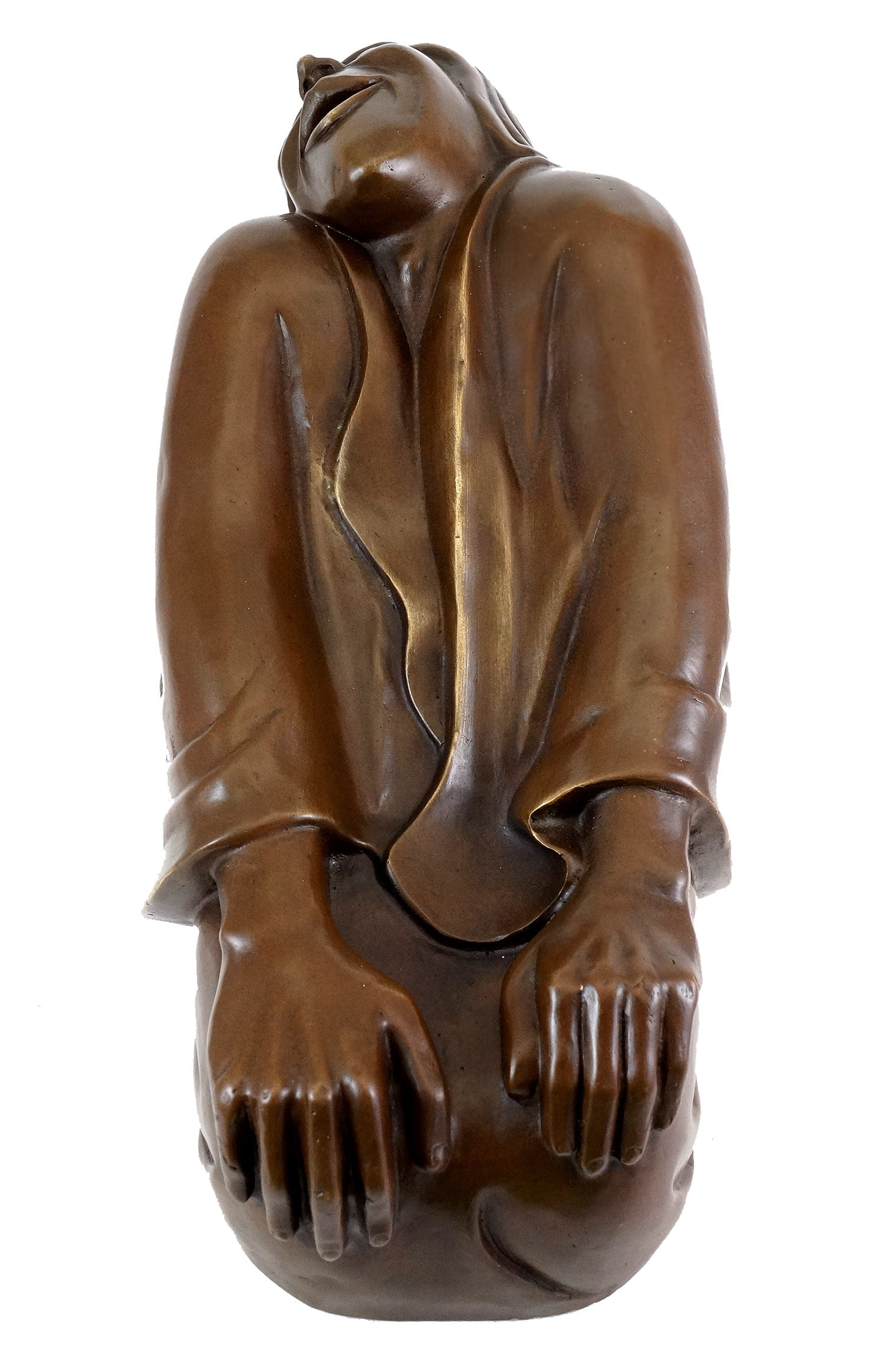
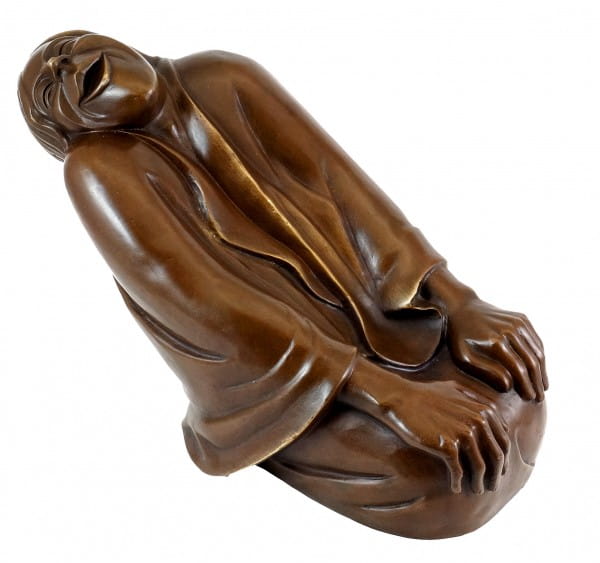
The 1937 bronze Laughing Old Woman, signed Ernst Barlach, captures an extraordinary moment of liberation expressed through the physical openness of an aging body. The figure leans back with exuberant energy, her mouth open in unrestrained laughter, allowing emotion to manifest with a spontaneity rarely seen in early twentieth-century sculpture. The simplicity of the robe she wears directs attention to the expressive curve of her torso, while the tension in her hands gripping her knees adds to the sense of joyful release. Even in its reduced form, the sculpture reveals the vitality and inner strength that Barlach sought to communicate in the final years of his career. This dynamic pose exposes another dimension of Ernst Barlach Art, demonstrating how emotional truth can be conveyed through expressive contrast and bold sculptural rhythm.
Sculptural movement expressed through concentrated form
Although the figure appears in a seated position, the posture conveys motion, as if laughter itself propels the body upward and outward. The backward tilt of the head, combined with the open mouth and the stretching of the throat, creates a powerful upward movement that lifts the entire composition. These gestures evoke the emotional authenticity associated with Ernst Barlach Artwork, where reduced lines and carefully controlled surfaces generate striking expressive clarity. The weight of the robe contrasts with the lively posture, creating a balance between physical grounding and emotional release. This interplay of heaviness and movement showcases Barlach’s ability to transform simple silhouettes into sculptural forms that resonate deeply across time.
Emotional intensity shaped by late-career mastery
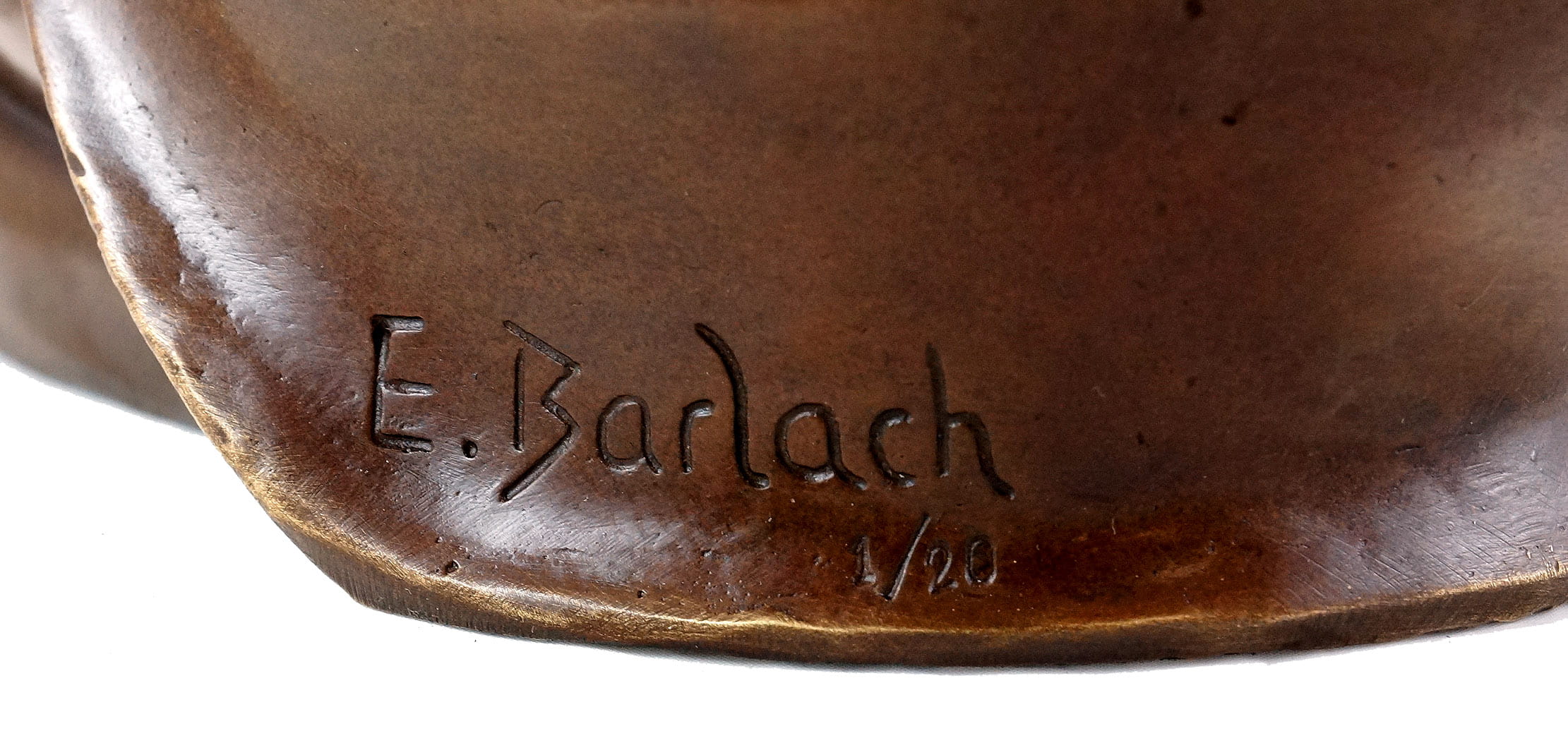
Created during a period marked by political tension and artistic suppression, the Laughing Old Woman stands out as a work in which emotional freedom resists the cultural constraints of its era. Barlach’s sculptural language, deeply rooted in empathy and psychological understanding, achieves remarkable nuance in this piece. The figure’s laughter appears not merely as amusement but as a powerful expression of human endurance, offering insight into themes often explored in Ernst Barlach Art. The smooth transitions between shoulders, arms and torso enhance the sculpture’s rhythmic coherence, allowing the viewer to follow the flow of energy through the body. As one of a limited edition of twenty bronzes, this work preserves the emotional immediacy of the original cast, demonstrating how personal experience informed the evolution of Ernst Barlach Artwork.
Ernst Barlach – life, training and artistic maturation
Born on January 2, 1870, in Wedel, Ernst Barlach spent his childhood in a household shaped by intellectual curiosity and emotional depth, fostered by his father’s medical profession and his mother’s nurturing influence. After early studies in Hamburg, he continued his education at the Académie Julian in Paris, where he encountered new sculptural ideas that expanded his formal vocabulary. His later travels, especially to Russia in 1906, awakened a concern for human struggle and dignity that would become essential to Ernst Barlach Art. Throughout the following decades, he refined a sculptural language defined by expressive reduction and emotional concentration, culminating in works that reveal profound sensitivity to the human condition. This bronze, created shortly before his death in 1938, reflects the culmination of his artistic journey and offers a testament to the emotional honesty central to Ernst Barlach Art.
A sculptural celebration of authentic emotion
The expressive power of the Laughing Old Woman lies in its ability to communicate joy without sentimentality, presenting laughter as both a release and an affirmation of life. The sharply defined crease of the open mouth contrasts with the smoothness of the face, emphasizing the intensity of the moment captured in bronze. Each fold of the robe contributes to the sense of motion, directing the viewer’s gaze upward as if to follow the sound of laughter. This interplay between stillness and dynamic expression mirrors the tension often explored in Ernst Barlach Art, where internal experience becomes visible through simplified but resonant form. Through these sculptural elements, the work reveals a universal emotional truth that continues to engage viewers across generations.
A presence that resonates within intimate spaces
Because of its expressive openness and compact scale, the Laughing Old Woman enriches quiet environments such as private libraries, contemplative reading rooms or small galleries where emotional nuance can unfold without distraction. Its lively posture contrasts beautifully with minimalist interiors, while also complementing collections focused on psychologically charged sculpture. Related pieces by Barlach can be viewed today at the Barlach House in Hamburg, the Güstrow collections and several German institutions preserving important examples of Ernst Barlach Artwork. Collectors value this bronze for its bold emotional character and the extraordinary vitality it brings into any thoughtfully designed setting.
The 1937 bronze Laughing Old Woman, signed Ernst Barlach, captures an extraordinary moment of liberation expressed through the physical openness of an aging body. The figure leans back with exuberant energy, her mouth open in unrestrained laughter, allowing emotion to manifest with a spontaneity rarely seen in early twentieth-century sculpture. The simplicity of the robe she wears directs attention to the expressive curve of her torso, while the tension in her hands gripping her knees adds to the sense of joyful release. Even in its reduced form, the sculpture reveals the vitality and inner strength that Barlach sought to communicate in the final years of his career. This dynamic pose exposes another dimension of Ernst Barlach Art, demonstrating how emotional truth can be conveyed through expressive contrast and bold sculptural rhythm.
Sculptural movement expressed through concentrated form
Although the figure appears in a seated position, the posture conveys motion, as if laughter itself propels the body upward and outward. The backward tilt of the head, combined with the open mouth and the stretching of the throat, creates a powerful upward movement that lifts the entire composition. These gestures evoke the emotional authenticity associated with Ernst Barlach Artwork, where reduced lines and carefully controlled surfaces generate striking expressive clarity. The weight of the robe contrasts with the lively posture, creating a balance between physical grounding and emotional release. This interplay of heaviness and movement showcases Barlach’s ability to transform simple silhouettes into sculptural forms that resonate deeply across time.
Emotional intensity shaped by late-career mastery
Created during a period marked by political tension and artistic suppression, the Laughing Old Woman stands out as a work in which emotional freedom resists the cultural constraints of its era. Barlach’s sculptural language, deeply rooted in empathy and psychological understanding, achieves remarkable nuance in this piece. The figure’s laughter appears not merely as amusement but as a powerful expression of human endurance, offering insight into themes often explored in Ernst Barlach Art. The smooth transitions between shoulders, arms and torso enhance the sculpture’s rhythmic coherence, allowing the viewer to follow the flow of energy through the body. As one of a limited edition of twenty bronzes, this work preserves the emotional immediacy of the original cast, demonstrating how personal experience informed the evolution of Ernst Barlach Artwork.
Ernst Barlach – life, training and artistic maturation
Born on January 2, 1870, in Wedel, Ernst Barlach spent his childhood in a household shaped by intellectual curiosity and emotional depth, fostered by his father’s medical profession and his mother’s nurturing influence. After early studies in Hamburg, he continued his education at the Académie Julian in Paris, where he encountered new sculptural ideas that expanded his formal vocabulary. His later travels, especially to Russia in 1906, awakened a concern for human struggle and dignity that would become essential to Ernst Barlach Art. Throughout the following decades, he refined a sculptural language defined by expressive reduction and emotional concentration, culminating in works that reveal profound sensitivity to the human condition. This bronze, created shortly before his death in 1938, reflects the culmination of his artistic journey and offers a testament to the emotional honesty central to Ernst Barlach Art.
A sculptural celebration of authentic emotion
The expressive power of the Laughing Old Woman lies in its ability to communicate joy without sentimentality, presenting laughter as both a release and an affirmation of life. The sharply defined crease of the open mouth contrasts with the smoothness of the face, emphasizing the intensity of the moment captured in bronze. Each fold of the robe contributes to the sense of motion, directing the viewer’s gaze upward as if to follow the sound of laughter. This interplay between stillness and dynamic expression mirrors the tension often explored in Ernst Barlach Art, where internal experience becomes visible through simplified but resonant form. Through these sculptural elements, the work reveals a universal emotional truth that continues to engage viewers across generations.
A presence that resonates within intimate spaces
Because of its expressive openness and compact scale, the Laughing Old Woman enriches quiet environments such as private libraries, contemplative reading rooms or small galleries where emotional nuance can unfold without distraction. Its lively posture contrasts beautifully with minimalist interiors, while also complementing collections focused on psychologically charged sculpture. Related pieces by Barlach can be viewed today at the Barlach House in Hamburg, the Güstrow collections and several German institutions preserving important examples of Ernst Barlach Artwork. Collectors value this bronze for its bold emotional character and the extraordinary vitality it brings into any thoughtfully designed setting.
Height: 20 cm
Width: 29 cm
Depth: 16 cm
Weight: 3,7 kg
100% bronze
Related links to "Bronze Statue - Laughing Woman (1937) - Ernst Barlach Art"
Read, write and discuss reviews... more
Customer evaluation for "Bronze Statue - Laughing Woman (1937) - Ernst Barlach Art"
Write an evaluation
Evaluations will be activated after verification.
Our advantages
free shipping
Worldwide free shipping
14 days money back
You can cancel your order
within 14 days
secure payment services
Paypal, Master Card, Visa, American Express and more
NEW
NEW
NEW
NEW
NEW