Prices incl. VAT, free shipping worldwide
Ready to ship today,
Delivery time appr. 3-6 workdays

Product description
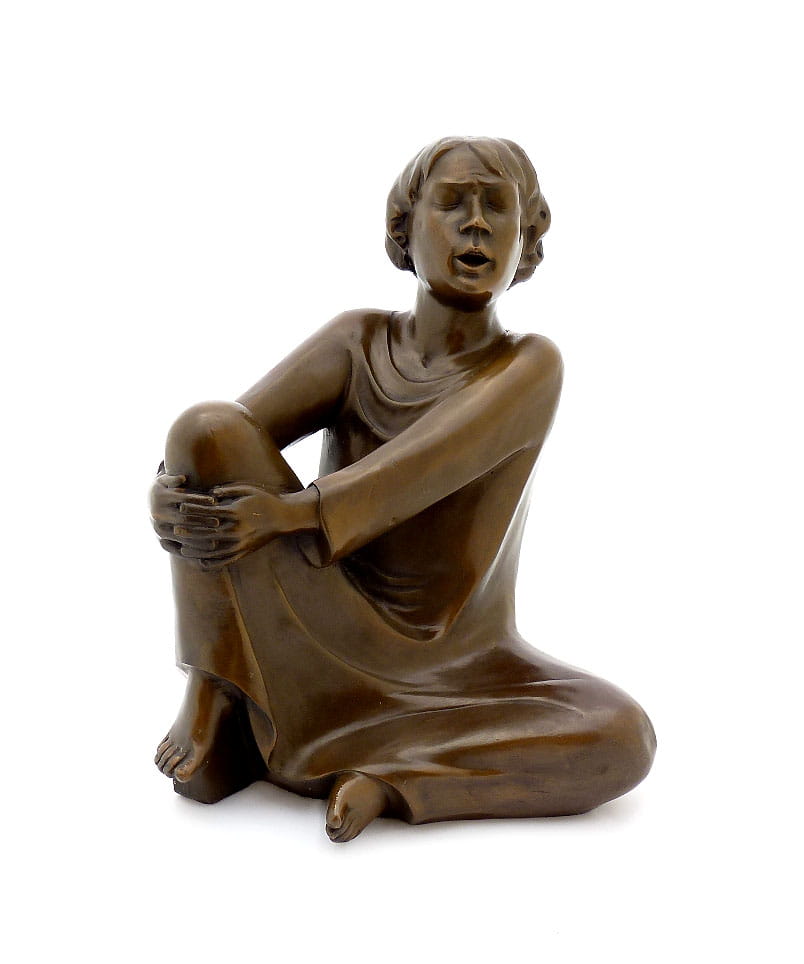
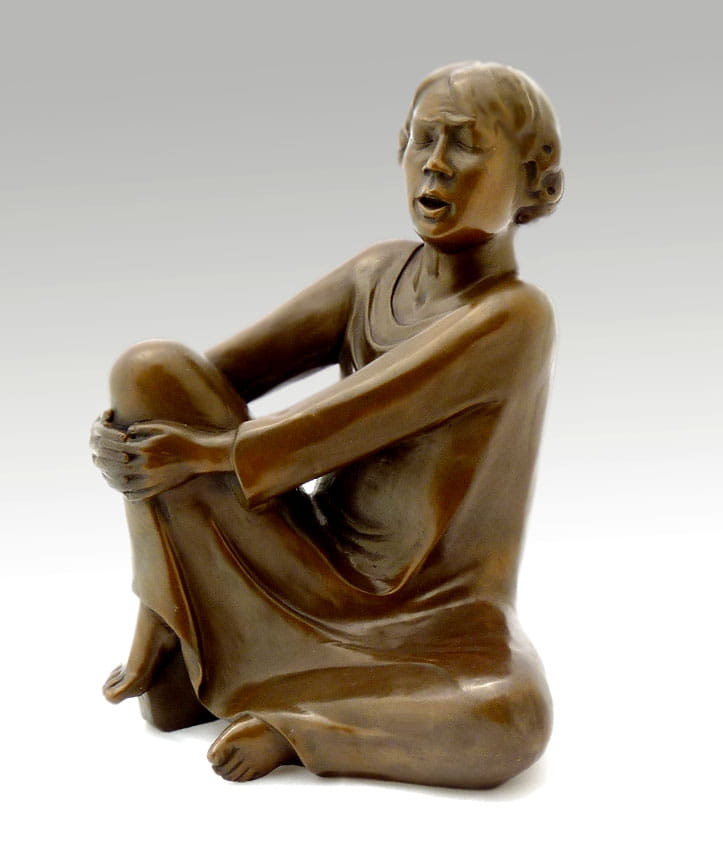
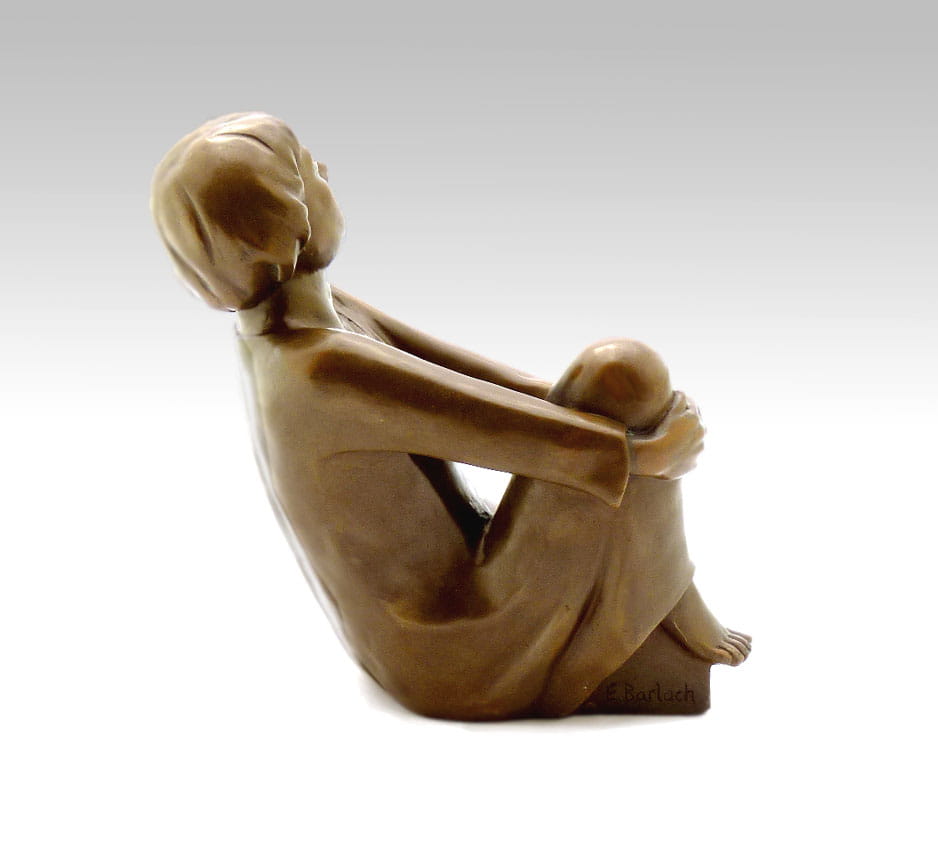
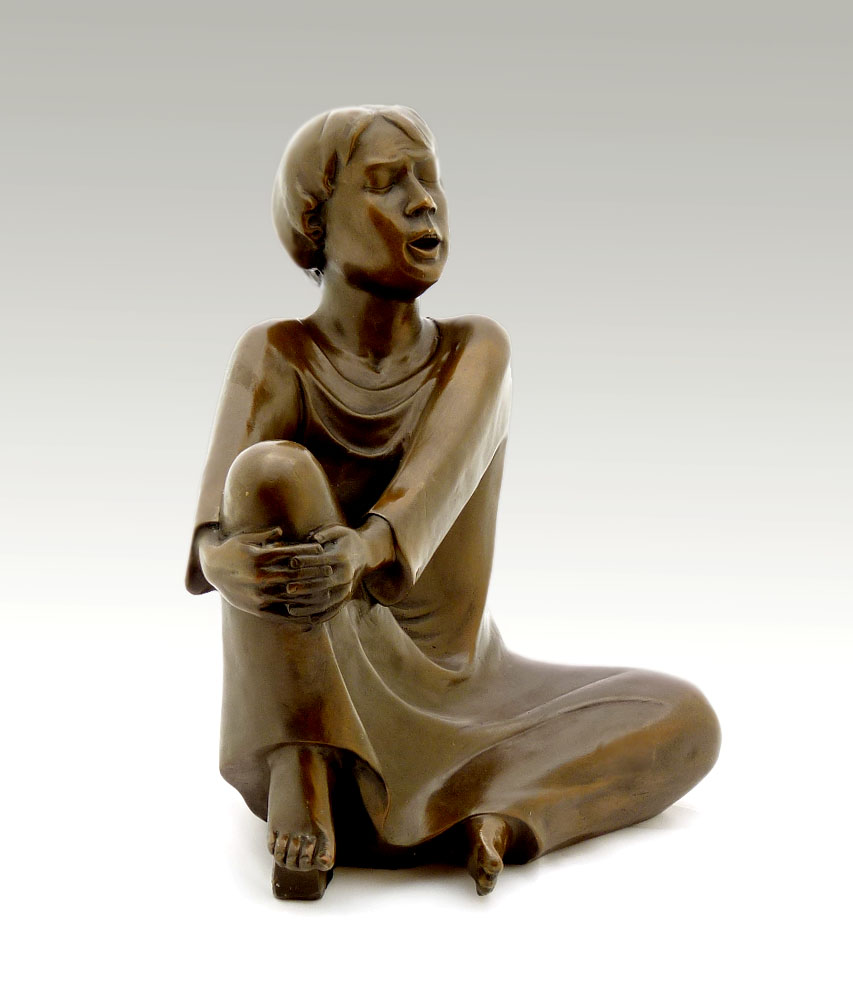
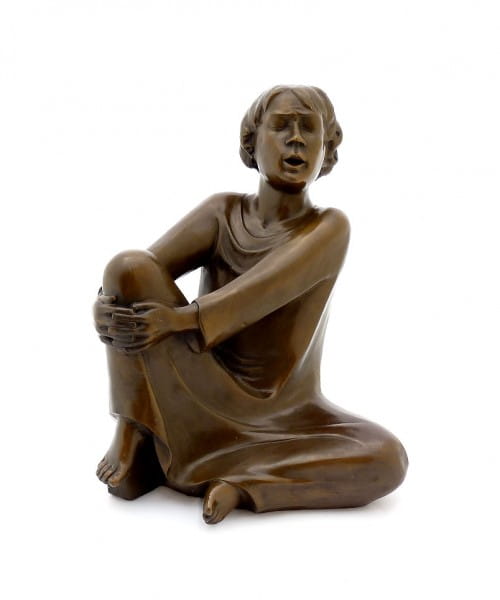
"Bronze Statue - The Singing Man (1928) - Ernst Barlach Art"
| Weight | 4,4 kg |
The Singing Man – A Resonant Bronze Figure - Signed Ernst Barlach
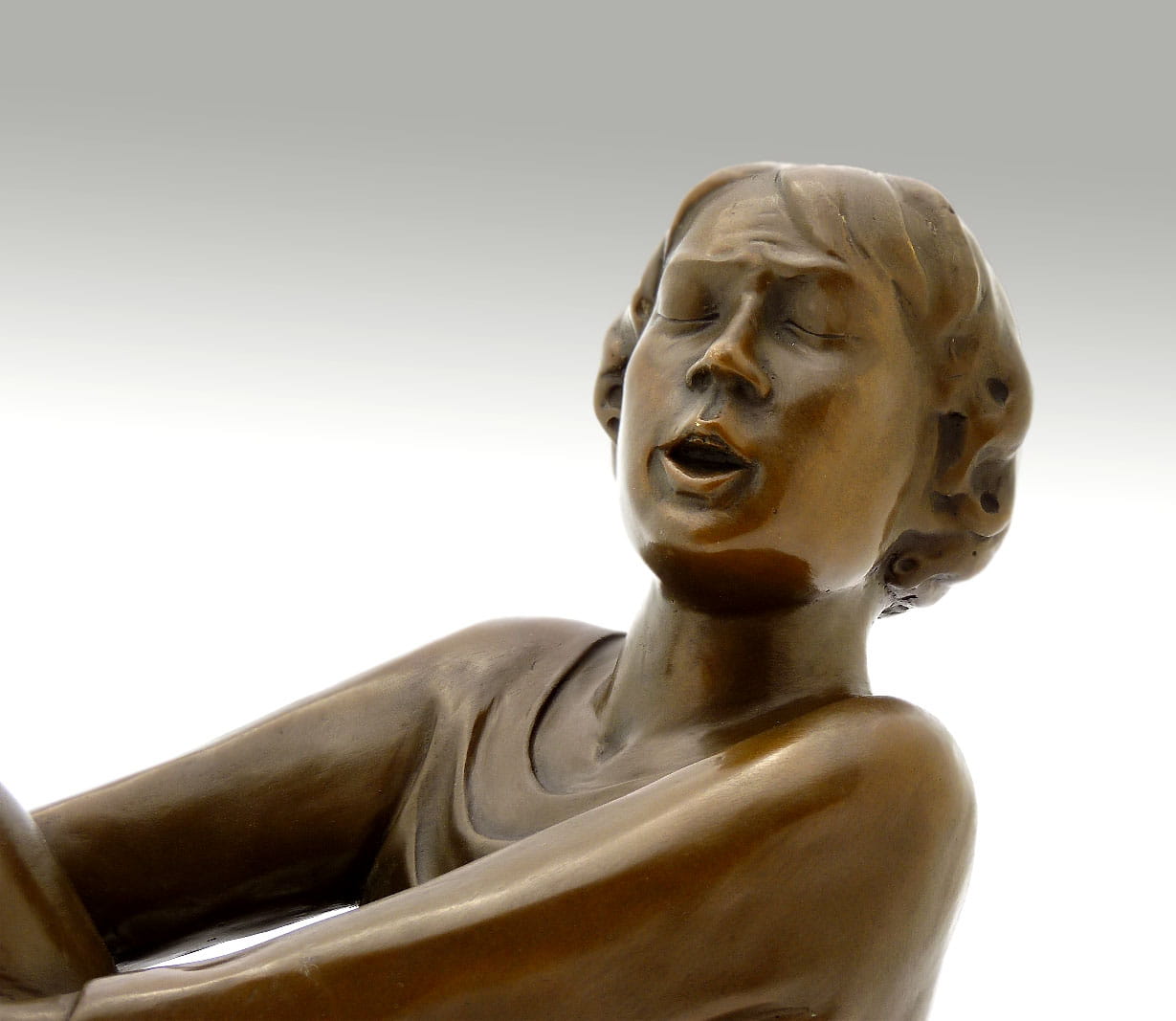
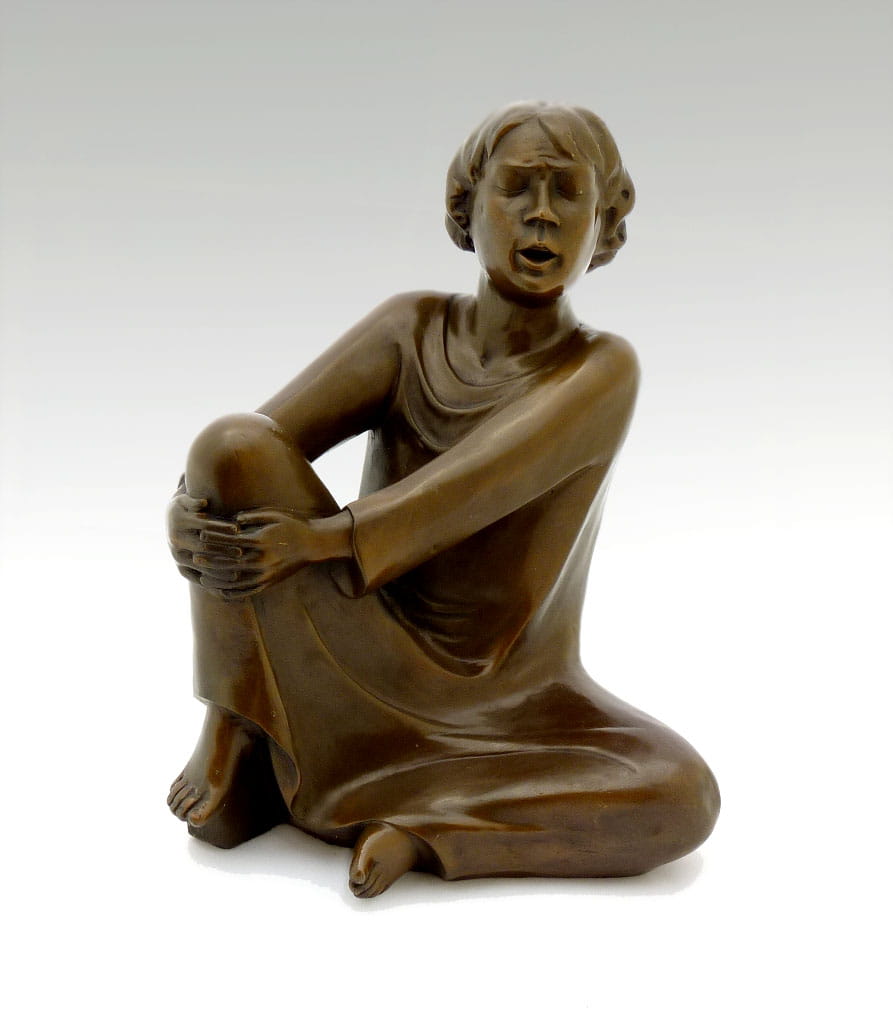
The bronze Singing Man, created in 1928 and signed Ernst Barlach, captures a rare moment in which the human voice seems to rise from deep within the body. The seated figure pulls one knee close to his chest, creating a compact posture that channels the inward concentration typical of Ernst Barlach Art, while his open mouth conveys a release of emotion that feels spontaneous and unrestrained. Light settling on the smooth curvature of the robe emphasizes the rhythmic flow of the body, guiding the viewer’s gaze toward the expressive tension of the face. This unity of form and gesture reflects the sculptor’s interest in distilling psychological intensity into simplified volumes, a hallmark visible in much of Ernst Barlach Artwork. Through this delicate balance, the sculpture invites contemplation of sound that is silent yet profoundly present.
A sculptural language shaped by voice
The expressive power of the Singing Man lies in the contrast between the stillness of the body and the vibrancy implied by the figure’s lifted voice. His closed eyes create a bridge between inner feeling and outward sound, echoing a theme frequently explored in Ernst Barlach Art, where emotional truth exceeds formal complexity. The robe flows in broad, simplified planes that create a meditative calm, while the carefully modeled hands clasping the knee anchor the figure in physical presence. This sculptural reduction heightens the resonance of the piece, allowing subtle gestures to carry profound meaning, as characteristic of expressive Ernst Barlach Artwork. Through the interplay of silent song and grounded posture, the sculpture evokes a moment of inward release.
Creation within Barlach’s late creative period
Conceived in 1928 in Barlach’s Mecklenburg studio, the Singing Man reflects a mature phase of the sculptor’s career in which psychological nuance took precedence over outward dynamism. The figure’s emotional charge, conveyed through minimal forms, embodies the artist’s commitment to depicting states of human vulnerability, a theme central to influential works of Ernst Barlach Art during this time. The compact silhouette and quiet self-containment reveal a sculptural vocabulary stripped of ornamentation, allowing the viewer to focus entirely on the intensity of the vocal gesture. In this concentration of form and feeling, the piece aligns closely with late-period Ernst Barlach Artwork, where sound becomes a visual expression of inner life. The limited edition of twenty casts ensures the sculpture remains both rare and deeply connected to its historical moment.
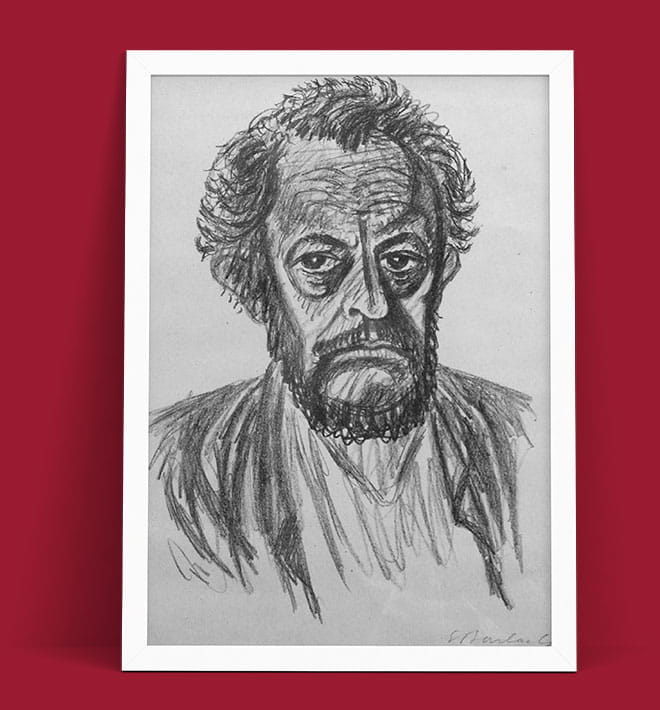
Ernst Barlach – life, family and artistic formation
Born on January 2, 1870, in Wedel, Ernst Barlach grew up under the influence of a thoughtful household shaped by his father’s medical profession and his mother’s encouragement of creative exploration. After formative studies at the Hamburg School of Applied Arts, he continued his artistic training at the Académie Julian in Paris, where he absorbed international currents that would later inform the expressive clarity seen throughout Ernst Barlach Artwork. His return to Germany marked a period of increasing focus on sculpture, supported by personal milestones such as the birth of his son Nikolaus, which deepened his sensitivity to human emotion. As he developed a distinctive artistic identity, he embraced a language of reduction and symbolic presence that became foundational to important contributions within Ernst Barlach Art. Until his death in 1938, he pursued a vision that fused spiritual gravity with a profound understanding of the human condition.
Emotional resonance and sculptural equilibrium
The Singing Man communicates emotional depth through its combination of outward expression and inward concentration, an approach that defines many of the most memorable works associated with Ernst Barlach Art. The tension between the compact posture and the open, almost vulnerable face suggests a merging of personal reflection and shared experience. The robe’s smooth transitions amplify the rhythmic movement of the figure, guiding the viewer toward the emotional center embedded in the act of singing. Subtle interactions of light and shadow across the bronze lend the sculpture a sense of living presence, reinforcing the intensity characteristic of influential Ernst Barlach Artwork. Through its quiet strength, the piece invites viewers to witness a moment of genuine human resonance.
A presence that enriches every environment
This bronze unfolds its contemplative strength most fully when encountered in quiet interior spaces such as a study, reading room, or softly illuminated corner that allows its emotional depth to resonate. Its compact silhouette harmonizes with minimalist arrangements as easily as with traditional collections, offering a focal point that invites repeated and thoughtful viewing. Comparable works by Barlach, including related singing figures and introspective seated compositions, may be found in the Barlach House in Hamburg, the museums in Güstrow, and several German cultural institutions preserving significant examples of Ernst Barlach Artwork. Collectors value the sculpture for the sincerity of its expression and the clarity with which it reflects the emotional vocabulary associated with Ernst Barlach Art. The Singing Man brings a quiet, enduring presence into any setting and remains deeply affecting in its simplicity.
Height: 29 cm
Width: 24 cm
Depth: 28 cm
Weight: 4,4 kg
100% Bronze
Our advantages
free shipping
Worldwide free shipping
14 days money back
You can cancel your order
within 14 days
secure payment services
Paypal, Master Card, Visa, American Express and more