Prices incl. VAT, free shipping worldwide
Ready to ship today,
Delivery time appr. 3-6 workdays

Product description
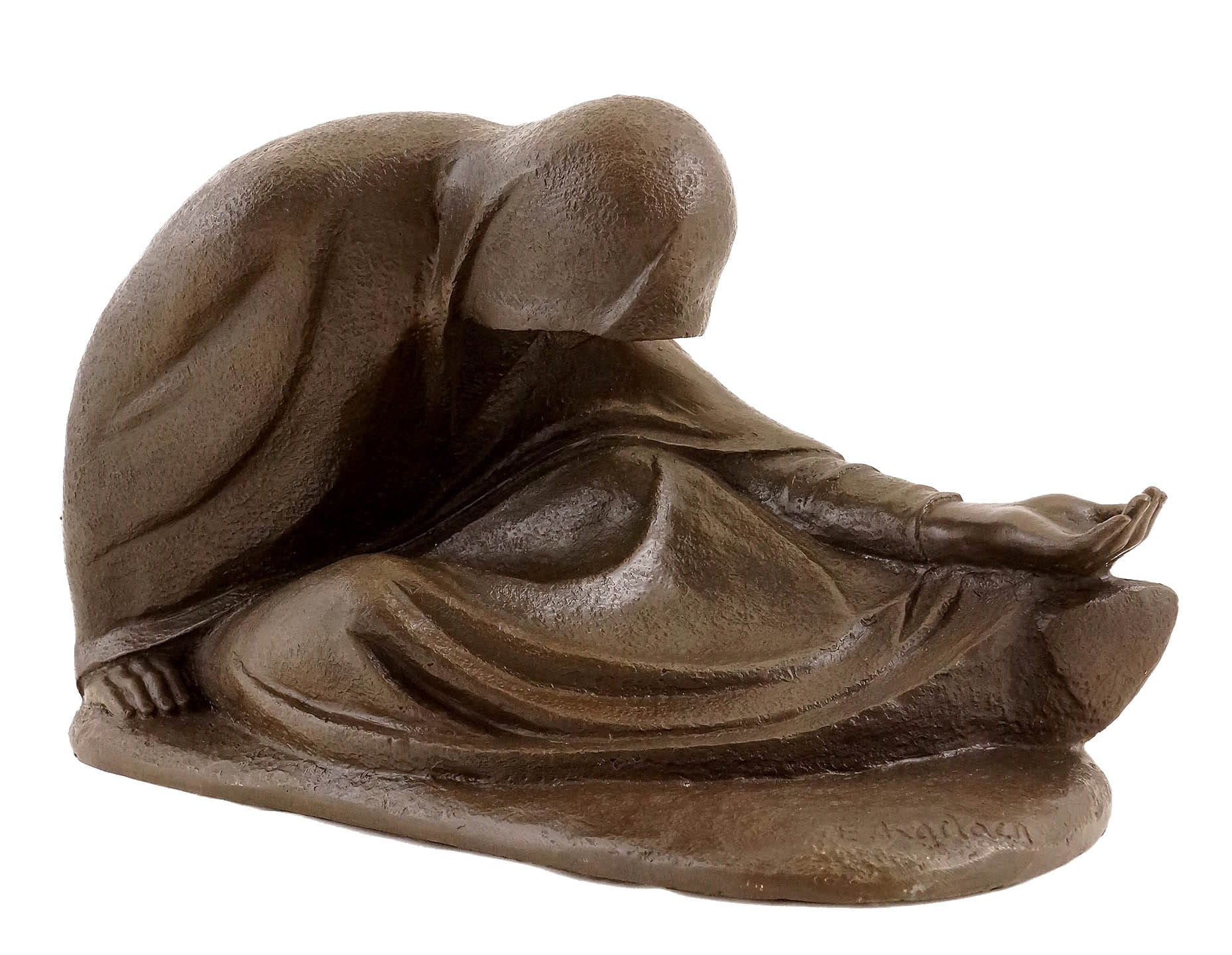
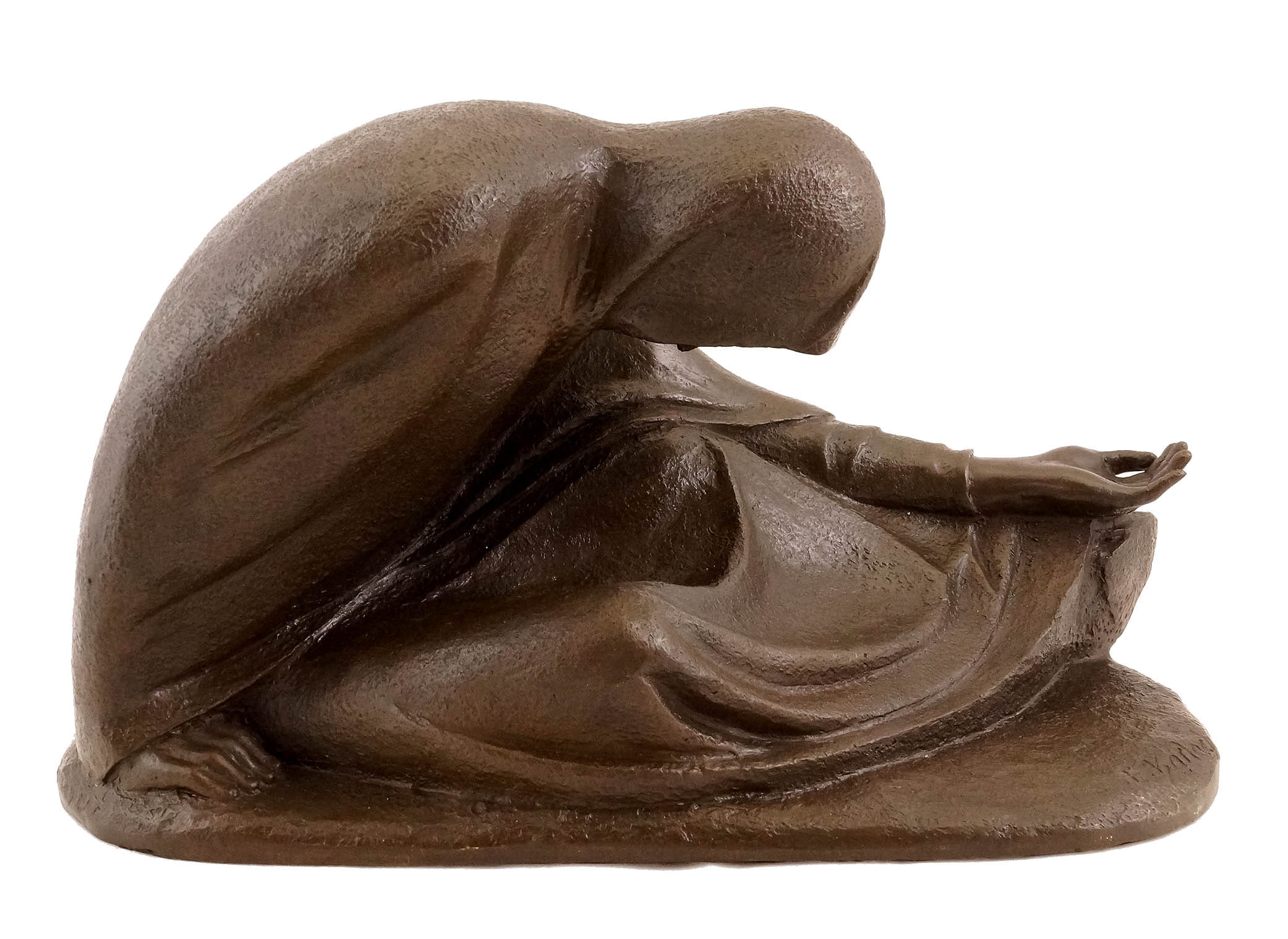
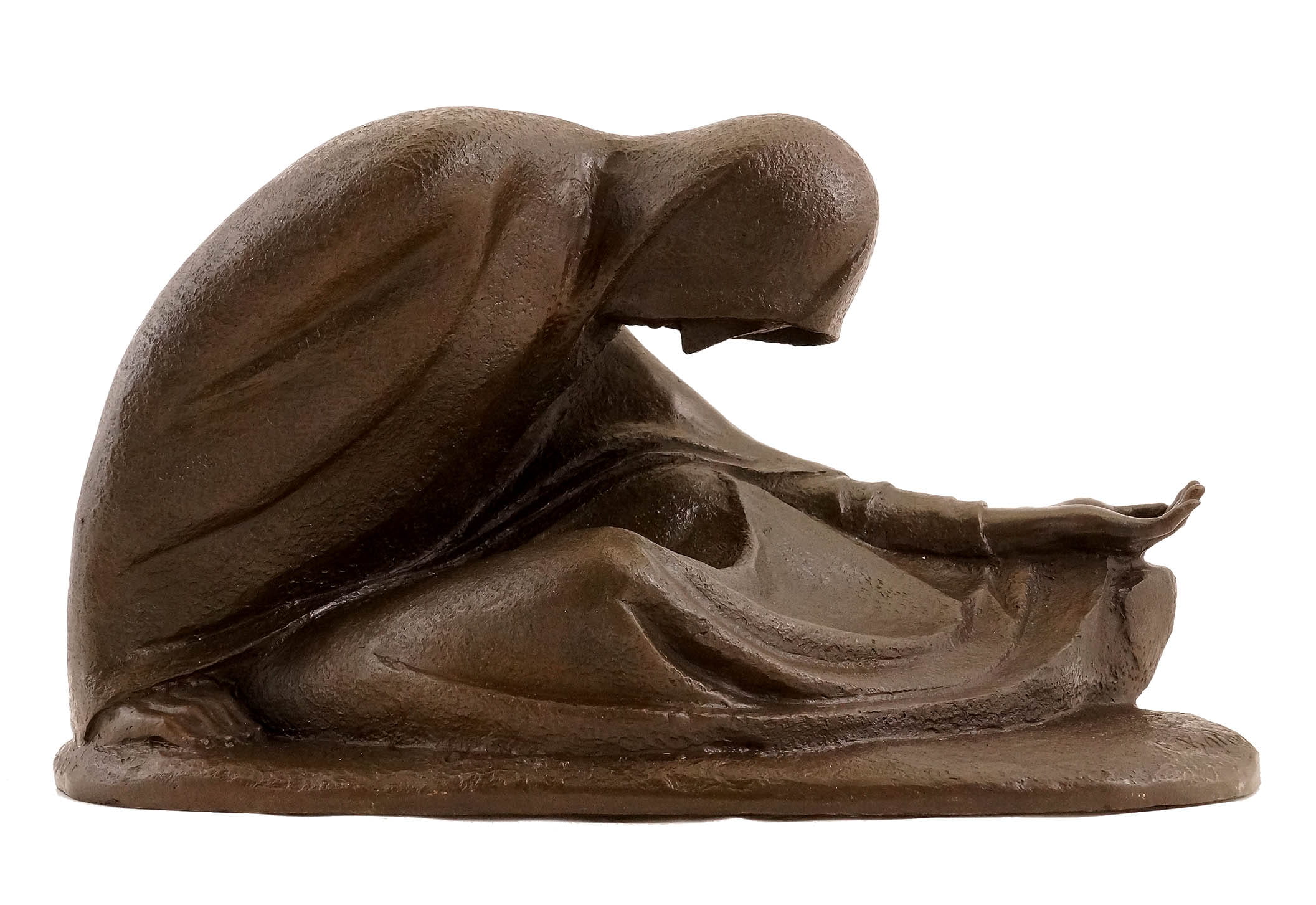
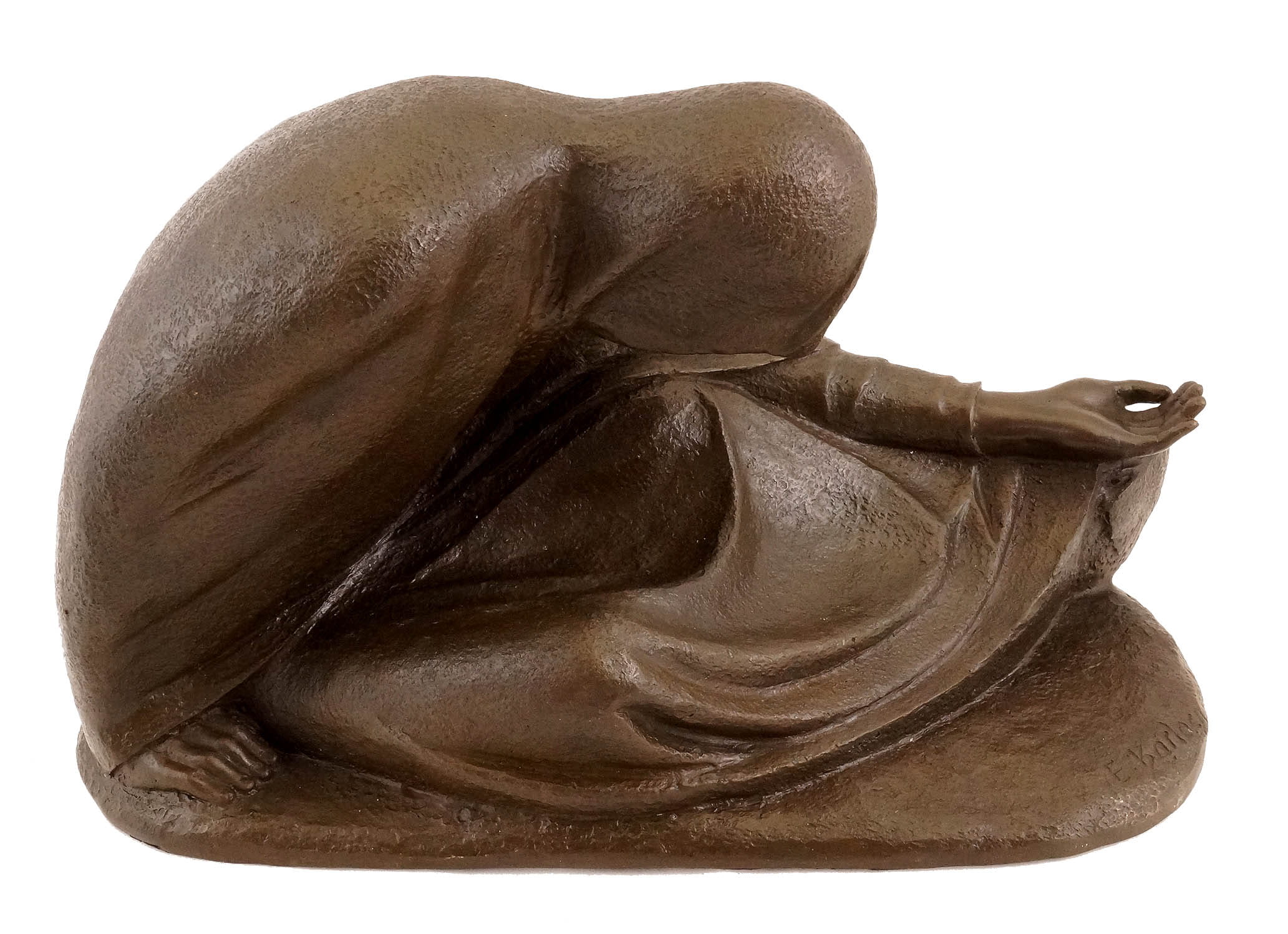
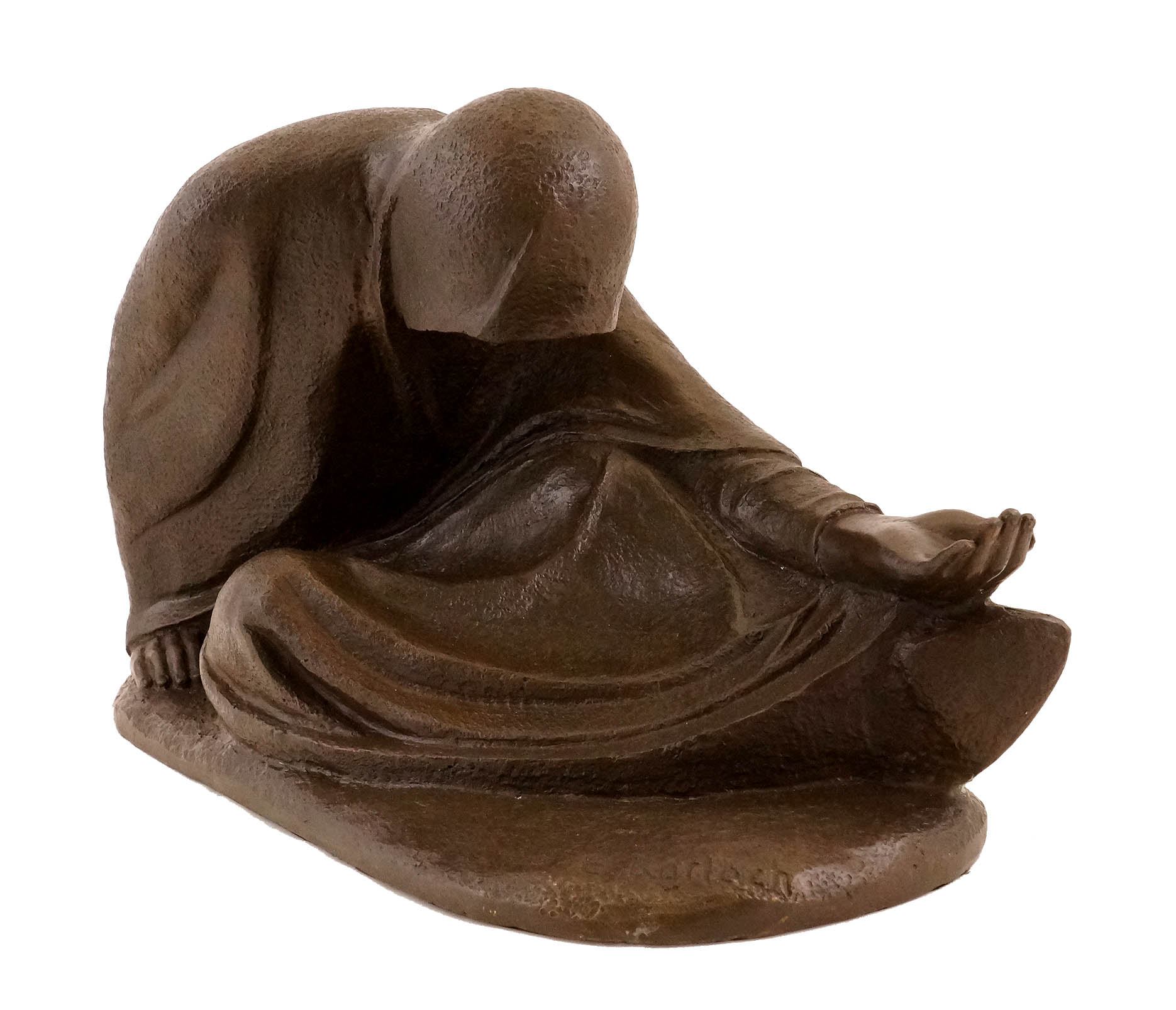
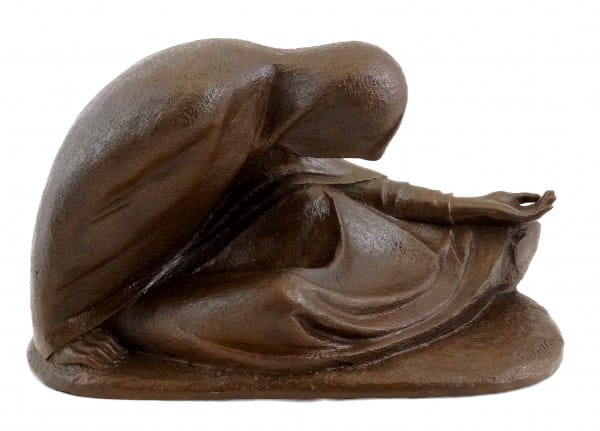
"Russian Beggar I (1907) - Ernst Barlach Art"
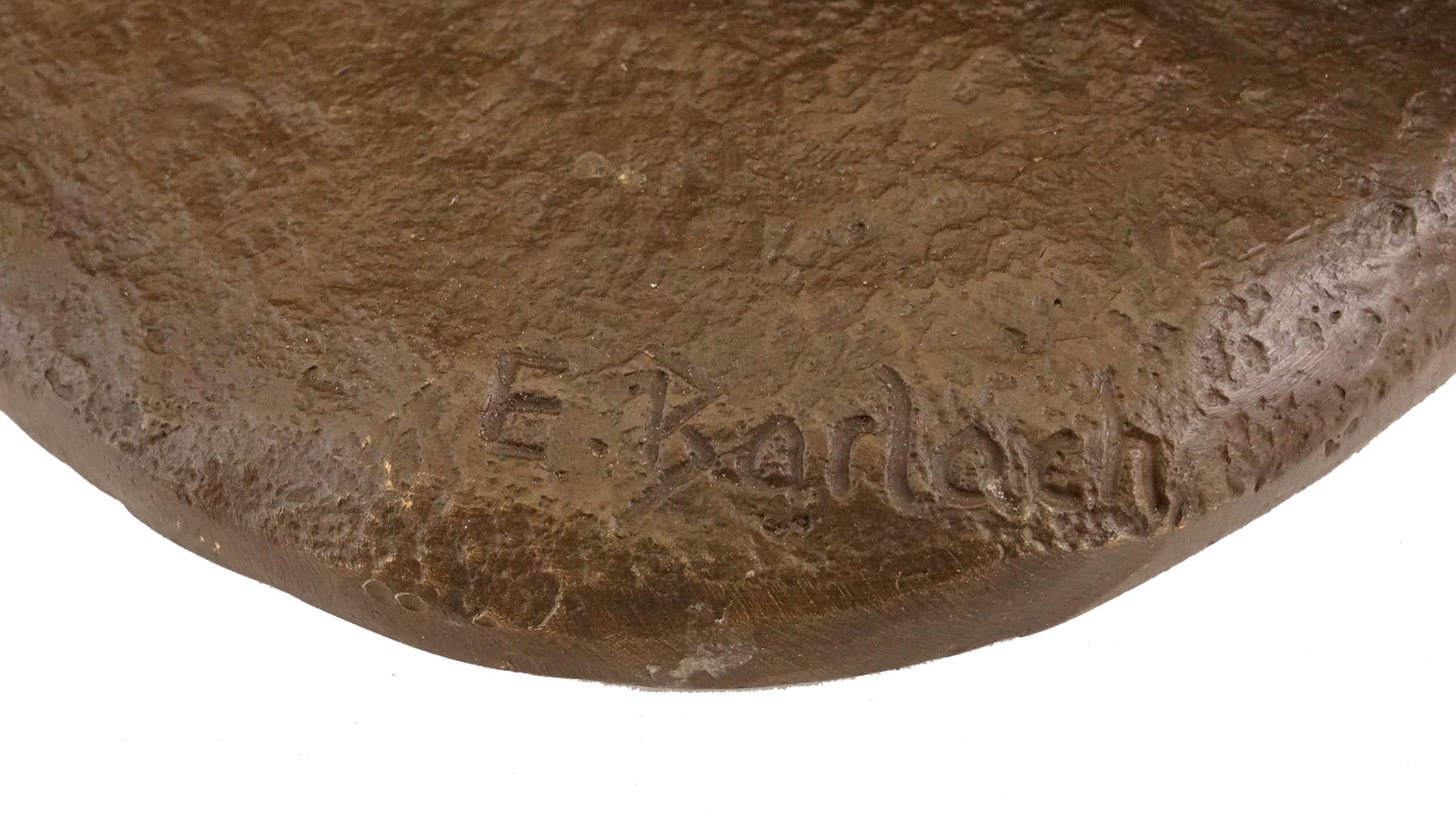
Russian Beggar I – A Contemplative Bronze - Signed Ernst Barlach
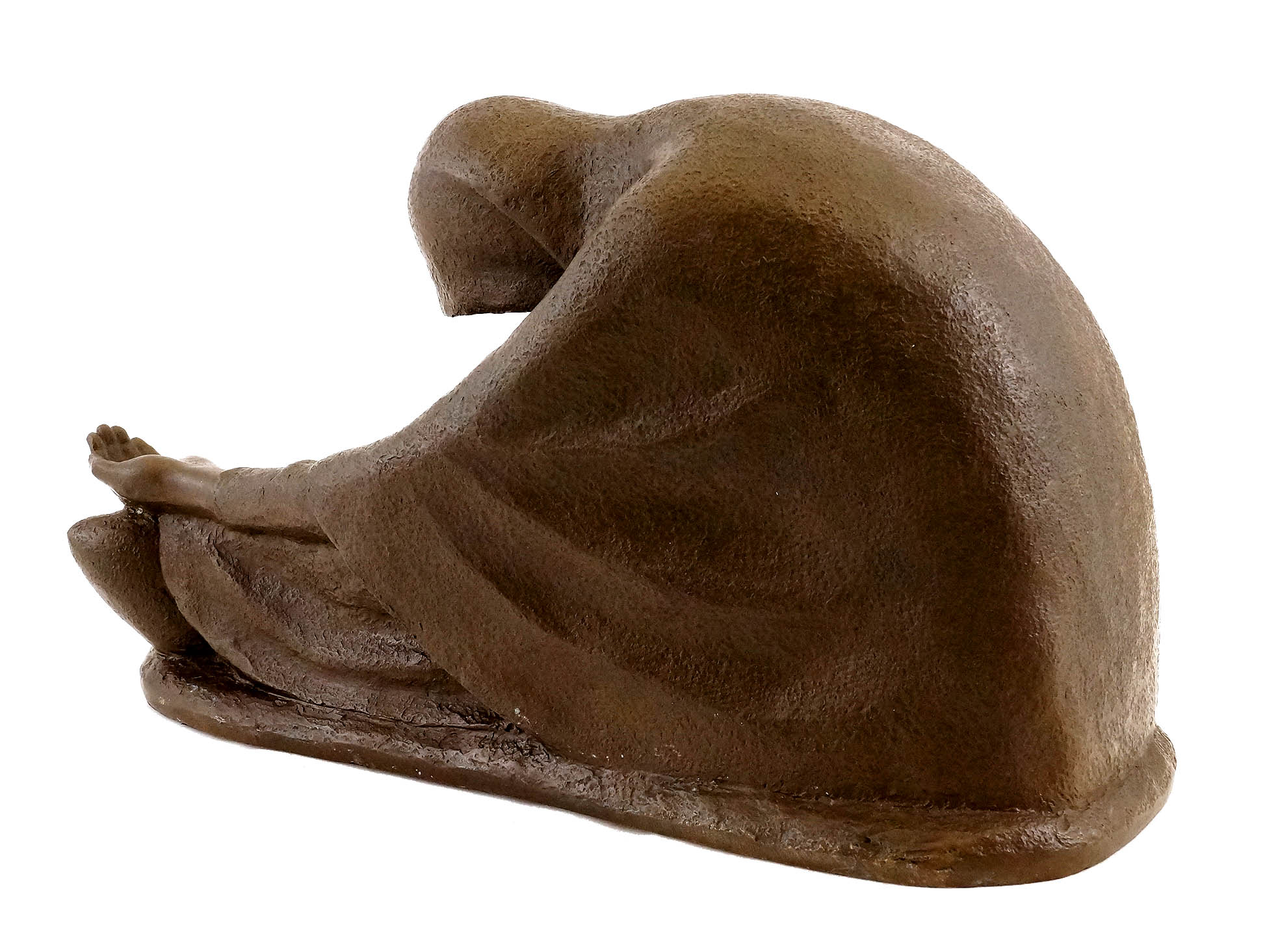
The 1907 bronze Russian Beggar I, signed Ernst Barlach, presents an intimate portrayal of human vulnerability distilled into a single, profoundly concentrated gesture. The figure is seated on the ground, her entire body curved inward, creating an enclosing form that suggests both physical exhaustion and spiritual perseverance. The bowed head hides her features almost completely, shifting the expressive weight to the sweeping lines of her cloak and the quiet tension of her outstretched right arm. This focus on posture rather than facial expression is characteristic of early Ernst Barlach Art, where emotional depth emerges through minimal but powerful sculptural decisions. The simplicity of the composition invites contemplation, allowing the viewer to sense the inner life of the figure in a manner typical of significant Ernst Barlach Artwork.
Expressive reduction as a means of truth
Barlach’s approach in this sculpture relies on a reduction of detail that strengthens the emotional clarity of the overall form. The large, flowing robe dominates the composition, its broad planes catching light in ways that highlight the figure’s withdrawn posture and quiet determination. The extended hand, delicately modeled and slightly open, introduces a subtle but poignant counterpoint to the inward-turning curves of the body, recalling early themes in Ernst Barlach Artwork about reaching outward despite hardship. The inclination of the torso and the rounded arc of the back show how carefully Barlach used sculptural mass to communicate psychological states. In the interplay between vulnerability and silent endurance lies the expressive heart of Ernst Barlach Art, and this bronze captures that equilibrium with remarkable precision.
An artistic response to Russian experiences
The origins of Russian Beggar I lie in Barlach’s transformative journey through Russia in 1906, an experience that left a lasting imprint on the emotional register of his work. During his travels he encountered individuals whose lives were marked by poverty, displacement and harsh climates, impressions that later shaped essential aspects of Ernst Barlach Art. Rather than treating these subjects with sentimentality, he sought to reveal their inner dignity through quiet, concentrated form. The sculpture reflects this shift in perspective, offering a portrait not of despair but of resilience, rendered in simplified silhouettes and introspective posture associated with early Ernst Barlach Artwork. As one of only twenty casts, this bronze stands as a rare document of the period in which Barlach’s artistic language underwent a defining evolution.
Ernst Barlach – life, training and creative development
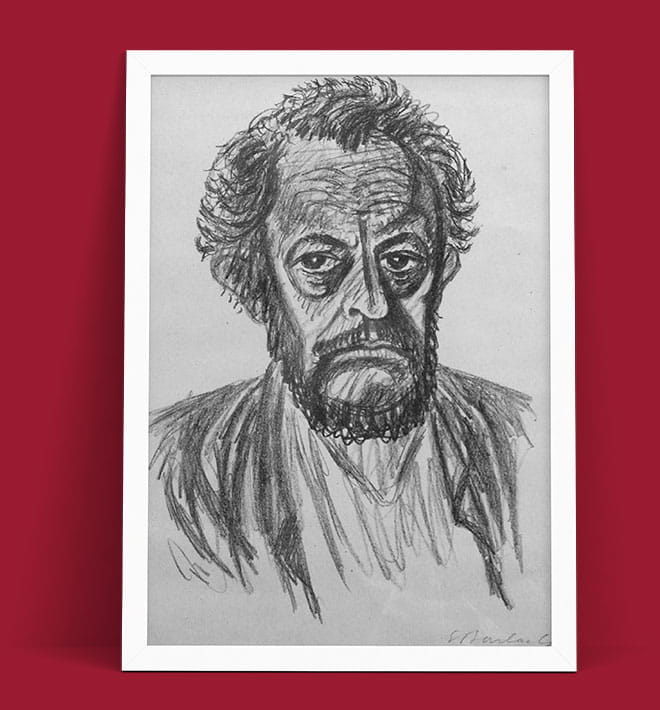
Born in Wedel in 1870, Ernst Barlach grew up in a household shaped by intellectual curiosity and the compassionate influence of his father, a country doctor. The early death of his father intensified a sense of emotional awareness that would later inform many pieces in what is now recognized as influential Ernst Barlach Art. His formal artistic studies began in Hamburg and continued at the Académie Julian in Paris, where he encountered new sculptural approaches and broadened his understanding of European modernism. Yet it was his later personal experiences, particularly his time in Russia, that awakened the thematic concerns central to Ernst Barlach Artwork—human hardship, spiritual endurance and the universality of suffering. These experiences helped shape a sculptural vocabulary rooted in expressive reduction and psychological depth.
A sculptural language grounded in inner stillness
The expressive power of Russian Beggar I derives from its quiet balance of weight, movement and introspective form. The bowed posture suggests a moment of inward concentration rather than passive suffering, reflecting Barlach’s conviction that the human spirit retains dignity even under severe strain. The heavy folds of the cloak intensify this sense of groundedness, anchoring the figure firmly to the earth while the extended arm introduces a fragile but meaningful gesture. This dynamic interplay between containment and subtle openness is central to the emotional economy of Ernst Barlach Artwork, where small sculptural decisions often carry profound symbolic weight. Through its minimalist expressiveness, the figure reveals the universal dimension of hardship, conveyed through a visual language that remains unmistakably linked to Ernst Barlach Art.
A contemplative presence for quiet interiors
This bronze unfolds its deepest resonance when placed in environments that encourage reflection—private libraries, secluded corners of a living space, or museum settings where viewers may engage with its meditative silence. Its modest scale allows it to integrate effortlessly into curated collections that value expressive clarity over ornamental display. Today, related works from the same creative period can be viewed in the Barlach House in Hamburg, the Güstrow collections and several German museums committed to preserving key examples of Ernst Barlach Artwork. Collectors appreciate this sculpture for its emotional immediacy, its exceptional craftsmanship and the contemplative depth it brings to any thoughtfully arranged space.
Height: 16 cm
Width: 29 cm
Depth: 13,5 cm
Weight: 3,3 kg
100 % bronze
Our advantages
free shipping
Worldwide free shipping
14 days money back
You can cancel your order
within 14 days
secure payment services
Paypal, Master Card, Visa, American Express and more